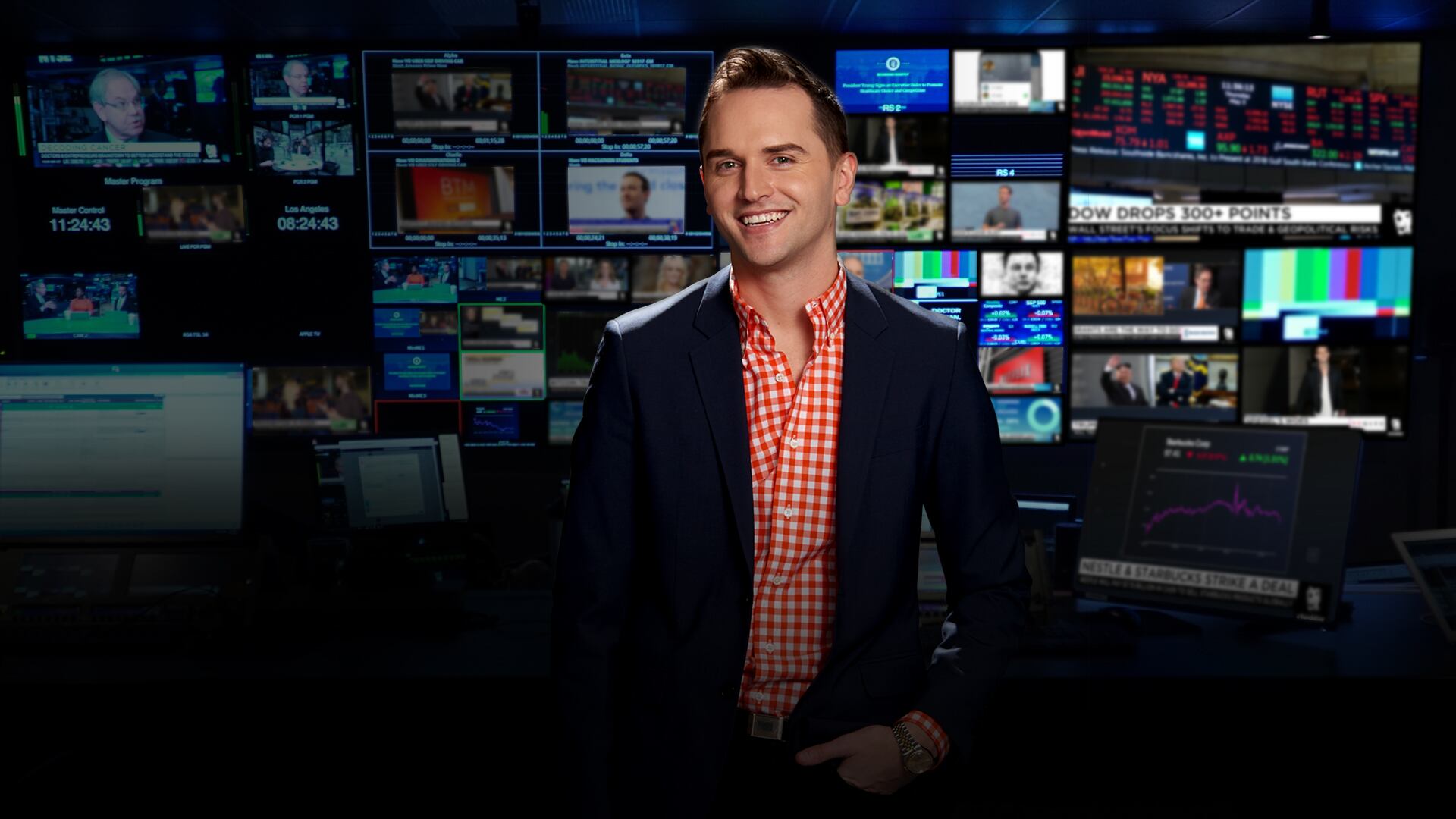
West Virginia's Latest Experiment: Blockchain Elections
The 2016 presidential election brought to light just how archaic and vulnerable America’s voting system is, raising questions of how to protect democracy from foreign influences and digital hacks in the future.
Venture capitalist Bradley Tusk thinks blockchain could be the answer.
“Long term, I believe that every American should be able to vote in any election on their phone,” the founder and CEO of Tusk Montgomery Philanthropies told Cheddar Thursday.
Through his foundation, Tusk currently funds America’s first blockchain-powered voting experiment in West Virginia.
In March, the state launched a secure app to enable deployed military voters from a few counties to vote from wherever they are.
“We already have a handful of votes from various locations,” said Mac Warner, West Virginia’s Secretary of State.
“I was in the military and I’ve had those experiences where it’s difficult to vote. Think of the soldier on the hillside in Afghanistan...When they have those few minutes to think about an election back home, they want to vote the same way they order something from Amazon.”
Following this pilot program, the state wants to expand the program ahead of the midterm elections in November.
Tusk says the technology, which is already upending a range of industries from banking to art, provides a safer alternative to the current system.
“Blockchain...really is a much, much, much safer way to conduct elections not only compared to just regular online mobile voting, if someone were to try that, but even compared to the systems we have right now,” said Tusk.
For a military member to vote, the app not only requires details from their government-issued ID cards, but also uses [facial recognition and fingerprint scans](https://cheddar.com/videos/how-does-blockchain-powered-voting-work) to verify a voter’s identity.
“I’m very secure in the integrity of this election process,” sayd Warner.
Tusk, who managed former New York City Mayor Michael Bloomberg’s campaign, believes that low voter turnout leads to increased polarization among candidates and that this technology, though nascent, could in the long-term drastically change that.
“If, all of a sudden, voting was as easy as pulling out your phone and turnout went from 12 percent to 60 percent, then those same politicians would be forced to represent the views of the mainstream.
“To me, that’s the value in doing this. Right now, we don’t have a true represent of democracy,” said Tusk.
The federal government and numerous industries have been preparing for a greener future, setting goals to reduce greenhouse emissions by switching to electric vehicles. But the next hurdle to clear is convincing the wider public to get on board. Arun Kumar, managing director in automotive practice at AlixPartners, spoke to Cheddar's Ken Buffa about consumer trends related to EV transition and said he believes a widespread switch is imminent in 2022. Despite this, he acknowledged there are still significant obstacles to overcome, including high prices and more charging stations. "Without charging infrastructure, people are going to struggle with increasing adoption of electric vehicles in the future," Kumar told Cheddar. "I think by 2030 our estimate is that about a million chargers need to be put in place nationally in the U.S."
The pandemic has supercharged the creator economy, and there are no signs of it slowing down no matter when the pandemic officially ends. Creators prove to be a key factor in driving purchasing decisions and retail sales, and an increasing amount of platforms are taking advantage of the social influence. Karissa Bell, senior editor at Engadget, joins cheddar news to discuss the creator economy boom.
The National Women's Soccer League is partnering with Voyager Digital as its first-ever cryptocurrency brokerage in a multi-year deal. Marla Messing, interim CEO of the NWSL, and Steve Ehrlich, CEO of Voyager Digital, joined Cheddar to discuss benefitting the league and educating players and fans as a way of democratizing cryptocurrency. Messing explained that the players themselves will own half the assets as part of how the deal is structured. "My hope is, just in terms of the expectations of crypto over the long term, that I hope a lot of them are able to just let it sit there," she said. "And that one day this will be a nice retirement account for them."
The E-V maker Tesla has had a wild year. The company managed to continue to dominate the U.S. electric vehicle space despite growing competition and production delays. As the end comes to an end, Tesla finds itself growing richer and richer. Author of Risk Ritual Newsletter Richard Smith, joined Cheddar to discuss more.
Paul Travers, CEO of Vuzix, joins Cheddar News to discuss the different scenarios that its augmented reality smart glasses can be used for and his outlook for this technology in 2022.