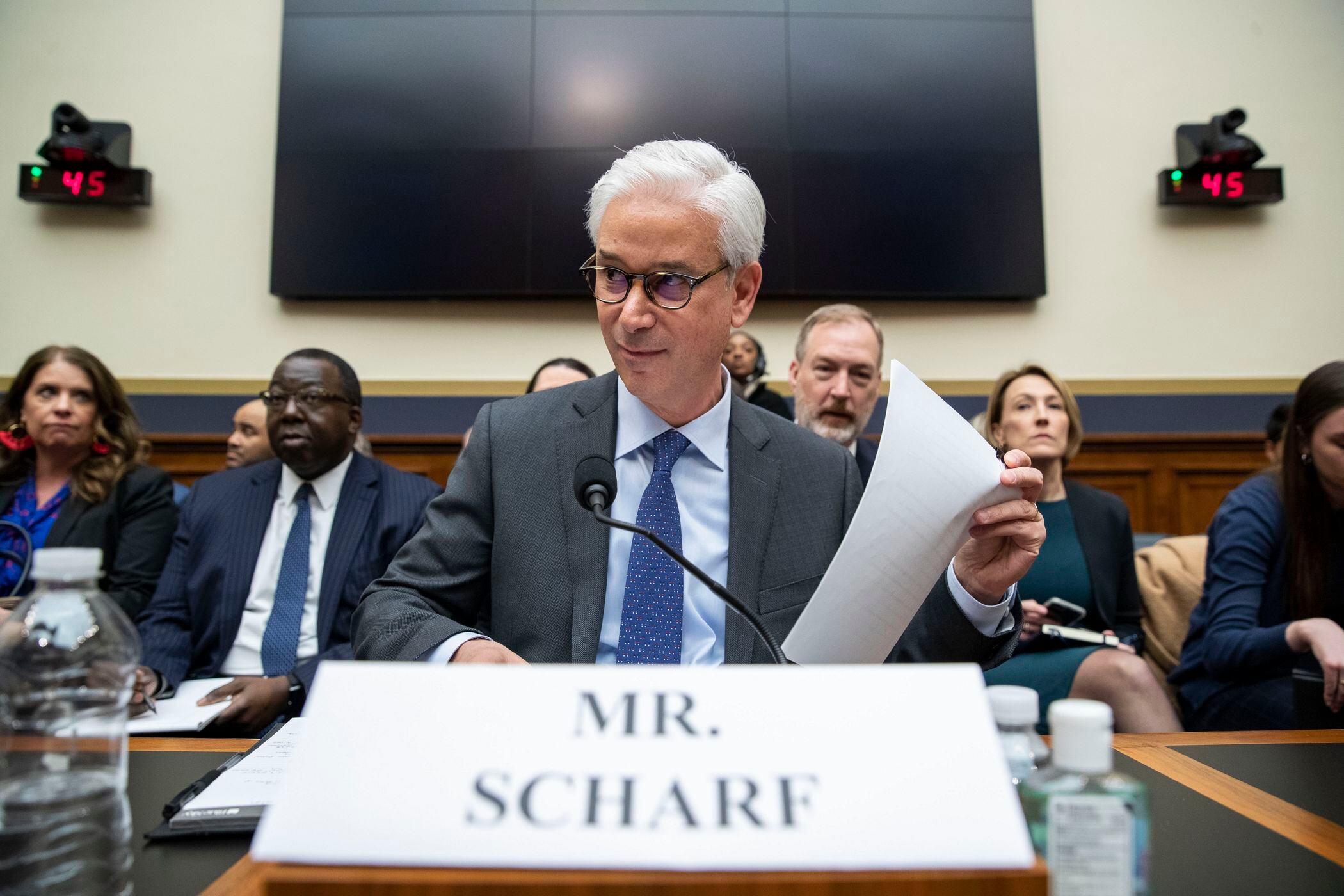
In this March 10, 2020 file photo, Wells Fargo CEO and President Charles Scharf is seated before he testifies during a hearing of the House Financial Services Committee, on Capitol Hill, in Washington. Scharf apologized Wednesday, Sept. 23 for comments he made that dismissed concerns that the banking industry, which has a long history of racist behavior, wasn’t doing enough to promote and retain diverse talent. (AP Photo/Alex Brandon, File)
By Ken Sweet
Wells Fargo CEO Charles Scharf apologized Wednesday for comments he made about the difficulty of finding qualified Black executives.
Scharf said that "there is a very limited pool of black talent to recruit from" in corporate America. The memo to employees was written in June but became public this week.
The comments and similar statements made in a Zoom meeting, reported by Reuters, led to an intense backlash in Washington and on social media.
"Perhaps it is the CEO of Wells Fargo who lacks the talent to recruit Black workers," said Rep. Alexandra Ocasio-Cortez of New York, on Twitter.
Scharf on Wednesday said in a prepared statement that his comments reflected "my own unconscious bias."
"There is no question Wells Fargo has to make meaningful progress to increase diverse representation," he wrote. Wells has pledged to increase the hiring of minority candidates, particularly through Black colleges and universities, as well as new anti-racism training programs at the bank.
American banking is dominated by leadership that is largely white and male. None of the six big Wall Street banks have ever had a Black or female CEO. Citigroup a few weeks ago announced it would promote a woman to CEO next year, the first on Wall Street to do so.
The last prominent African American to serve as CEO at a large financial services company was Kenneth Chenault, the former CEO of American Express. He retired in 2018. In an interview with The Associated Press at the time, Chenault called the lack of a pipeline to recruit and retain diverse talent "embarrassing" to the financial services industry.
Stanley O'Neal, the former CEO Merrill Lynch while it was still an independent company, is also Black. He resigned in 2007 during the firm's collapse.
Peloton has weathered a seemingly never-ending storm the past few months: PR blunders, sinking customer demand, and in recent weeks, reported cost-cutting and potential layoffs. Now, several companies are said to be in the mix as potential buyers: Amazon, Netflix, Disney, and Apple. How likely is it that one of these companies pursues a deal — and how likely is it that it will be Apple who buys Peloton? Dan Ives, Managing Director of Equity Research at Wedbush Securities, joins Closing Bell to discuss his thoughts about Apple pursuing a Peloton takeover,
Astra aborted the launch for NASA ELaNa 41 Mission out of Cape Canaveral on Monday due to what was described as a minor issue, but the company's stock fell nearly 14 percent following the news. Jim Cantrell, CEO and co-founder of Phantom Space, which builds and launches spacecraft of its own, joined Cheddar to discuss the scrubbed mission. “The last thing you want is for this to go wrong, you're better to err on the side of safety expectations,” Cantrell explained, noting that the mission delay was a normal event.
Dating app Bumble announced its first acquisition, expanding into Europe by picking up Fruitz, a French Platform. The Fruitz app allows its users to convey dating preferences through fruit metaphors.
Meat production giant Tyson Foods reported a beat on its Q1 earnings. In spite of obstacles posed by supply chain issues and inflation, the company exceeded expectations on earnings per share and revenue.
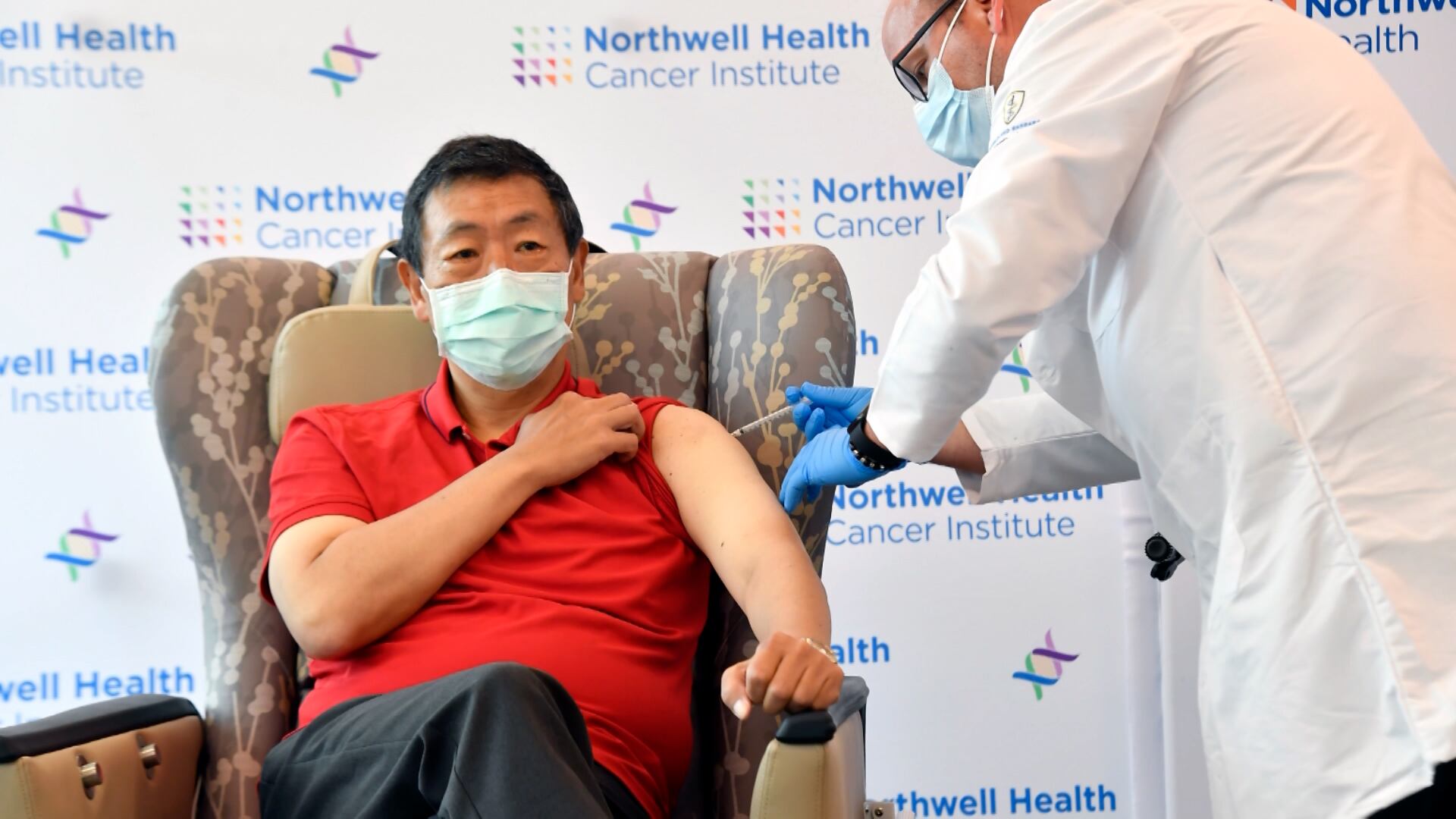
TC BioPharm, a biopharmaceutical company focused on developing cell therapy products targeting, went public on the Nasdaq in January. CEO Bryan Kobel joined Cheddar to talk about the company's IPO launch, its cancer-fighting therapeutics tech, and its potential for using its research to treat COVID-19. "The opportunity here for us is to really get safety data and covid and expand into other areas," Kobel said. "So from COVID, where we hope to treat patients, hopefully maybe the elderly population, populations that that really can't handle the antivirals because they're too hard in the system, well then we'll expand out into maybe severe influenza Ebola, other viral and viral infections where we think we can be helpful."
The gaming industry has been under the spotlight so far this year following some big mergers and acquisitions. This week featured earnings of three major gaming companies, but also Meta and for the latter, things are not doing too hot. Joining Cheddar News to break it all down was Kenny Rosenblatt, President and Co-Founder of Arkadium.