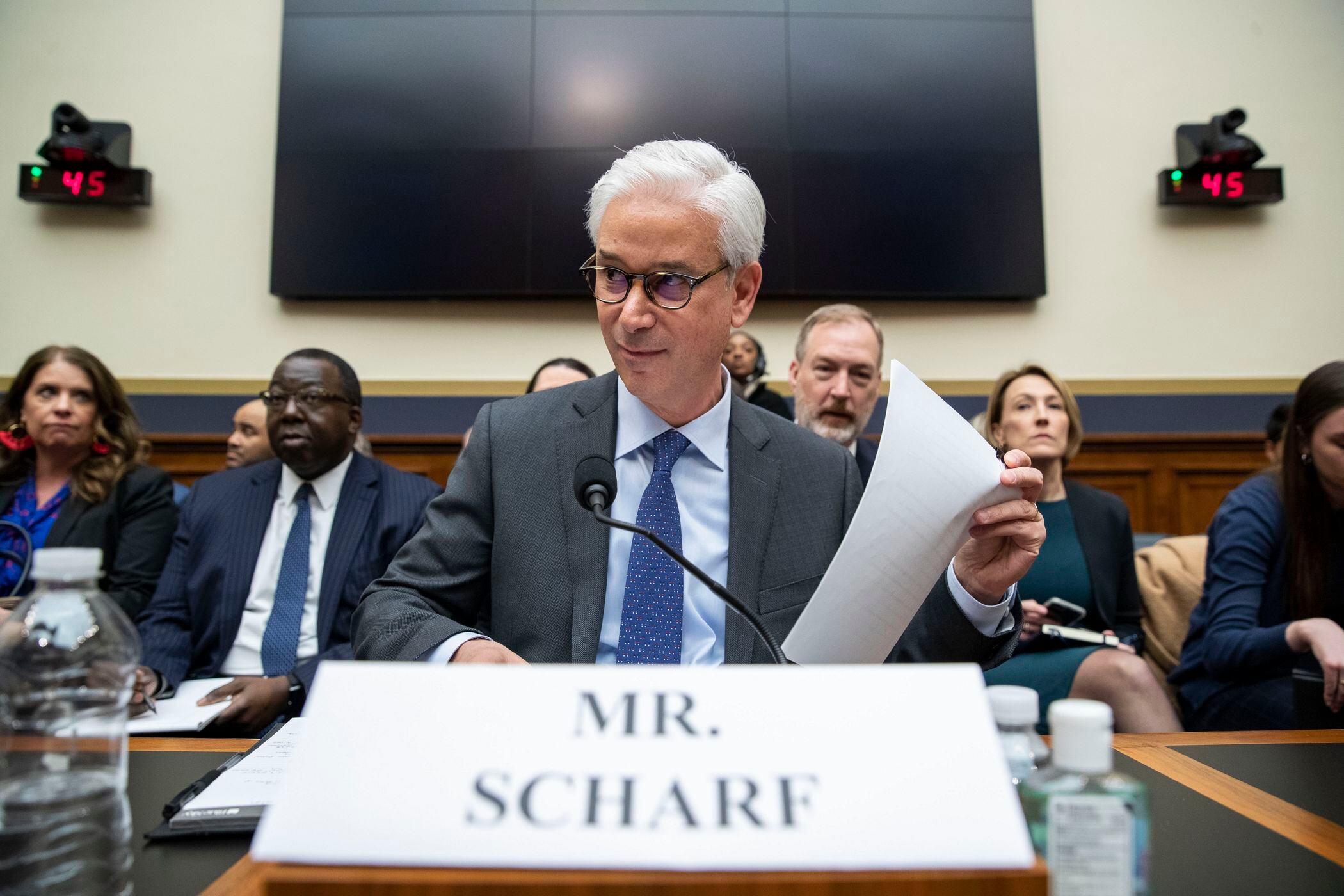
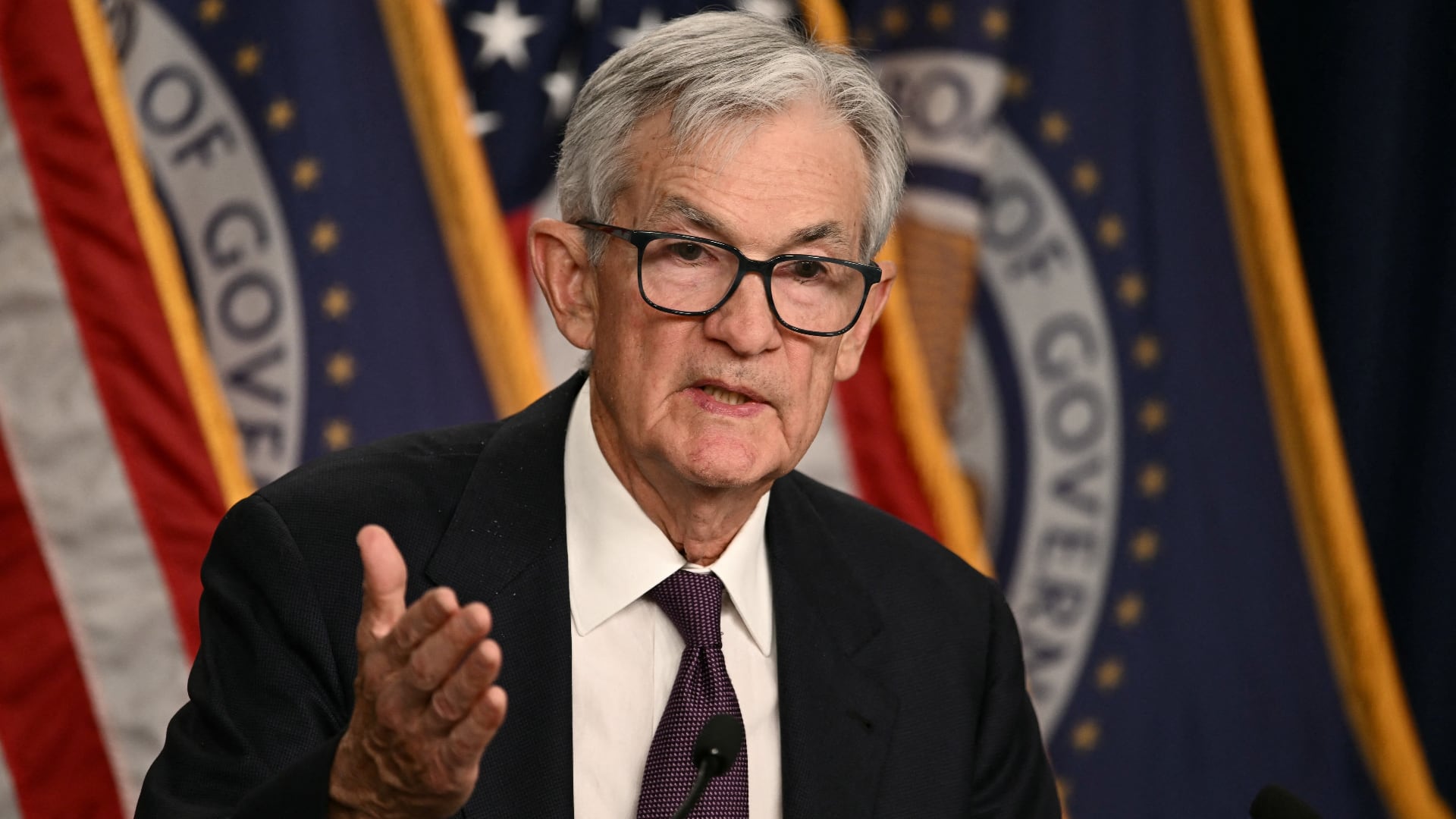
In this March 10, 2020 file photo, Wells Fargo CEO and President Charles Scharf is seated before he testifies during a hearing of the House Financial Services Committee, on Capitol Hill, in Washington. Scharf apologized Wednesday, Sept. 23 for comments he made that dismissed concerns that the banking industry, which has a long history of racist behavior, wasn’t doing enough to promote and retain diverse talent. (AP Photo/Alex Brandon, File)
By Ken Sweet
Wells Fargo CEO Charles Scharf apologized Wednesday for comments he made about the difficulty of finding qualified Black executives.
Scharf said that "there is a very limited pool of black talent to recruit from" in corporate America. The memo to employees was written in June but became public this week.
The comments and similar statements made in a Zoom meeting, reported by Reuters, led to an intense backlash in Washington and on social media.
"Perhaps it is the CEO of Wells Fargo who lacks the talent to recruit Black workers," said Rep. Alexandra Ocasio-Cortez of New York, on Twitter.
Scharf on Wednesday said in a prepared statement that his comments reflected "my own unconscious bias."
"There is no question Wells Fargo has to make meaningful progress to increase diverse representation," he wrote. Wells has pledged to increase the hiring of minority candidates, particularly through Black colleges and universities, as well as new anti-racism training programs at the bank.
American banking is dominated by leadership that is largely white and male. None of the six big Wall Street banks have ever had a Black or female CEO. Citigroup a few weeks ago announced it would promote a woman to CEO next year, the first on Wall Street to do so.
The last prominent African American to serve as CEO at a large financial services company was Kenneth Chenault, the former CEO of American Express. He retired in 2018. In an interview with The Associated Press at the time, Chenault called the lack of a pipeline to recruit and retain diverse talent "embarrassing" to the financial services industry.
Stanley O'Neal, the former CEO Merrill Lynch while it was still an independent company, is also Black. He resigned in 2007 during the firm's collapse.
Johannes Evenblij, President of PepsiCo Beverages North America for the West Division, joins Cheddar News to discuss giving back at the Super Bowl this year
Youth sports coaching service MOJO has partnered with Major League Baseball, named the "trusted grassroots coaching app" of the MLB. The app provides content for parents and coaches to help young players grow their skills. Ben Sherwood, founder & CEO of MOJO joined Cheddar News to talk about how his app works to improve coaching to keep players interested. "The number one reason that kids drop out of sports and all of the surveys is that sports aren't fun, and one of the big reasons that sports aren't fun is that the coach doesn't know what she or he is doing," he said. "We think there's a great coach in everyone, and we just have to have the right resources and tools and inspiration."
Big tech companies such as Amazon and Google are garnering criticism for failing at their proposed climate pledges, most of which rely on carbon offsets — a potential loophole where companies pay others to address their omissions. Gilles Dufrasne, policy officer at Carbon Market Watch, joined Cheddar News to explain the organization's negative evaluation. "The objective here is not to bash companies and say everybody is doing the wrong thing," he said. "The objective is to also provide lessons, and there are some companies that are doing the right thing."
Jeff Zucker has resigned as CNN's president, writing in a memo he failed to disclose a romantic relationship with a colleague. Zucker admitted to the relationship, which he described as consensual, during the investigation into former CNN anchor Chris Cuomo's behavior. Seth Schachner, managing director of StratAmericas, joined Cheddar to discuss where does this abrupt resignation leaves the network.
Kevin Kelly, Founder & CEO of Kelly ETFs, discusses the profitability concerns within the banking sector and highlights the long-term headwinds in the energy market.