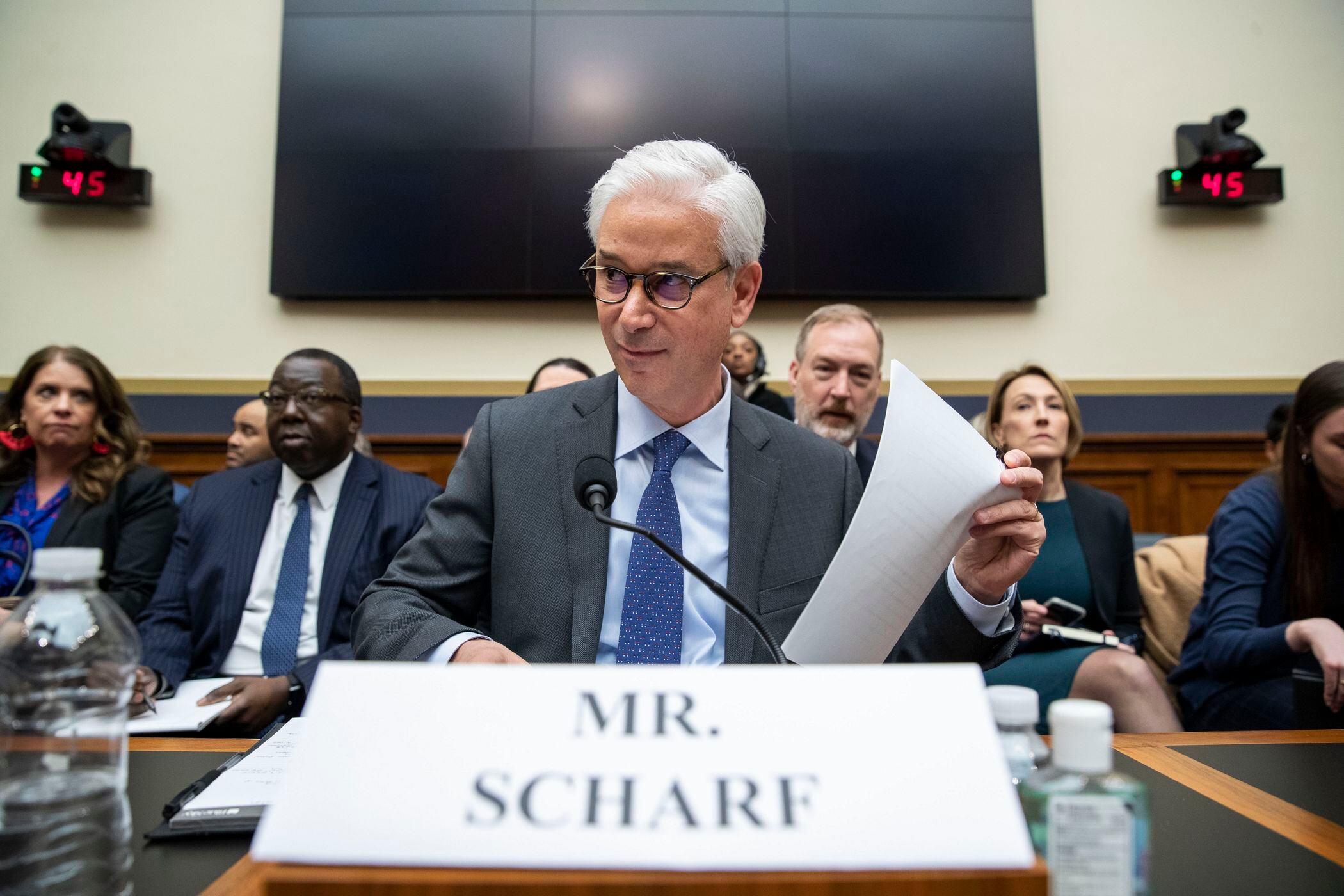
In this March 10, 2020 file photo, Wells Fargo CEO and President Charles Scharf is seated before he testifies during a hearing of the House Financial Services Committee, on Capitol Hill, in Washington. Scharf apologized Wednesday, Sept. 23 for comments he made that dismissed concerns that the banking industry, which has a long history of racist behavior, wasn’t doing enough to promote and retain diverse talent. (AP Photo/Alex Brandon, File)
By Ken Sweet
Wells Fargo CEO Charles Scharf apologized Wednesday for comments he made about the difficulty of finding qualified Black executives.
Scharf said that "there is a very limited pool of black talent to recruit from" in corporate America. The memo to employees was written in June but became public this week.
The comments and similar statements made in a Zoom meeting, reported by Reuters, led to an intense backlash in Washington and on social media.
"Perhaps it is the CEO of Wells Fargo who lacks the talent to recruit Black workers," said Rep. Alexandra Ocasio-Cortez of New York, on Twitter.
Scharf on Wednesday said in a prepared statement that his comments reflected "my own unconscious bias."
"There is no question Wells Fargo has to make meaningful progress to increase diverse representation," he wrote. Wells has pledged to increase the hiring of minority candidates, particularly through Black colleges and universities, as well as new anti-racism training programs at the bank.
American banking is dominated by leadership that is largely white and male. None of the six big Wall Street banks have ever had a Black or female CEO. Citigroup a few weeks ago announced it would promote a woman to CEO next year, the first on Wall Street to do so.
The last prominent African American to serve as CEO at a large financial services company was Kenneth Chenault, the former CEO of American Express. He retired in 2018. In an interview with The Associated Press at the time, Chenault called the lack of a pipeline to recruit and retain diverse talent "embarrassing" to the financial services industry.
Stanley O'Neal, the former CEO Merrill Lynch while it was still an independent company, is also Black. He resigned in 2007 during the firm's collapse.
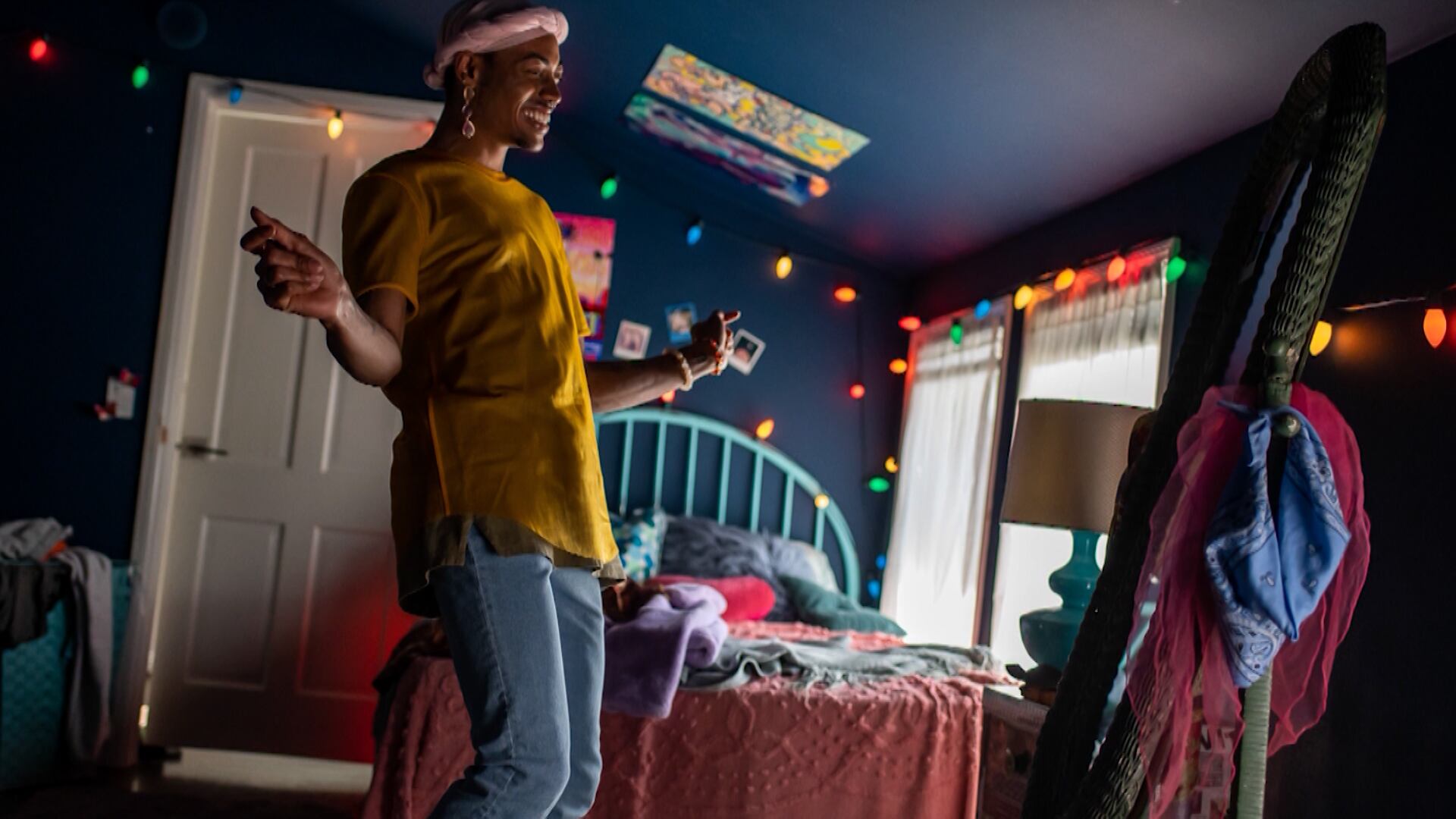
According to a survey, 45% of LGBTQ youth seriously considered attempting suicide in the past year. Amit Paley, CEO and Executive Director of The Trevor Project, joins Cheddar Pride to address LGBTQ youth mental health.
Reepher is a Salt Lake City-based company that offers a prepaid legal defense plan for cannabis DUIs. CEO and co-founder Justin Kahn joined Cheddar News to break down the business model, explaining how lawful users may be in trouble when being pulled over by police. "The reason is because cannabis users have THC and cannabis cannabinoids in their system regardless of the last time that they consumed," he said. "Any regular cannabis user is at risk, or they're one mistake away from having an interaction with a police officer that could lead them to be suspected of being under the influence of cannabis."
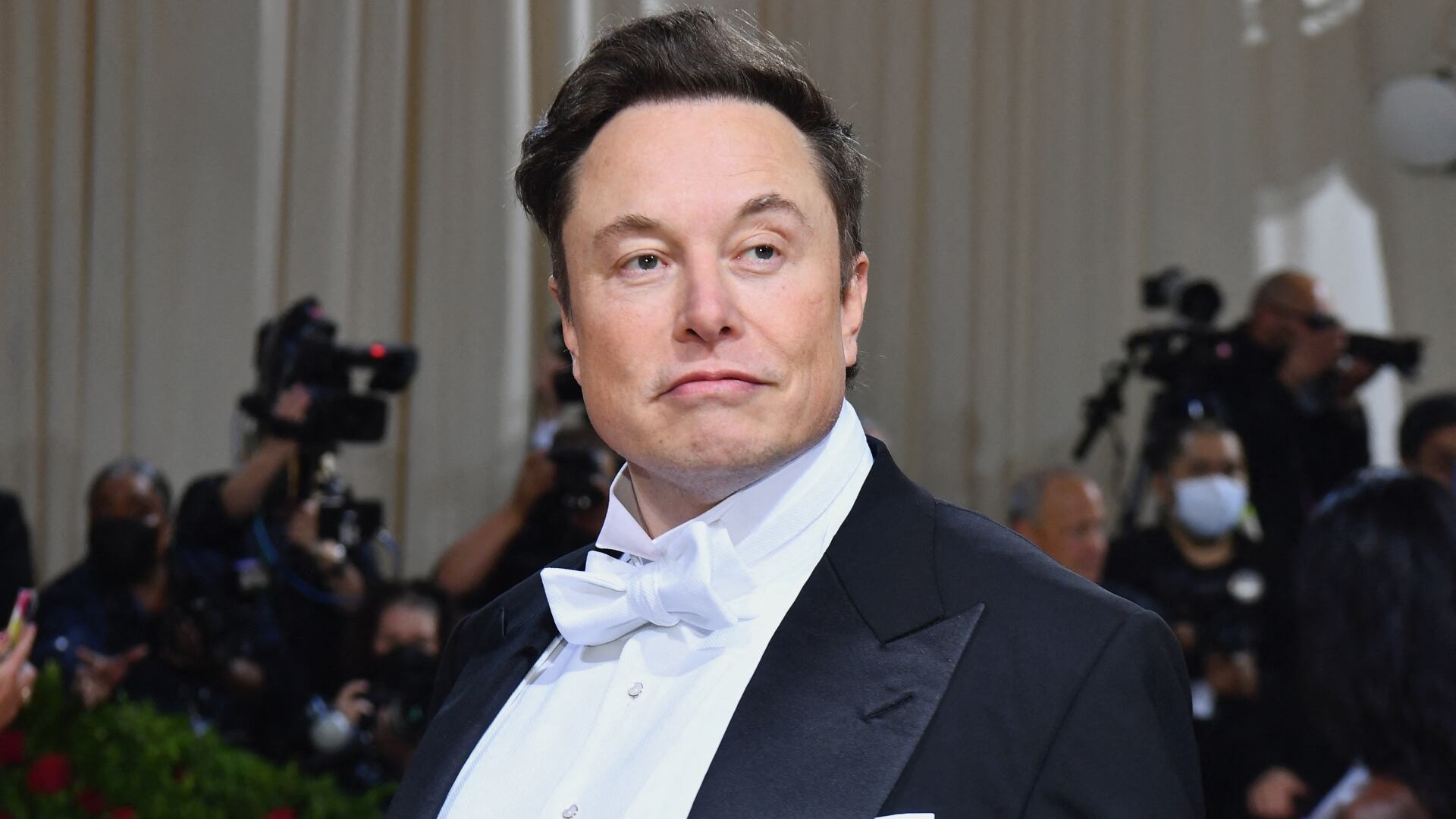
Elon Musk is demanding his Tesla employees to return to the office full time, a minimum of at least 40 hours a week. The CEO also took a shot at other companies who have some form of work-from-home status. The ultimatum comes at a tumultuous time for Musk with the reveal of a sexual misconduct scandal and his attempted Twitter purchase.
Bindu Sundaresan, Director, AT&T Cybersecurity, joins Cheddar to discuss best practices and important cybersecurity milestones to hit for any organization, and how small business owners can think about cyber beyond technology and compliance.
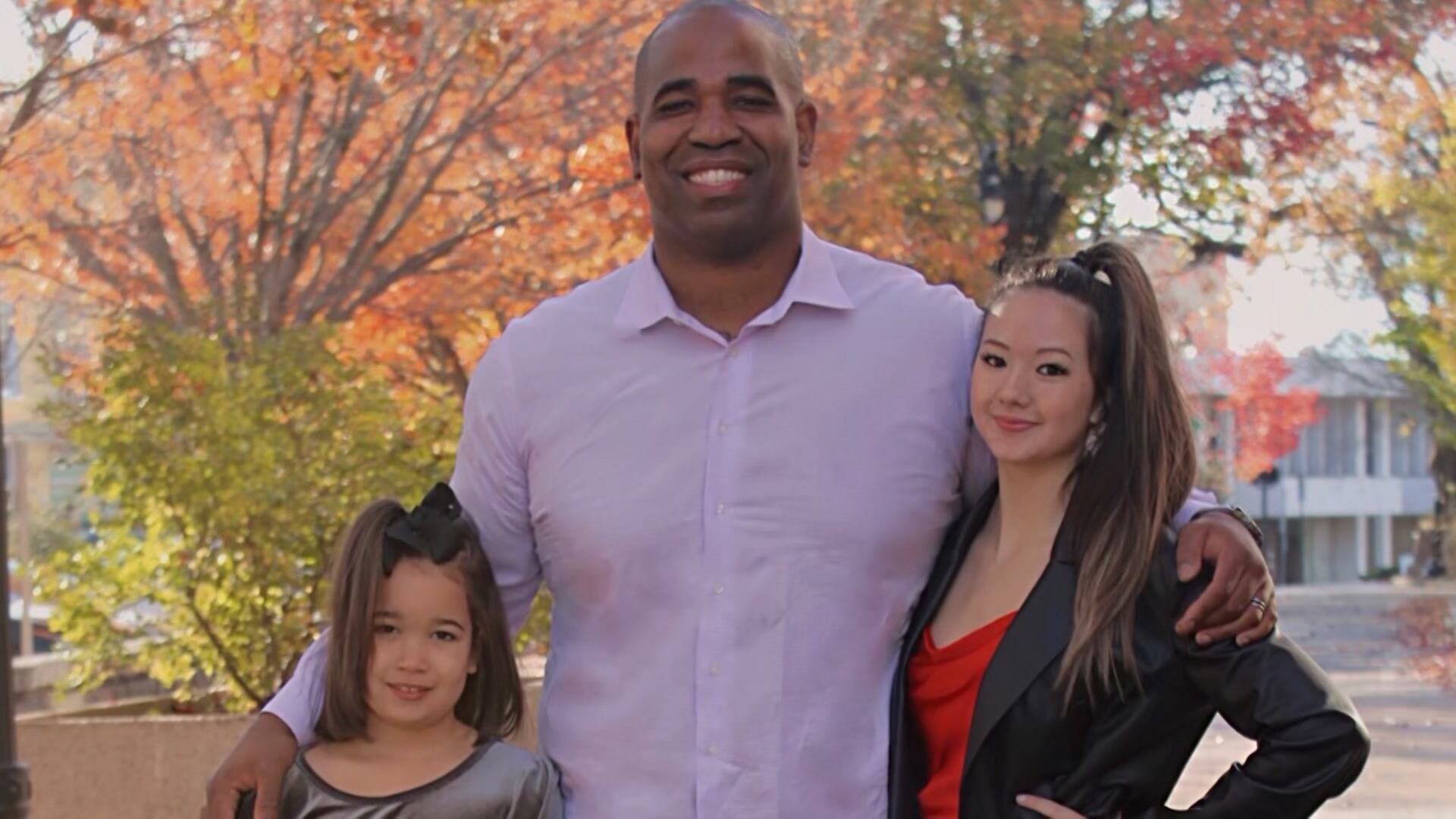
Marques Ogden, former NFL offensive lineman turned author and celebrity success coach, joins Cheddar to discuss his career transition after his NFL playing days and how he overcame a low point to prioritize family and re-shape his life as a success coach.
Mark Bowen, General Manager at Midnight Sun in San Francisco, joins Cheddar to discuss how the pandemic affected LGBTQ+ nightlife and the return to work for service industry workers.
On this episode of On the Job, Mark Bowen, General Manager at Midnight Sun in San Francisco, discusses how the pandemic affected LGBTQ+ nightlife and the return to work for service industry workers; Drew Lewis, VP Diversity, Equity, and Inclusion & Talent, ADP, breaks down how DE&I practices can drive greater business value and how organizations can effectively create an action plan for supporting DE&I in the workplace.
Drew Lewis, VP Diversity, Equity, and Inclusion & Talent, ADP, joins Cheddar to break down how DE&I practices can drive greater business value and how organizations can effectively create an action plan for supporting DE&I in the workplace.