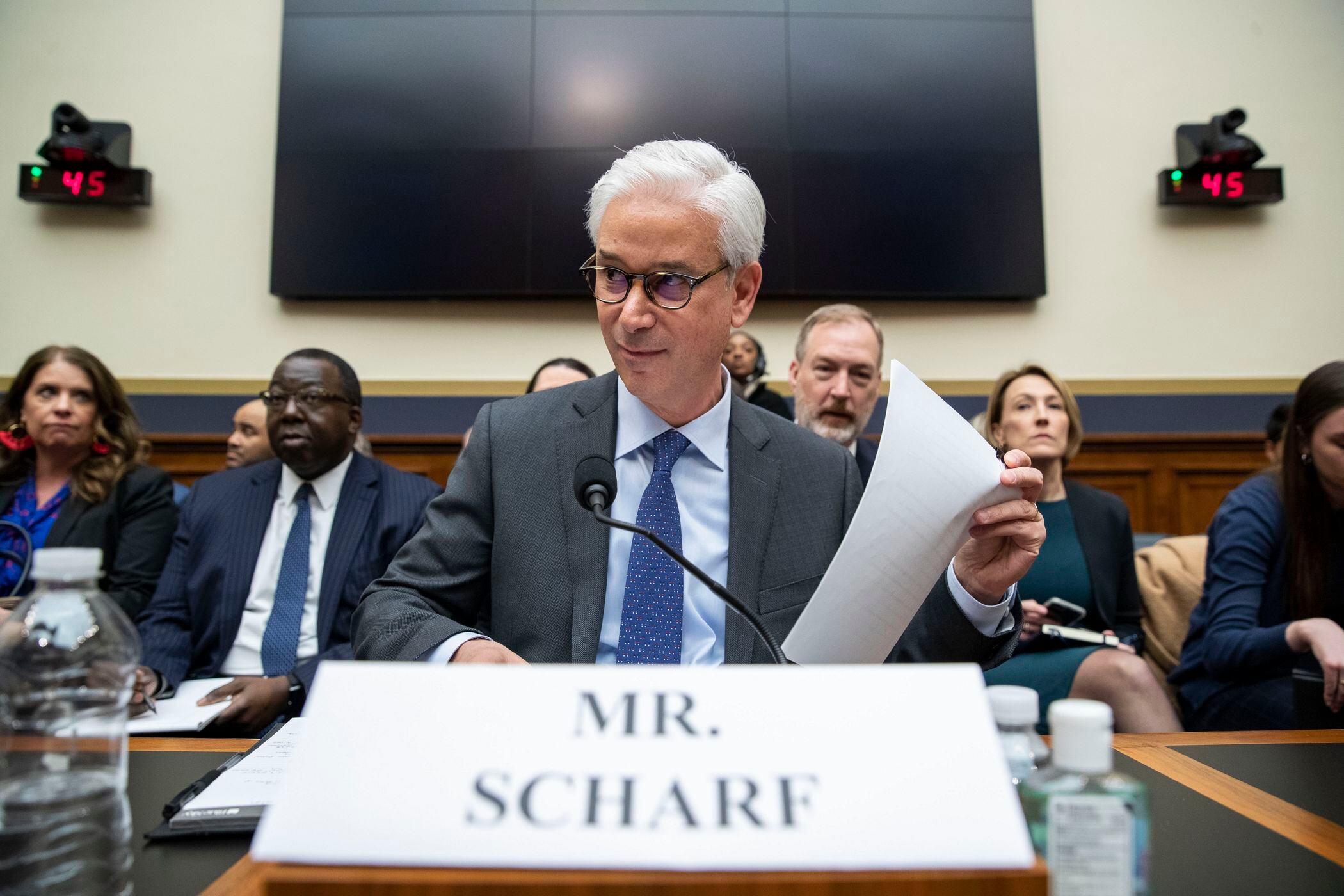
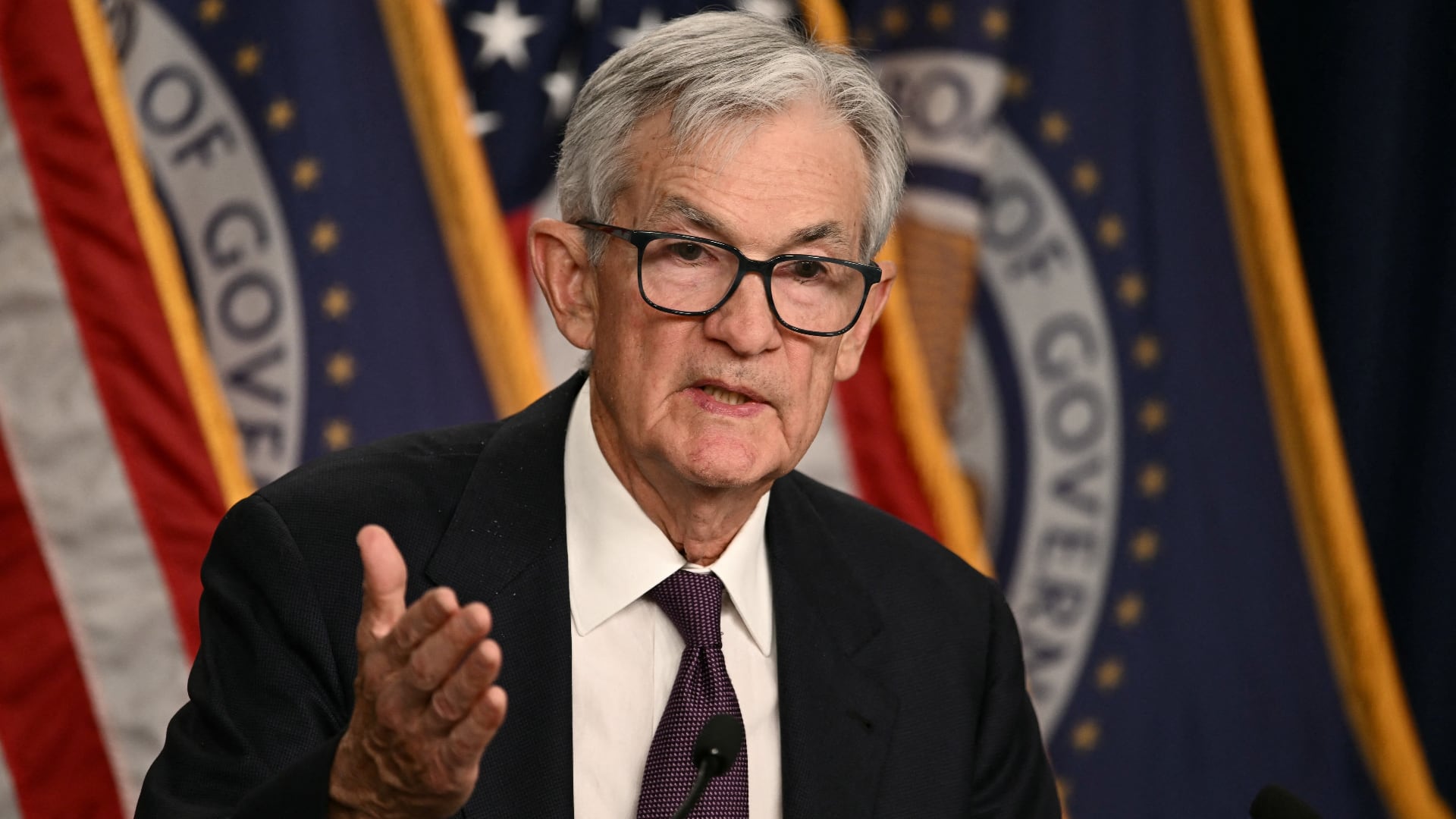
In this March 10, 2020 file photo, Wells Fargo CEO and President Charles Scharf is seated before he testifies during a hearing of the House Financial Services Committee, on Capitol Hill, in Washington. Scharf apologized Wednesday, Sept. 23 for comments he made that dismissed concerns that the banking industry, which has a long history of racist behavior, wasn’t doing enough to promote and retain diverse talent. (AP Photo/Alex Brandon, File)
By Ken Sweet
Wells Fargo CEO Charles Scharf apologized Wednesday for comments he made about the difficulty of finding qualified Black executives.
Scharf said that "there is a very limited pool of black talent to recruit from" in corporate America. The memo to employees was written in June but became public this week.
The comments and similar statements made in a Zoom meeting, reported by Reuters, led to an intense backlash in Washington and on social media.
"Perhaps it is the CEO of Wells Fargo who lacks the talent to recruit Black workers," said Rep. Alexandra Ocasio-Cortez of New York, on Twitter.
Scharf on Wednesday said in a prepared statement that his comments reflected "my own unconscious bias."
"There is no question Wells Fargo has to make meaningful progress to increase diverse representation," he wrote. Wells has pledged to increase the hiring of minority candidates, particularly through Black colleges and universities, as well as new anti-racism training programs at the bank.
American banking is dominated by leadership that is largely white and male. None of the six big Wall Street banks have ever had a Black or female CEO. Citigroup a few weeks ago announced it would promote a woman to CEO next year, the first on Wall Street to do so.
The last prominent African American to serve as CEO at a large financial services company was Kenneth Chenault, the former CEO of American Express. He retired in 2018. In an interview with The Associated Press at the time, Chenault called the lack of a pipeline to recruit and retain diverse talent "embarrassing" to the financial services industry.
Stanley O'Neal, the former CEO Merrill Lynch while it was still an independent company, is also Black. He resigned in 2007 during the firm's collapse.
Officials and power operators are bracing the public for blackouts caused by higher-than-average temperatures this summer. Utility officials in California and Arizona are warning of potential interruptions this summer due to the strain on energy supplies. Heat waves and drought conditions weaken power grids and available electricity reserves. This also makes hydroelectric power less reliable and raises the risk of wildfires.
Cisco DeVries, CEO of OhmConnect, joins Cheddar News to discuss.
The markets opened lower on Thursday as investors hold their breath ahead of the May consumer price index, which will give investors a better picture of the state of inflation in the United States. Michele Schneider, a partner and the director of trading research and education for MarketGauge.com, joined Cheddar to discuss. "If the CPI read is softer than what's expected, we actually might get a rally," she said. "If it's more than expected, then I think it will spook the market."
With real estate being a largely male-dominated industry, Stephanie Shojaee, vice president and chief marketing officer at development company Shoma Group, joined Cheddar News to discuss how she took on the gender gap for women to achieve leadership roles, starting at her own company. “It's been very important to teach all the women that work here, especially the younger ones, that they shouldn't change themselves," she said. "You need to be happy with who you are and just keep breaking barriers."
We are already starting to feel the effects of summer. Heat waves in Texas and California are already sending temperatures soaring. That could spell trouble for the nation's power supply. there are new concerns about outages in many areas of the country. Cheddar's Shannon Lanier explains the two main causes of blackouts, and what states are doing to keep the lights on and the air conditioning running.
Pinterest is making a big move as it pushes further into online shopping. The image-focused social media site is acquiring A.I.-powered shopping platform THE YES as it focuses on enhancing the user shopping experience. THE YES's technology gives users a personalized feed of products based on their preferences, and Pinterest is banking on the tech to give it an advantage among other social media apps with built-in shopping features. Julie Bornstein, founder and CEO of THE YES, joins Closing Bell to discuss the company's unique technology, why it agreed to sell to Pinterest, her vision as she takes over shopping initiatives, and more.
Keith Barr, CEO of InterContinental Hotel Group, says he is expecting an 'incredible' summer for his business as pandemic conditions have normalized and people are ready to travel.