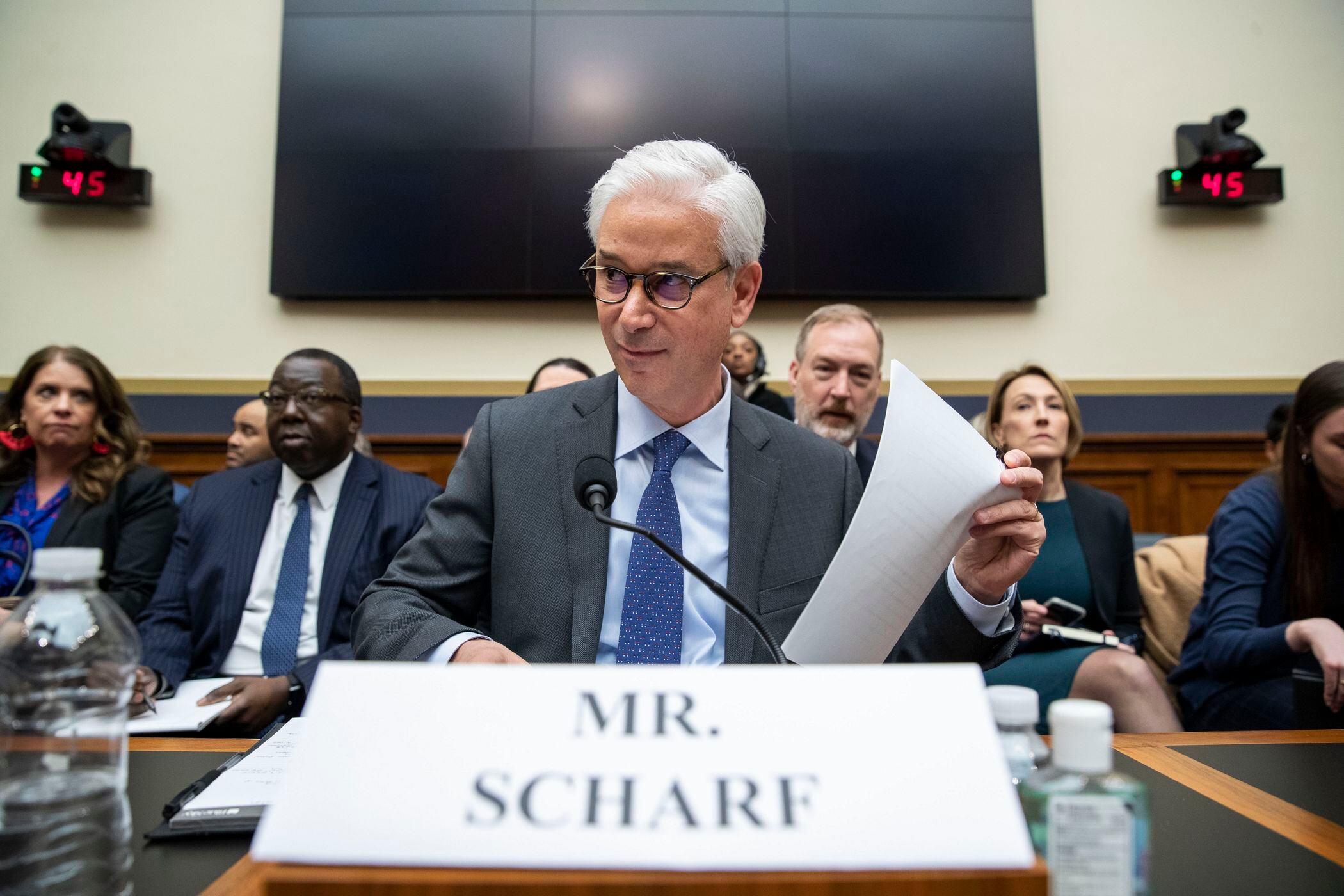
In this March 10, 2020 file photo, Wells Fargo CEO and President Charles Scharf is seated before he testifies during a hearing of the House Financial Services Committee, on Capitol Hill, in Washington. Scharf apologized Wednesday, Sept. 23 for comments he made that dismissed concerns that the banking industry, which has a long history of racist behavior, wasn’t doing enough to promote and retain diverse talent. (AP Photo/Alex Brandon, File)
By Ken Sweet
Wells Fargo CEO Charles Scharf apologized Wednesday for comments he made about the difficulty of finding qualified Black executives.
Scharf said that "there is a very limited pool of black talent to recruit from" in corporate America. The memo to employees was written in June but became public this week.
The comments and similar statements made in a Zoom meeting, reported by Reuters, led to an intense backlash in Washington and on social media.
"Perhaps it is the CEO of Wells Fargo who lacks the talent to recruit Black workers," said Rep. Alexandra Ocasio-Cortez of New York, on Twitter.
Scharf on Wednesday said in a prepared statement that his comments reflected "my own unconscious bias."
"There is no question Wells Fargo has to make meaningful progress to increase diverse representation," he wrote. Wells has pledged to increase the hiring of minority candidates, particularly through Black colleges and universities, as well as new anti-racism training programs at the bank.
American banking is dominated by leadership that is largely white and male. None of the six big Wall Street banks have ever had a Black or female CEO. Citigroup a few weeks ago announced it would promote a woman to CEO next year, the first on Wall Street to do so.
The last prominent African American to serve as CEO at a large financial services company was Kenneth Chenault, the former CEO of American Express. He retired in 2018. In an interview with The Associated Press at the time, Chenault called the lack of a pipeline to recruit and retain diverse talent "embarrassing" to the financial services industry.
Stanley O'Neal, the former CEO Merrill Lynch while it was still an independent company, is also Black. He resigned in 2007 during the firm's collapse.
Professional networking platform LinkedIn says it's laying off more than 700 workers and shuttering its China jobs app, in the latest round of tech industry downsizing.
Tyson Foods suffered a surprise loss in the second quarter, something not since 2009, and cut its sales forecast due to the cost of plant closures and layoffs.
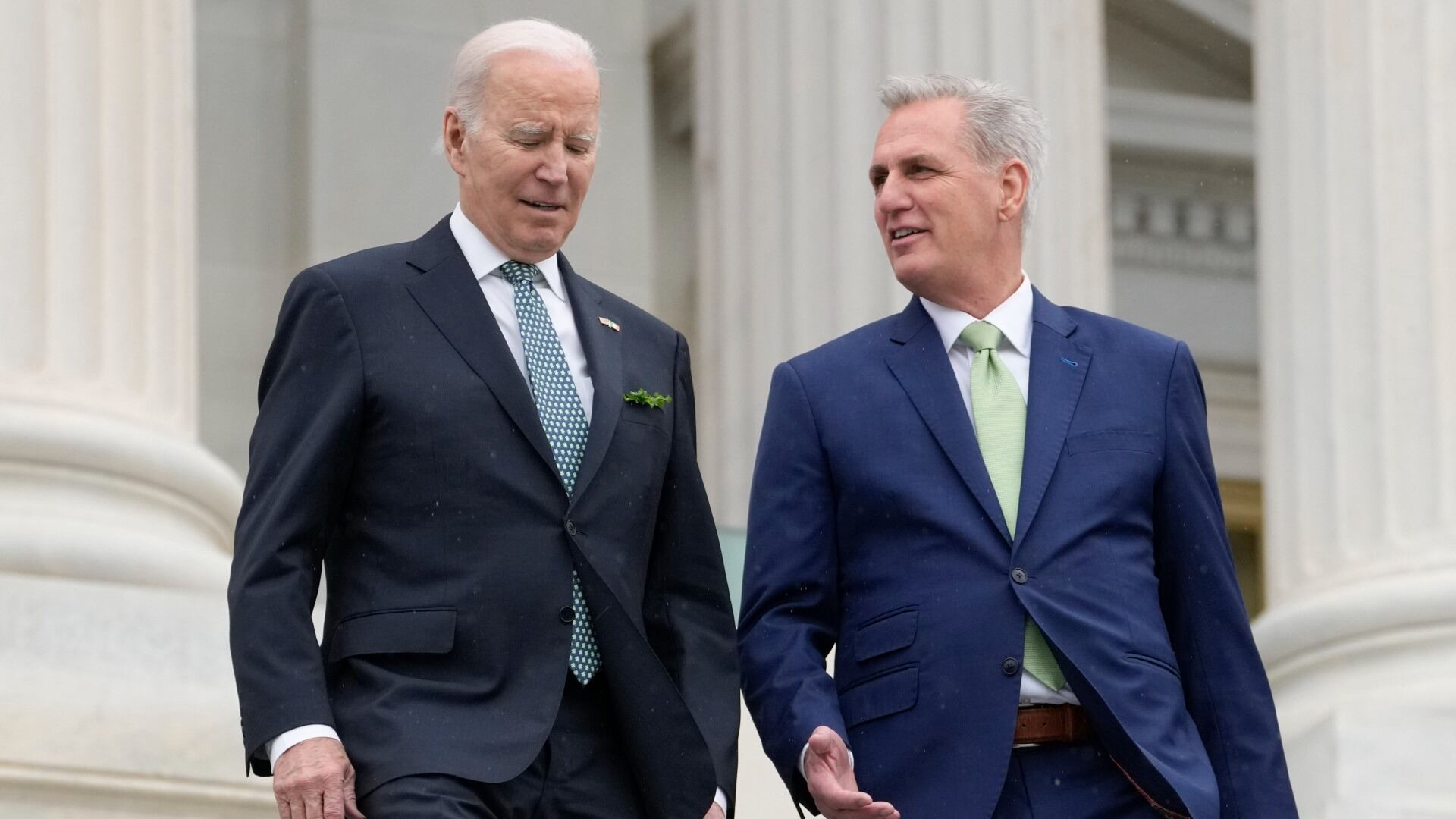
Cheddar News checks in on what to look for on The Day Ahead as President Joe Biden meets with House Speaker Kevin McCarthy to look to resolve the debt ceiling debate. Earnings are also slated to be reported from companies including Airbnb, AMC Networks, Electronic Arts and Nintendo.
A study on the U.S. banking system found nearly 190 banks are at risk of failure. Preston D. Cherry, founder and president of Concurrent Financial Planning, joined Cheddar News to explain the process if you have a mortgage with a bank that collapses.
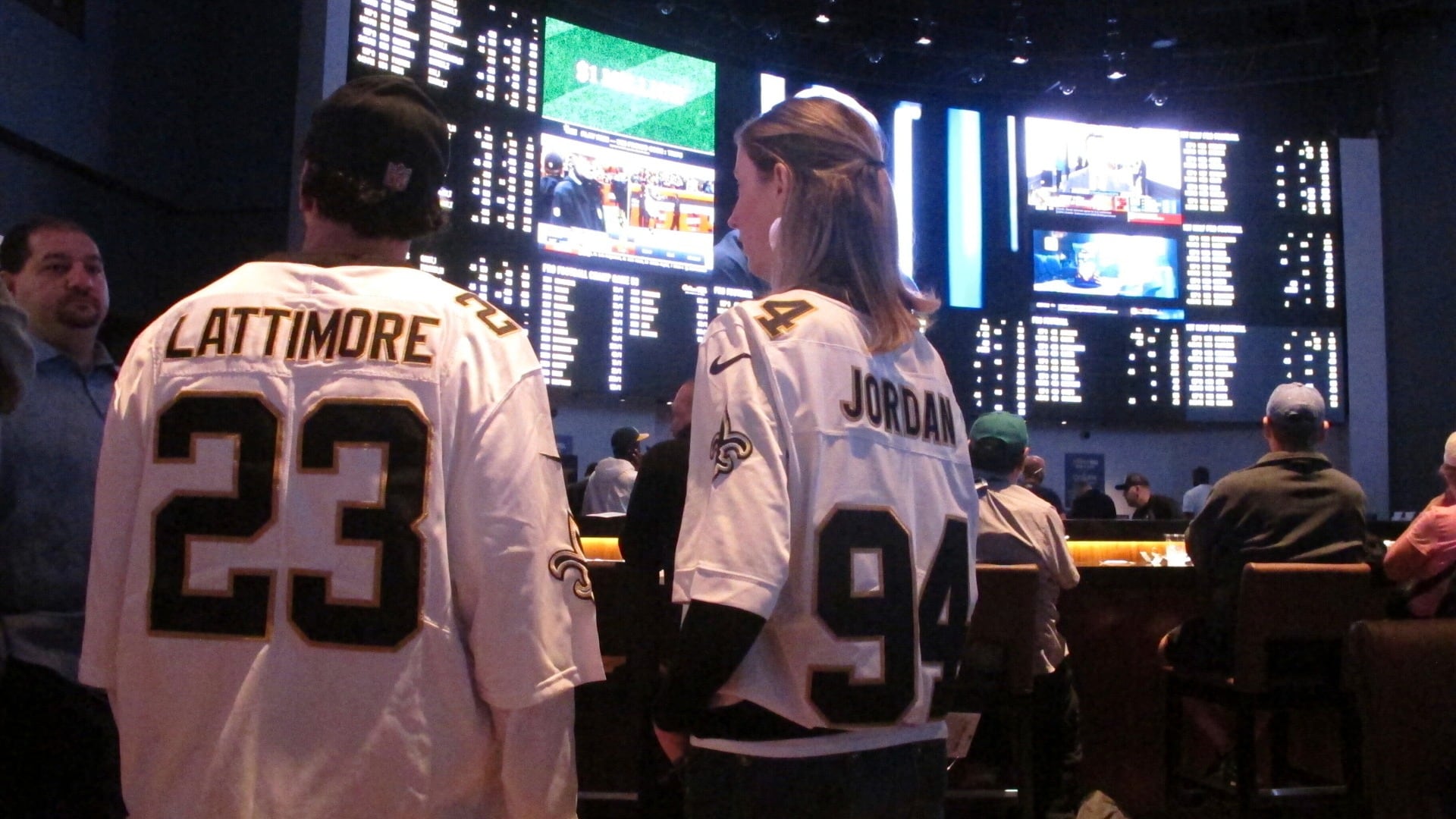
Americans have bet over $220 billion on sports with legal gambling outlets in the five years since the U.S. Supreme Court cleared the way for all 50 states to offer it.
Melissa Brown, managing director of applied research with Qontigo, joined Cheddar News to discuss a new start to the trading week as the market edged lower in a mixed-performance day. Investors also await the meeting between President Joe Biden and House Speaker Kevin McCarthy to look to resolve its debt ceiling debate.
Bobbi Rebell, chief financial officer of Financial Wellness Strategies and author of Launching Financial Grownups: Live Your Richest Life by Helping Your (Almost) Adult Kids Become Everyday Money Smart, gives the top four reasons people struggle financially.