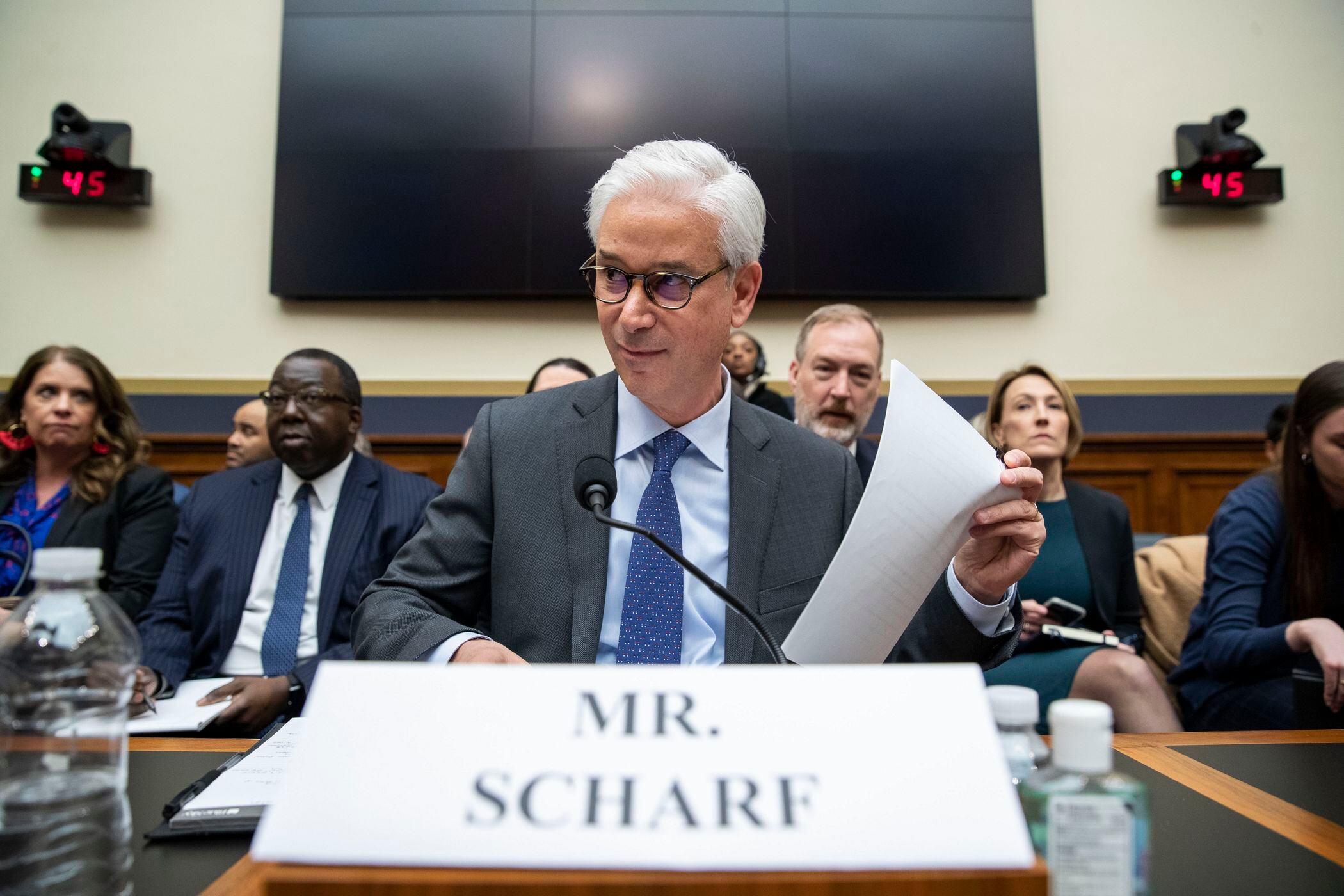
In this March 10, 2020 file photo, Wells Fargo CEO and President Charles Scharf is seated before he testifies during a hearing of the House Financial Services Committee, on Capitol Hill, in Washington. Scharf apologized Wednesday, Sept. 23 for comments he made that dismissed concerns that the banking industry, which has a long history of racist behavior, wasn’t doing enough to promote and retain diverse talent. (AP Photo/Alex Brandon, File)
By Ken Sweet
Wells Fargo CEO Charles Scharf apologized Wednesday for comments he made about the difficulty of finding qualified Black executives.
Scharf said that "there is a very limited pool of black talent to recruit from" in corporate America. The memo to employees was written in June but became public this week.
The comments and similar statements made in a Zoom meeting, reported by Reuters, led to an intense backlash in Washington and on social media.
"Perhaps it is the CEO of Wells Fargo who lacks the talent to recruit Black workers," said Rep. Alexandra Ocasio-Cortez of New York, on Twitter.
Scharf on Wednesday said in a prepared statement that his comments reflected "my own unconscious bias."
"There is no question Wells Fargo has to make meaningful progress to increase diverse representation," he wrote. Wells has pledged to increase the hiring of minority candidates, particularly through Black colleges and universities, as well as new anti-racism training programs at the bank.
American banking is dominated by leadership that is largely white and male. None of the six big Wall Street banks have ever had a Black or female CEO. Citigroup a few weeks ago announced it would promote a woman to CEO next year, the first on Wall Street to do so.
The last prominent African American to serve as CEO at a large financial services company was Kenneth Chenault, the former CEO of American Express. He retired in 2018. In an interview with The Associated Press at the time, Chenault called the lack of a pipeline to recruit and retain diverse talent "embarrassing" to the financial services industry.
Stanley O'Neal, the former CEO Merrill Lynch while it was still an independent company, is also Black. He resigned in 2007 during the firm's collapse.
In what could be the biggest deal in video games history, Microsoft's purchase of Activision Blizzard underlines the company's aggressive push in gaming and beyond into its long-term vision of being top dog in the metaverse. Adam Hollander, former director of gamification at Microsoft and founder of Hungry Wolves NFT, joined Cheddar's Opening Bell to discuss. “Microsoft always plays chess, not checkers," he said, describing the price tag as an opportunity cost. "It's about integrating Activision Blizzard in with Azure and Windows and Xbox and Hololens and Minecraft and everything else that they're doing for the inevitable goal of being the major player in the next phase of the internet."
Jason Moser, a senior analyst at the Motley Fool, breaks down Unilever's expansion into healthcare and outlines the challenges the company faces gaining market share in this field.
Rhys Williams, Chief Strategist at Spouting Rock Asset Management, breaks down what to expect ahead of big banks Q4 earnings and highlights areas of the tech sector with potential growth.
Anu Gaggar, Global Investment Strategist for Commonwealth Financial Network, breaks down the headwinds facing Banks and spotlights industries with potential growth.
Mark DeCambre, Markets Editor at MarketWatch, discusses the factors impacting bank profitability and highlights industries within tech that are showing signs of growth.
Telecom giants AT&T and Verizon have agreed to delay activating their 5G services around airports and runways once again. This comes after major U.S. airlines voiced their concern over the rollout of 5G technology, warning of an impending "catastrophic" aviation crisis. Peter Andersen, Chief Investment Officer, Anderson Capital Management joined Cheddar's Opening Bell to discuss.
Earnings season kicks into high gear this week as big players are on tap to report their Q4 numbers. Goldman Sachs, Procter & Gamble, United Airlines, and Netflix are just a few of the companies we're keeping a close eye on to give us a better idea of how they're dealing with the Omicron variant, inflation and interest rates. David Nelson, chief strategist at Belpointe, gives a preview of what to expect.
Concerns over inflation have become one of the biggest worries for executives. A survey from The Conference Board shows that more than 900 CEOs consider inflation a top tier concern, a major shift from last year's survey that had it as a low-level concern. Rebecca Ray, Executive Vice President, Human Capital, The Conference Board joined Cheddar's Opening Bell for more.
David Maza, Managing Director and Head of Product at Direxion, joins Cheddar News to discuss the evolution of mRNA technologies, future applications of this tech including fighting Lyme disease and HIV, and what this all means for investors.
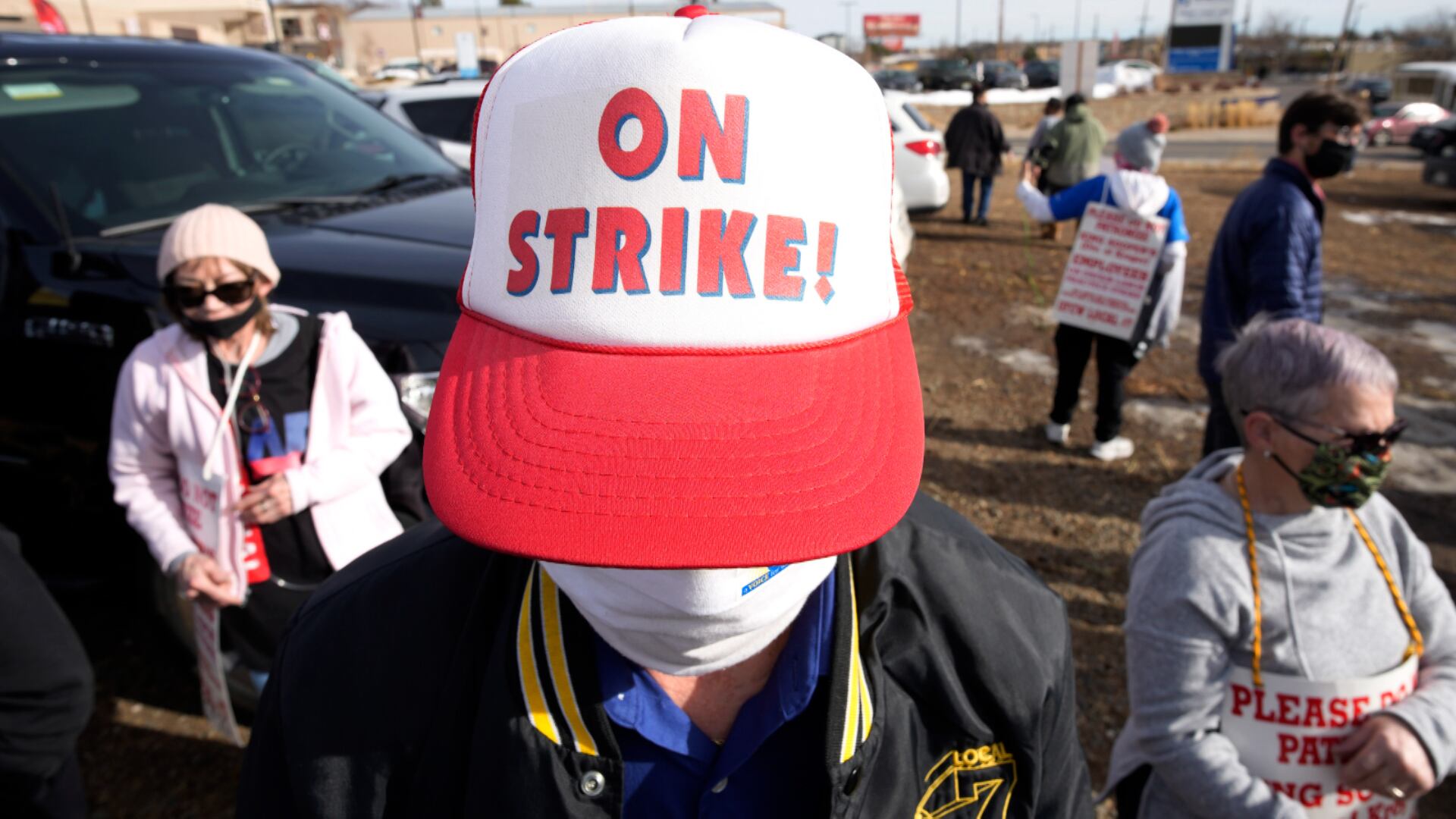
Jordan Zakarin, Media Producer at A More Perfect Union, joined Cheddar News to break down the latest from Colorado, where at least 8,700 Kroger employees walked off the job in demand of increased benefits and wages.