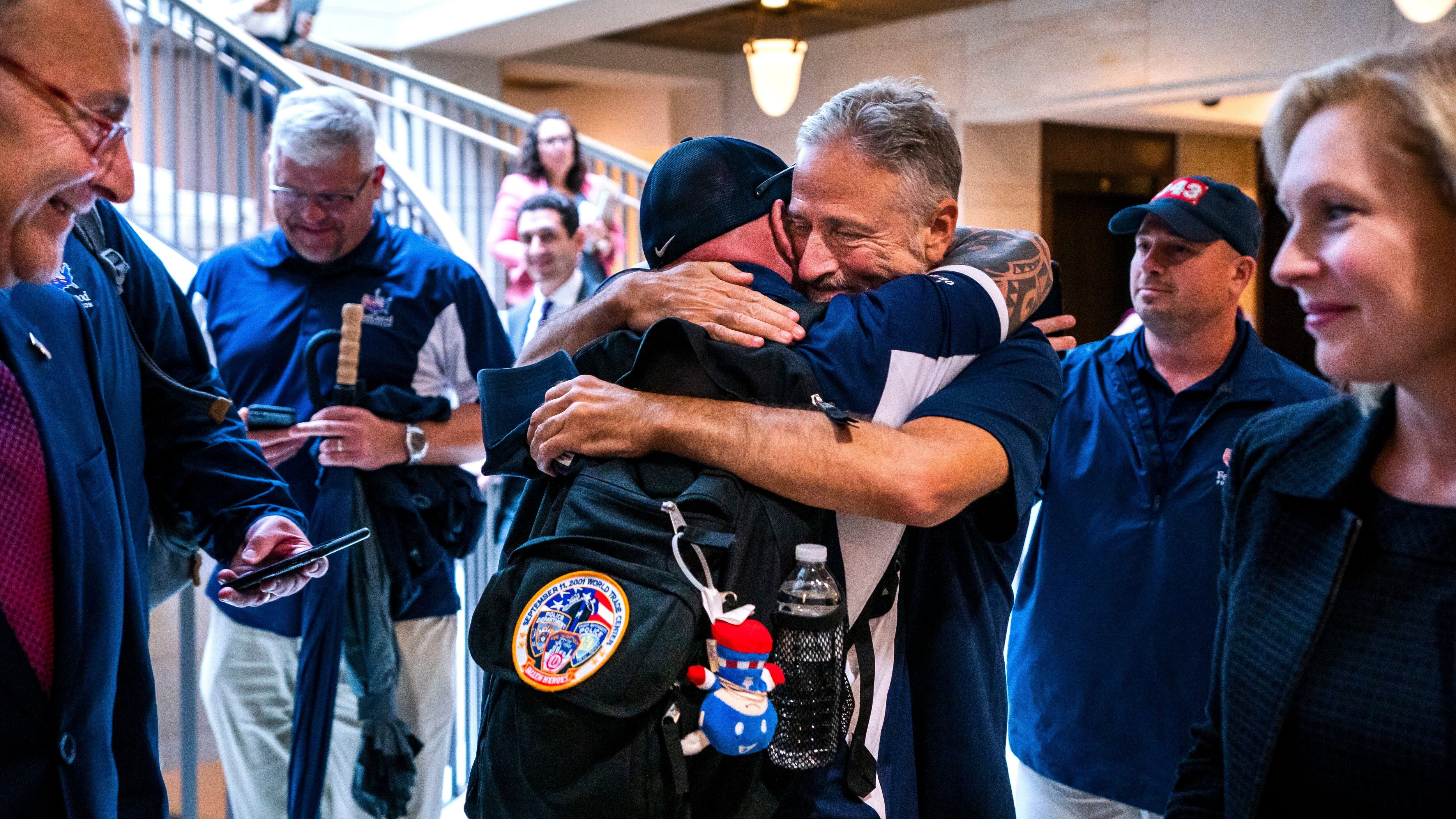
Tuesday’s 97-2 vote in the Senate to extend permanent protections for 9/11 first responders came after many years of visits to Capitol Hill — more than 280 for John Feal alone, a former demolition specialist and responder from Long Island whose advocacy has helped bring a national conversation to the issue.
And minutes after the lopsided vote, Feal made sure to alert lawmakers that his days of tirelessly knocking down their doors are thankfully coming to a close.
“We’ll put down our swords,” he said on Capitol Hill, acknowledging the good-faith efforts that Senate Majority Leader Mitch McConnell exhibited in recent months to get the bill a clean vote.
After all, during a recent trip to Washington, Feal came bearing a special memento for McConnell: the NYPD badge of Detective Luis Alvarez who died on June 29, a gesture that Jon Stewart recently told Cheddar he had hoped would secure passage of the measure.
McConnell’s commitment to Feal was widely noticed.
Jake Lemonda, the president of the Uniformed Fire Officers Association, told Cheddar, “When someone gives you their word, that’s their bond. I have so much respect. He stuck to his word. And I thank him.”
Republican Rep. Pete King added, “You have to give [McConnell] credit.” King was joined by his GOP colleague in the Senate Cory Gardner to gather support for the compensation fund from skeptical conservatives, although two Republicans — Senator Rand Paul of Kentucky and Senator Mike Lee of Utah — were on full blast Tuesday with their no votes.
“Trying to block this was inexcusable,” Rep. King told Cheddar about Paul and Lee.
There is a line that some New York Democrats like Rep. Carolyn Maloney and House Judiciary Chairman Jerry Nadler say about the immediate post-9/11 reality: that New Yorkers were told, as Maloney puts it, a “toxic lie” — that the air at Ground Zero was safe to breathe. (Former EPA Administrator Christine Todd Whitman apologized in 2016 for her role in government-led misinformation in the fall of 2001.)
“Government told them to go back,” Maloney told Cheddar Tuesday on Capitol Hill. History] will show it was a "horrible, horrible judgment and horrible decision.”
But Tuesday was not the day for the sharpest of barbs, nor the most accusatory of finger-pointing. It was, instead, a day of muted celebration: a victory of a hard-fought battle that has come — and continues to come — with devastating consequences (members of Congress have indicated that 18 people have died in the past month alone from 9/11-related illnesses). And while the bill got its final push over the goal line from McConnell, a simple credo has united the advocacy efforts for so many others along the way. As Maloney told Cheddar Tuesday, “We promised we would never forget.”
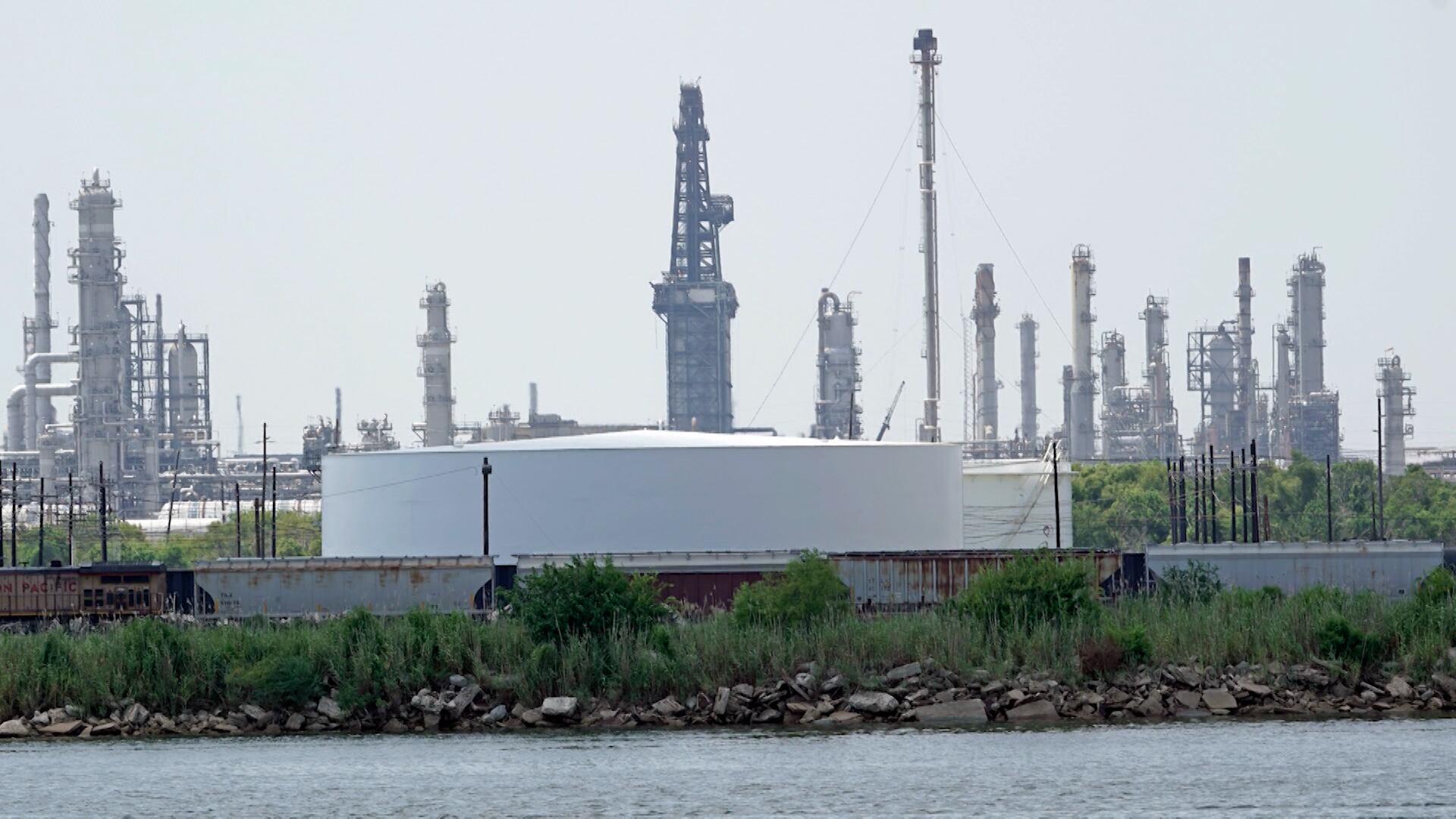
President Biden announced a ban on Russian oil and natural gas imports to the U.S. in response to its invasion of Ukraine, a move he warned could lead to an even greater surge in gas prices. The ban is prompting a conversation about the current oil production levels in the U.S. and whether or not the industry can ramp up production to soften the blow to American families at the gas pump. Clark Williams-Derry, Energy Finance Analyst with the Institute for Energy Economics and Financial Analysis, breaks down the state of the U.S. oil industry and how the ban might impact production levels here at home.
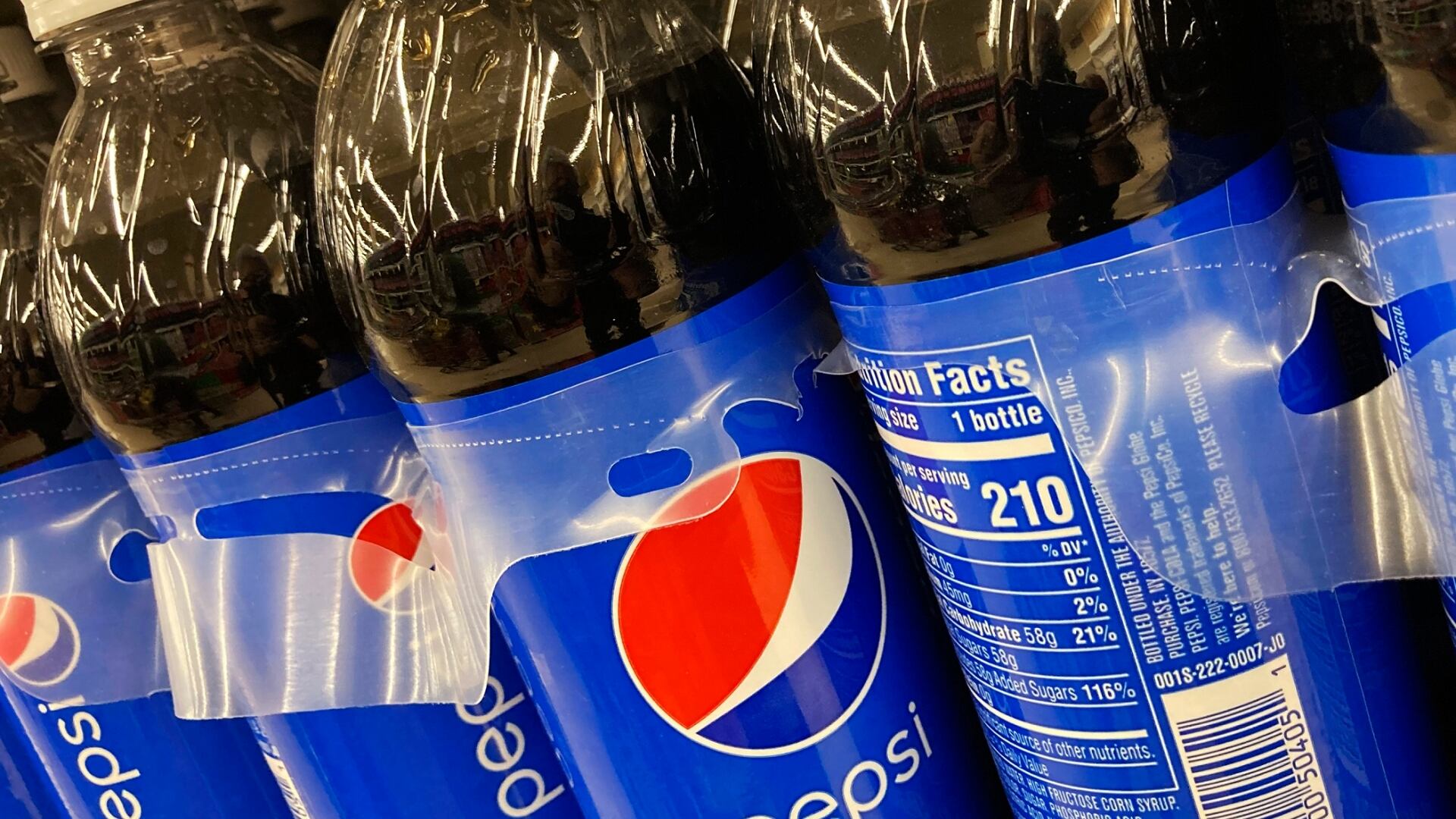
PepsiCo, Coca-Cola, McDonald’s, and Starbucks are the latest American food brands to have halted business operations in Russia after having faced scrutiny and criticism for originally failing to do so amid the country's invasion of Ukraine.
As Russia intensifies its war on Ukraine, President Biden announced a ban on oil imported from the aggressor nation. Critics of Russia have said this would be the best way to force Putin to pull back, but curbs on Russian oil exports are expected to send already skyrocketing oil and gas prices even higher, further impacting consumers, businesses, financial markets, and the global economy. Leslie Beyer, CEO of the Energy Workforce and Technology Council, joined Cheddar News' Closing Bell to discuss. "It's certainly going to increase pricing, but it is the right thing to do," she said. "The industry itself has already pulled out of the significant portion of its operations in Russia."
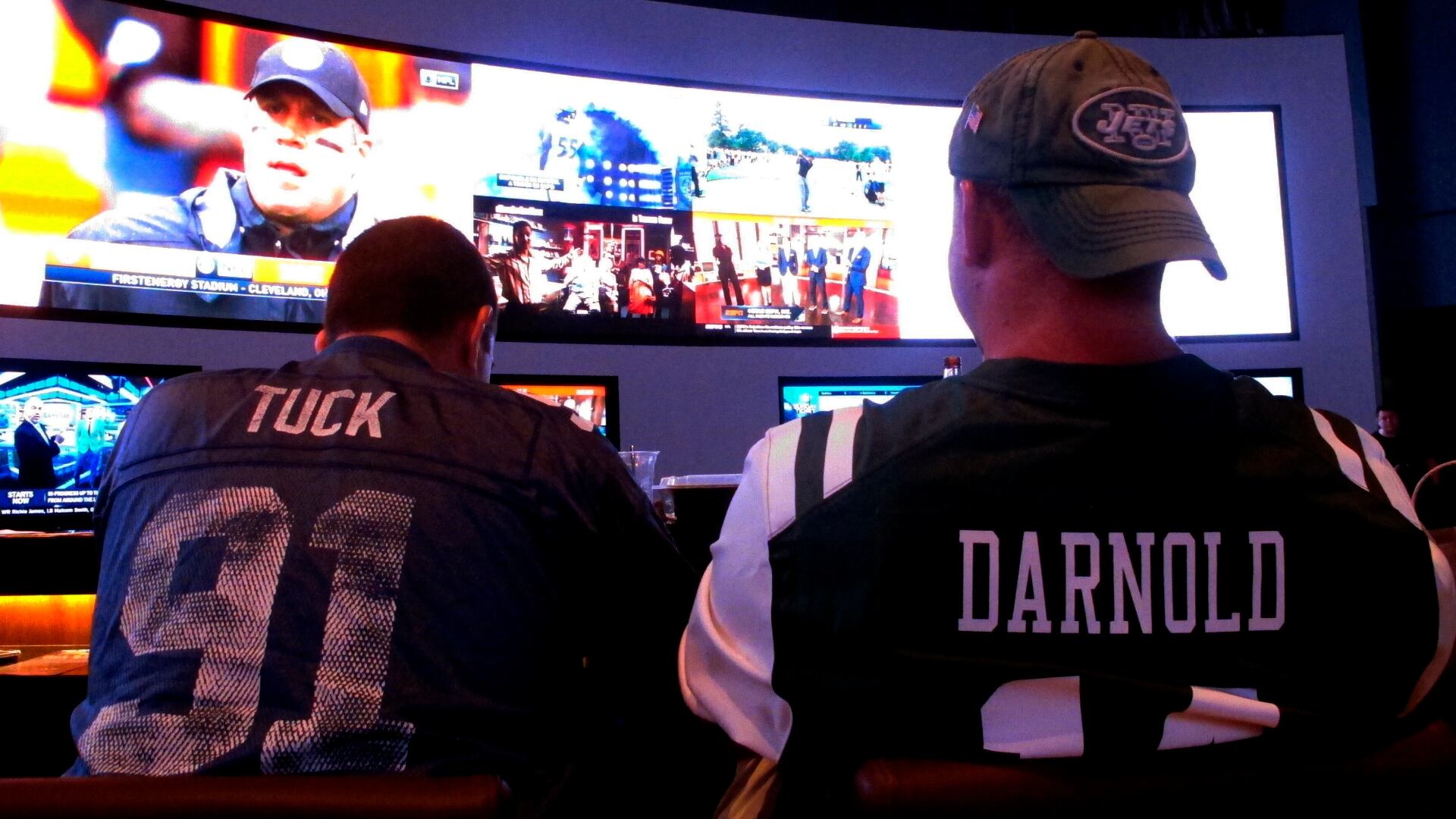
Sports Betting in the U.S. is booming. According to industry experts, we could see another boom this year as more states move towards statewide legalization of sports wagering. While this comes as huge news for fans, there are some very real concerns as to whether or not sports betting potentially poses a threat to public health. Senior Clinician at the Caron Treatment Centers, Eric Webber, joined Cheddar to discuss more.
The Biden administration has made gender policy a core part of how it governs. The president established the first Gender Policy Council. It's on the same level as the National Security Council, Domestic Policy Council and National Economic Council, putting the interests of women and other underserved groups at the table for the most important policy discussions.
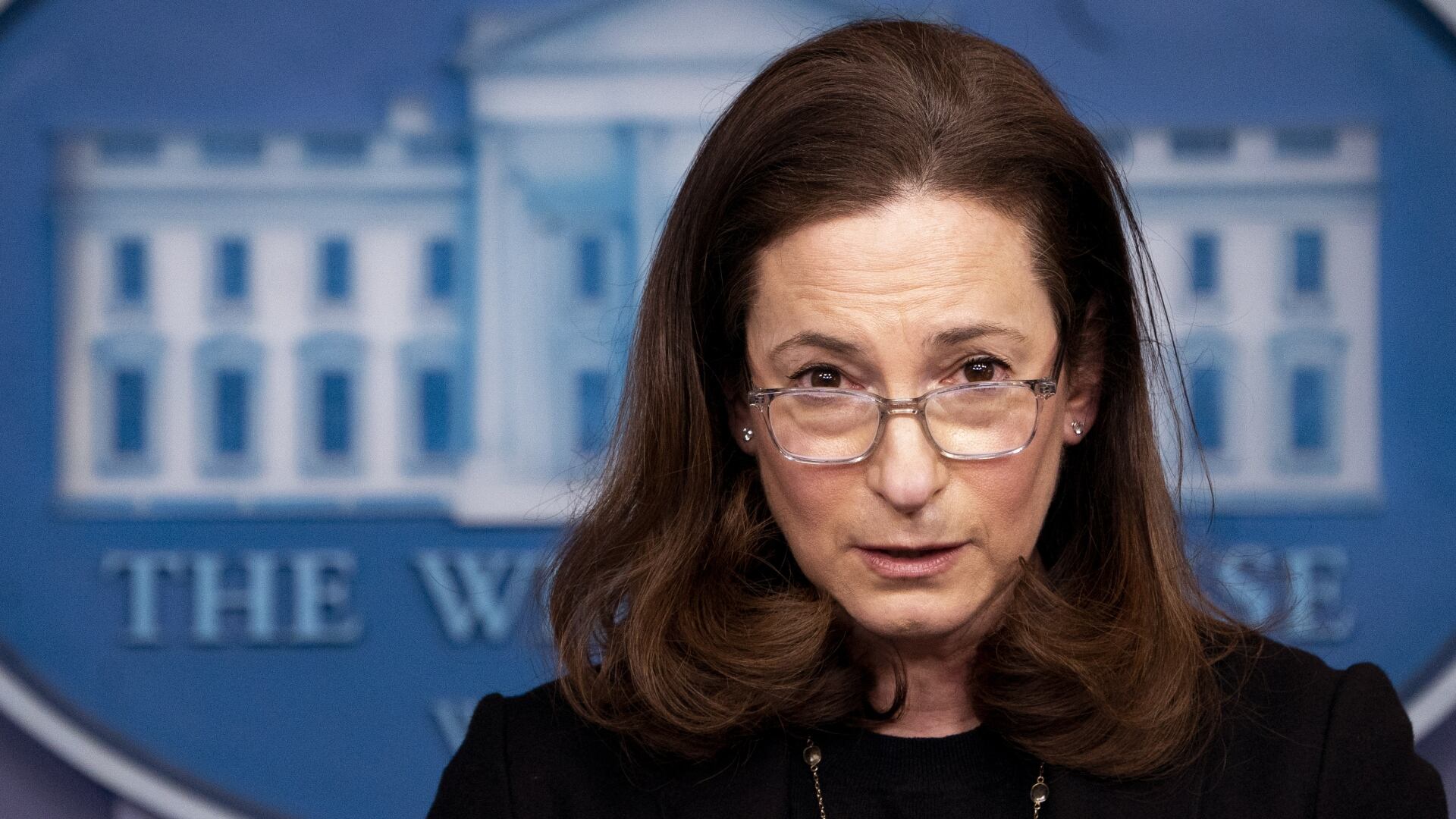
Cheddar News sat down with Jennifer Klein, executive director and co-chair of the White House Gender Policy Council, to discuss the council's work and its significance during Women's History Month.
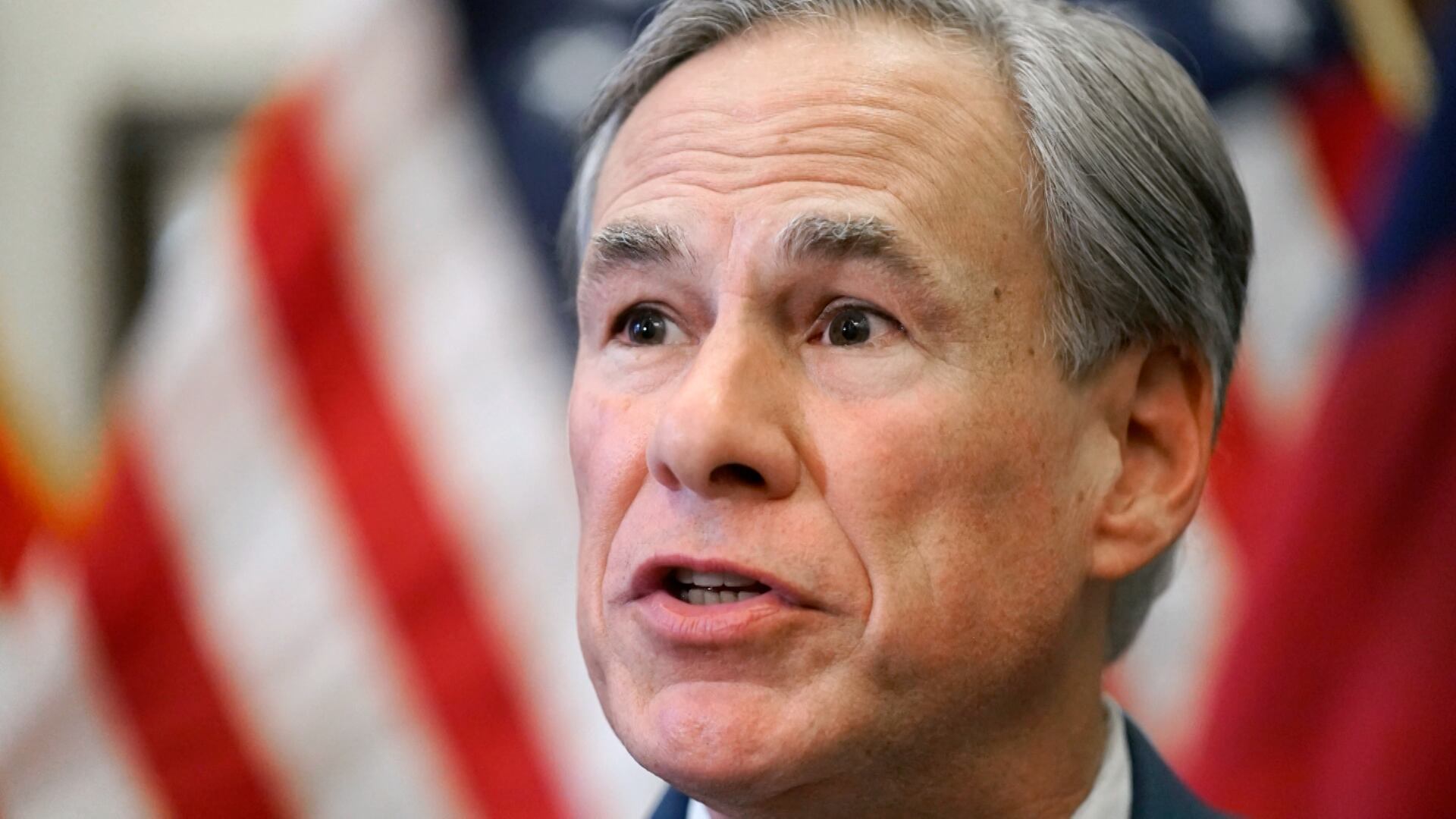
State Representative Jessica González, Vice Chair of the Texas House LGBTQ Caucus, joins Cheddar News to discuss the latest Texas anti-transgender directive.
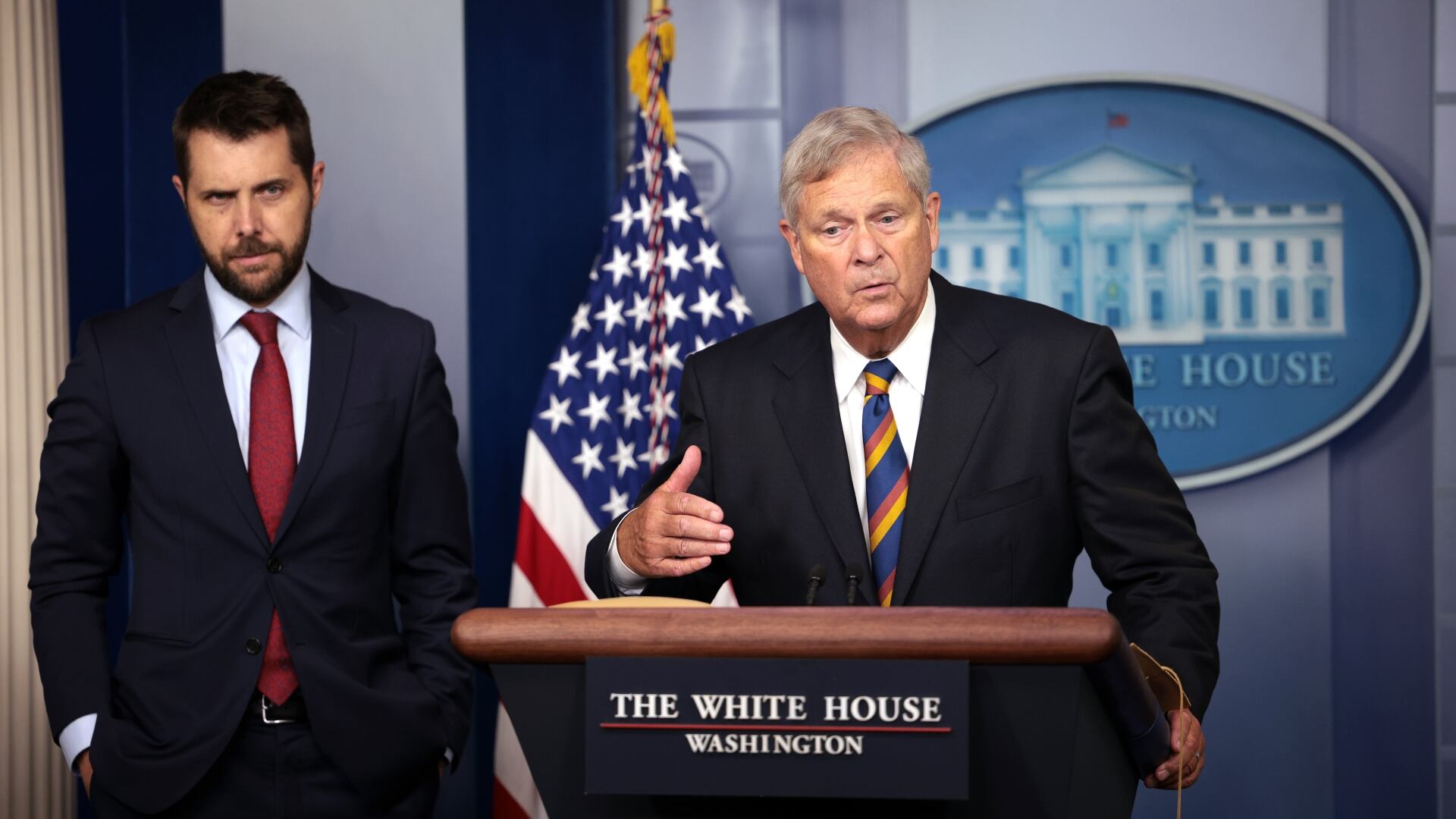
The United States Secretary of Agriculture, Tom Vilsack joins None of the Above to discuss the newly emerging conflict in Europe, what it means for agriculture in the states, dairy and meat consumption, and how the department is planning to promote climate-smart agriculture.
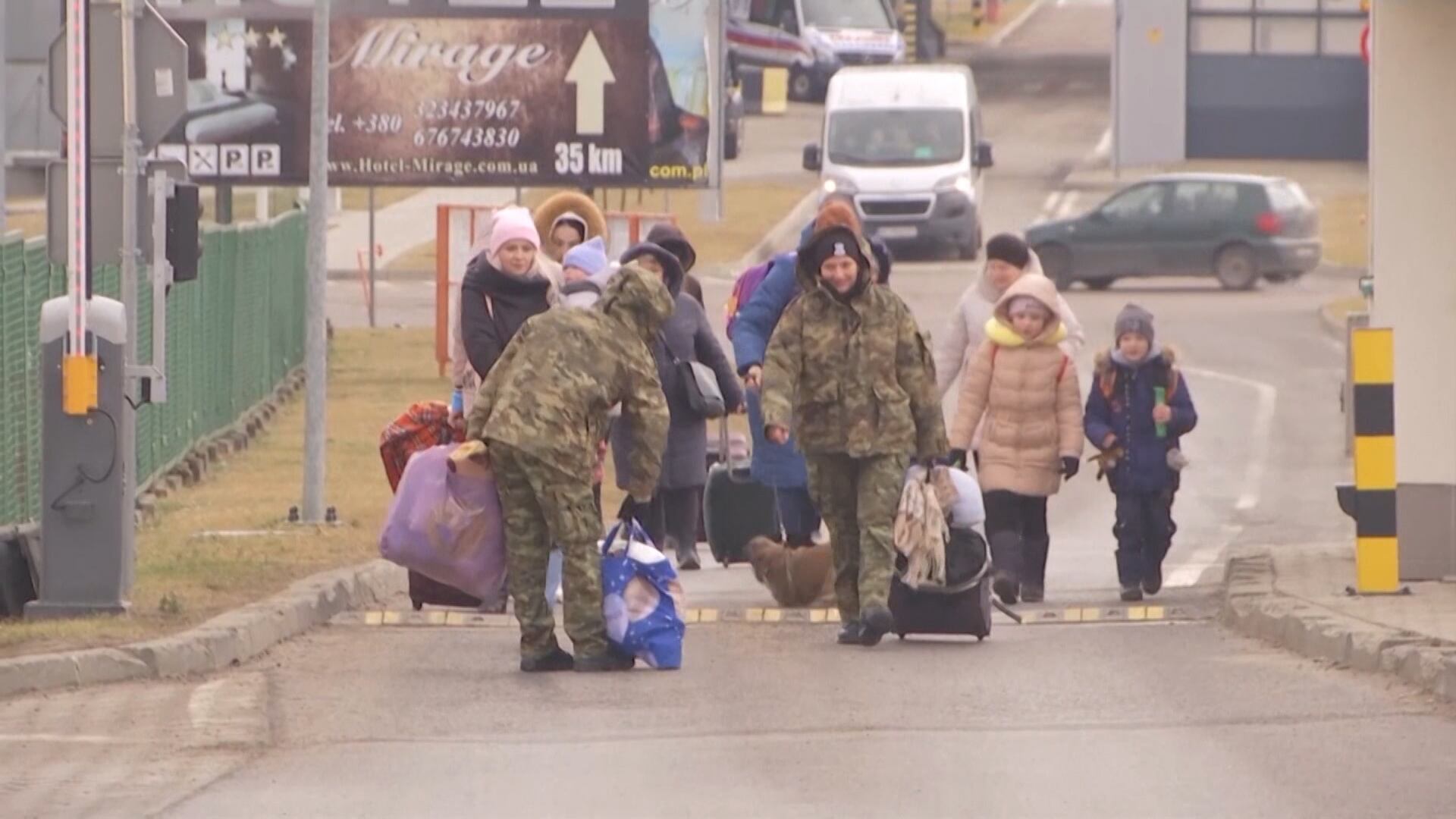
Tens of thousands of people have fled Ukraine in attempts to escape the Russian Invasion. According to the U.N. neighboring countries like Poland, Hungary, and even Romania have seen half a million refugees. While the hospitality is being welcomed by many, it also highlights the mistreatment of migrants and refugees from the Middle East and Africa. Professor of Philosophy and Director of Politics at Northeastern University Serena Parekh, joined Cheddar, to discuss more.
As Russia unleashed war in the country of Ukraine, global leaders have started inflicting punishment on Vladimir Putin's regime via commercial and financial penalties. According to President Joe Biden Putin's aggression is "a flagrant violation of international law and it demands a firm response from the international community".However, the main question is will these sanctions actually work. Partner at Jenner & Block LLP, Rachel Alpert, joined Cheddar to discuss more.