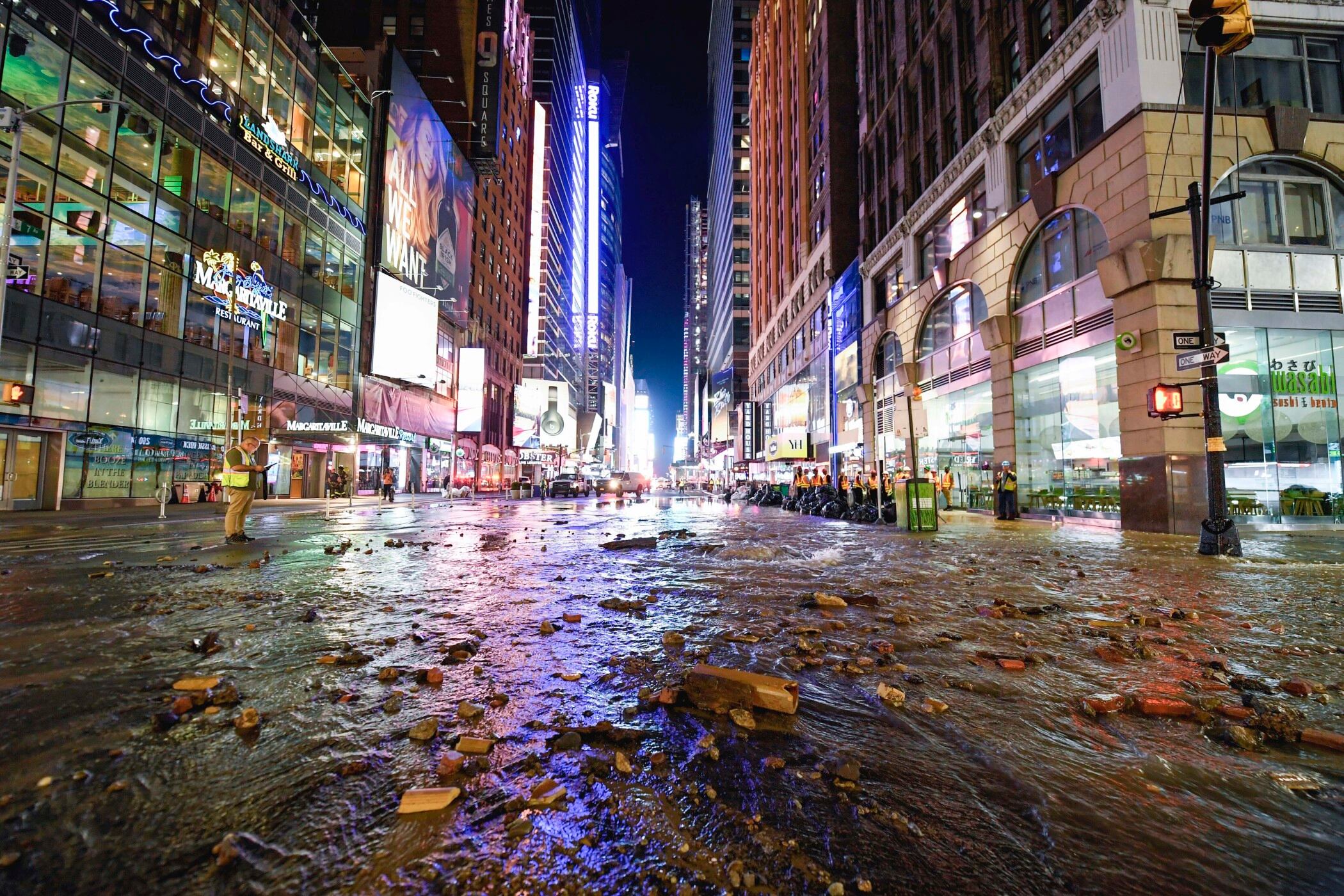
A 127-year-old water main under New York's Times Square gave way early Tuesday, flooding midtown streets and the city's busiest subway station.
The 20-inch (half-meter) pipe gave way under 40th Street and Seventh Avenue at 3 a.m., and quickly delivered a wet reminder of the perils of aging infrastructure beneath the city's crowded streets.
The rushing water was only a few inches deep on the street, but videos posted on social media showed the flood cascading into the Times Square subway station down stairwells and through ventilation grates. The water turned the trenches that carry the subway tracks into mini rivers and soaked train platforms.
It took DEP crews about an hour to find the source of the leak and shut the water off, said Rohit Aggarwala, commissioner of New York City’s Department of Environmental Protection.
The excavation left a big hole and a muddy mess in one city intersection where workers dug with heavy equipment to get to the broken section of pipe.
Surrounding streets were open by rush hour, but subway service was suspended through much of Manhattan on the 1, 2 and 3 lines, which run directly under the broken pipe. Service was restored with delays by midday.
Only two local businesses were without left without water at the start of the work day, Aggarwala said.
New York City has about 6,800 miles (10,900 kilometers) worth of water mains — enough pipe to stretch from Times Square to Tokyo — and has spent $1.9 billion in the past three years upgrading outdated water and sewer lines. Breaks happen somewhere in the city almost every day, though the city said the 402 water main breaks last year were the second lowest number on record, and better than average for a U.S. city if the size of the system is taken into account.
The cast iron pipes used as water mains in the city in the late 19th century, like the one that broke, were known for their durability, but even those have a typical lifespan of 120 years.
Besides old water and sewer pipes and subway tunnels, the ground beneath Manhattan also contains a steam energy system and an electrical system that rely on components buried many decades ago.
Breakdowns can occasionally be spectacular. In 2007, an 83-year-old steam pipe exploded near Grand Central Terminal, sending a towering geyser of scalding vapor and mud into the air, swallowing a tow truck and killing one person.