After a bruising week for progressive Democrats that ruled out including a minimum wage hike in the $1.9 trillion COVID-19 relief bill, Congressional business on the legislation will continue next week. This is your Washington Week Ahead for the week of March 1.
Trump Speaks
Former President Donald Trump will speak at the Conservative Political Action Conference, commonly referred to as CPAC, in Orlando on Sunday. It will be his first major public appearance since leaving office and comes after a series of high-profile rebukes from Democrats, including an impeachment trial, while the Republican Party seems divided on how it moves forward. Plus, Sen. Mitch McConnell (R-Ky.) keeps flip-flopping in his support, pledging to support Trump if he runs for the White House again in 2024, just days after holding him responsible for the January 6 insurrection on the Capitol building. Trump has pledged a return of his Make America Great Again movement and CPAC will provide a friendly platform for that exact messaging, further highlighting the hold he still has on his party.
Stimulus Stalemate
The Senate will begin debate on the American Rescue Plan on March 1, marking the first time the chamber is officially taking up the latest round of coronavirus relief spending. The nearly $2 trillion rescue package includes $1,400 stimulus checks for Americans, billions in federal relief for state, local, and tribal governments, and a huge bucket of money for vaccine rollout. Because the Senate has a legislative filibuster, the bill must adhere to the Byrd Rule, a parliamentary procedure that allows budget reconciliation legislation to pass without being subject to the filibuster. One thing we know for sure is that the final Senate version of the bill, expected to pass next week, will not include a federal minimum wage increase after the parliamentarian determined it would be against the rules. The current federal minimum wage is $7.25 and has remained unchanged since 2009.
Voting Rights in the Spotlight
Now that the House of Representatives has finished with COVID relief, it’s on to other priorities. In the last Congress, House Democrats passed H.R. 1, the For the People Act, a sweeping election reform bill. It languished in a Republican-controlled Senate. This is a chance for the chamber to try again — but expect a lot of amendments from Republicans, looking to strike down provisions like universal vote-by-mail and extended early voting periods, as well as a national holiday for Election Day. At the same time, the United State Supreme Court will hear arguments on a pair of Voting Rights Act cases that could further erode protections for disadvantaged voters. So in the first week in March, 20 months before the 2022 midterm elections, all eyes in Washington will be on voting rights.
As Russia continues to invade Ukraine, its tech outsourcing sector is at risk. Over the past few years, the country has become a popular outsourcing destination for American and European tech companies, but now the future of that industry is uncertain. Isabelle Bousquette, enterprise technology reporter, for The Wall Street Journal, discusses what repercussions the crisis might have on the industry, and what companies are doing to mitigate possible disruptions.
In a nearly 3,700 page UN report, climate scientists outline the imminent dangers caused by climate change, saying fossil fuels are 'choking humanity.' The report calls some of the impacts of global warming 'irreversible,' warning of extreme consequences in the near future. Kristie L. Ebi, Professor of Global Health and Environmental and Occupational Health Sciences, University of Washington joined Cheddar's Opening Bell to discuss.
Ukrainian President Volodymyr Zelenskyy has signed an application for Ukraine's membership in the European Union, pleading with the bloc to accept this request. It comes as Russian forces push further into Ukraine, forcing at least half a million refugees to flee. Benjamin Schmitt, Postdoctoral Research Fellow at Harvard University and Senior Fellow at the Center for European Policy Analysis, breaks down the latest in Ukraine.
A growing wave of major U.S. companies have taken steps to cut ties with Russia or offer support to Ukraine, as tensions escalate in the region. Exxon, Apple and Boeing are just the latest companies to make the move, following the likes of Google, Meta and BP who have all announced plans to exit the region in response to the conflict. Courtney Vinopal, Breaking News Reporter, Quartz joined Cheddar's Opening Bell for more.
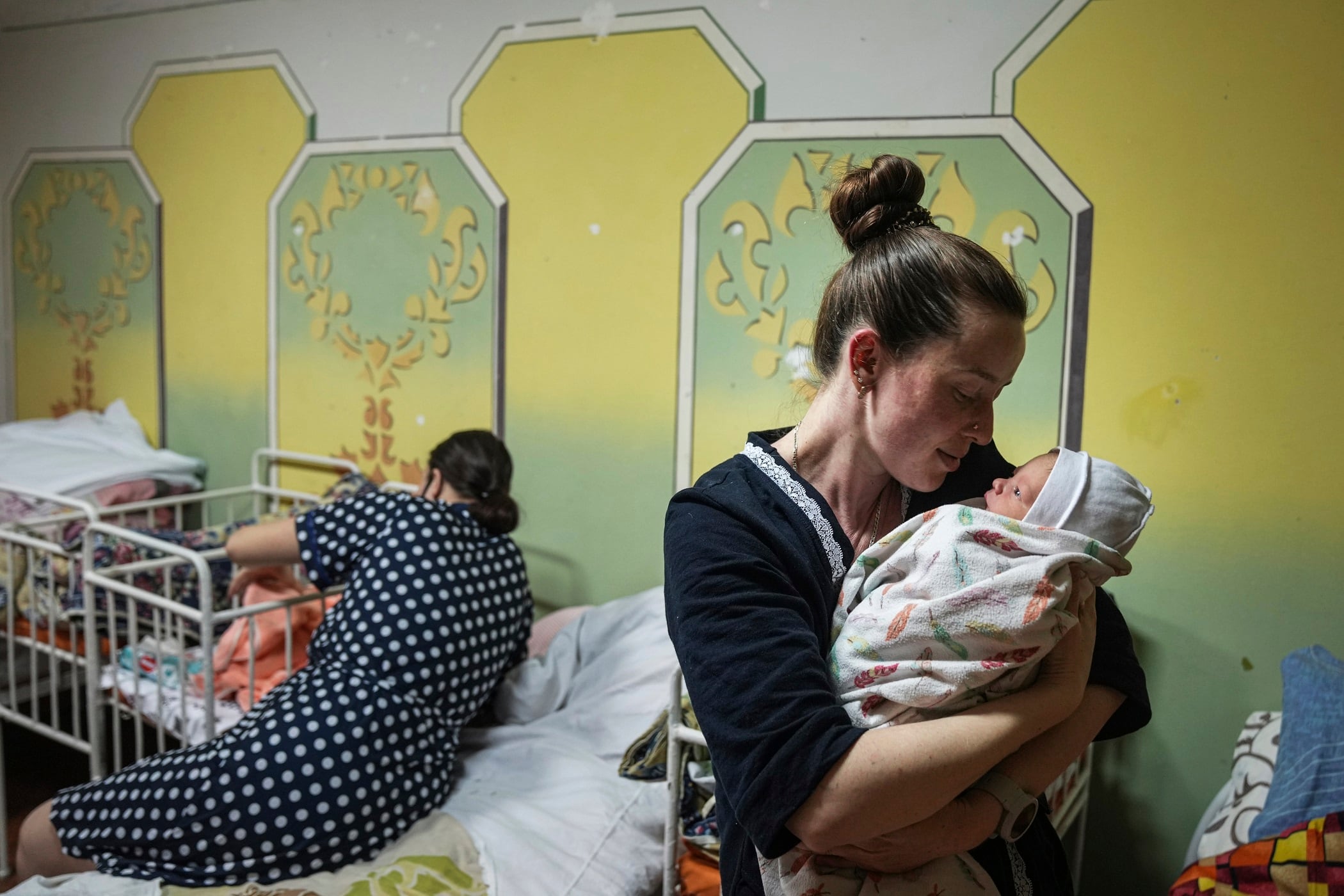
A hospital basement in Ukraine’s coastal city of Mariupol has transformed into a bomb shelter and maternity ward amid shelling during Russia’s invasion.
World leaders are currently dealing with a handful of pressing issues, including Russia's invasion of Ukraine, inflation, and not to mention the COVID-19 pandemic; but it could be argued that the most pressing issue is one that has experienced its fair share of neglect in the past -- climate change. As tensions escalate between Russia and Ukraine, there is fear the focus on climate will once again be pushed aside. However, the White House appears to be making some effort to prevent that from happening. The White House Office of Science and Technology held a first-of-its-kind roundtable discussion with some of the nation's leading climate scientists on Thursday. Michael Mann, Director of the Earth System Science Center at Pennsylvania State University, and author of the book 'The New Climate War' joins Cheddar News' Closing Bell to discuss his experience as one of the climate scientists at the White House event.
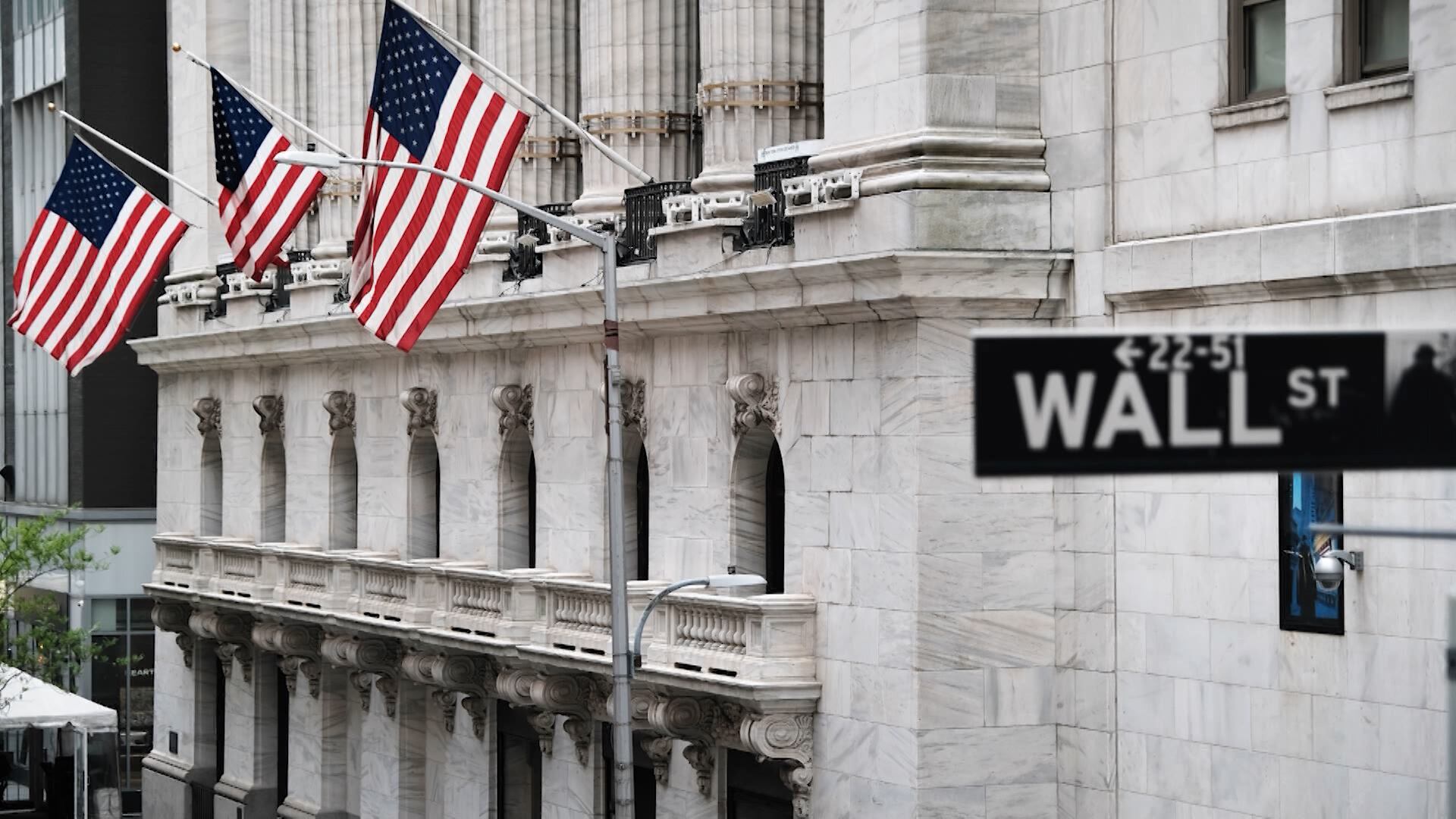
Scott Clemons, Partner and Chief Investment Strategist at Brown Brothers Harriman, joins Cheddar News' Closing Bell, where he discusses the factors leading to the sell-off on Wall Street today and explains why uncertainty is worse than bad news for the investors.
U.S. stocks rebounded to end higher on Thursday after President Biden announced new sanctions against Russia following the country's attack on Ukraine. The Dow was down 859 points at its lowest point of the session, before ultimately finishing the day in the green. Melissa Armo, founder and owner of the Stock Swoosh, joins Cheddar News' Closing Bell to discuss.
People of African and Middle Eastern descent fleeing from Russia’s invasion of Ukraine are facing the double trauma of racism at the borders. Professor of law and migration studies at the University of San Francisco, Bill Hing, joined Cheddar News Wrap to discuss what some are describing as a double standard for other refugees escaping the war. "Those that are from the Middle East and from Africa who just happen to be in Ukraine, for example on a student visa, they are not going to be able to get into Poland or another area of the Schengen area because they are not natural Ukrainian," he said.