Washington state lawmakers are considering levying a 1 percent tax on "extraordinary intangible financial assets" of people whose personal wealth exceeds $1 billion. This includes assets such as cash, futures contracts, and publicly traded options — not income.
Washington Democrats have rallied around the measure as one way to help combat growing economic inequality in the state, which has only intensified during the pandemic.
"The conditions were there before the pandemic, but the pandemic has laid bare the true inequity in our tax code here in Washington state," State Rep. Noel Frame told Cheddar.
The representative said that Washington had the distinction of having the most regressive tax code in the country, with lower-income households paying disproportionately more than higher-income households. The state does not impose a personal income tax.
"I think it's egregious and out of step with our values as a state," she said.
Using confidential data from the IRS, U.S. Federal Reserve, and proprietary information from Forbes, the state estimated that the law would impact 100 taxpayers in Washington.
Among them are world-famous mega billionaires such as Jeff Bezos, Bill Gates, MacKenzie Scott, and Steve Ballmer, who would contribute the lion's share of the tax contributions.
Based on the latest data from Forbes, the Tax Foundation found that about 97 percent would come from those four individuals, though roughly a dozen people would be liable for the tax.
"I have to tell you that number is jaw-dropping to me," Frame said. "I think we know a few of those billionaires in our state, but it turns out there are many, many more."
If passed, the levy would be imposed starting January 1, 2022, for taxes due the following year.
Frame said another goal of the bill is to help fund existing tax credits for lower-income households, including a credit against the sales tax, which she said the state is overly reliant on. She added that about 47 percent of Washington's revenue in 2020 came from the sales tax, which is generally considered more regressive than other taxes.
"When you think about somebody who has a total household income of $24,000 or less, you can imagine how quickly the sales tax on those everyday purchases will add up as a share of your household income," she said.
State lawmakers are set to let the bill "simmer" over the next few weeks, Frame said.
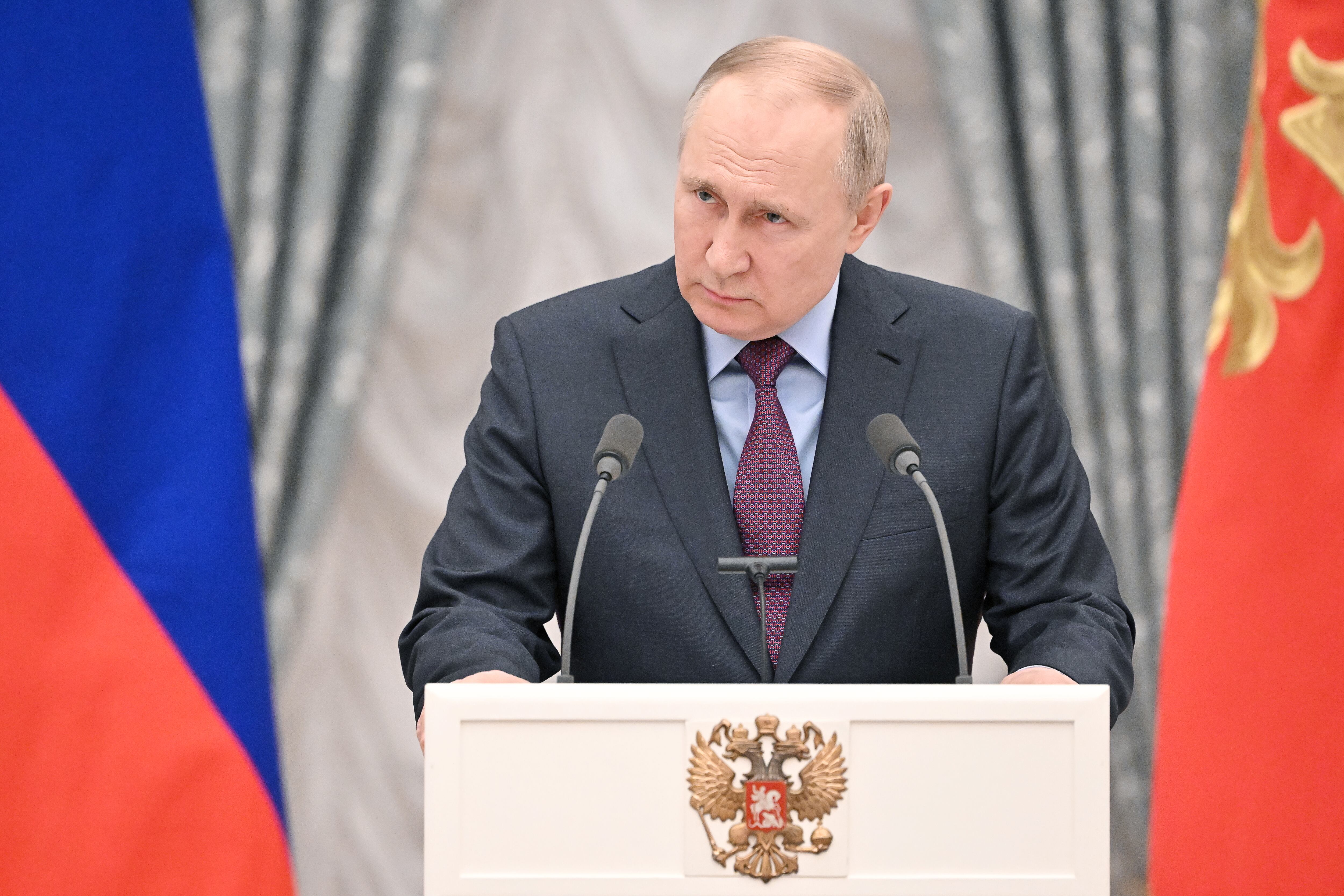
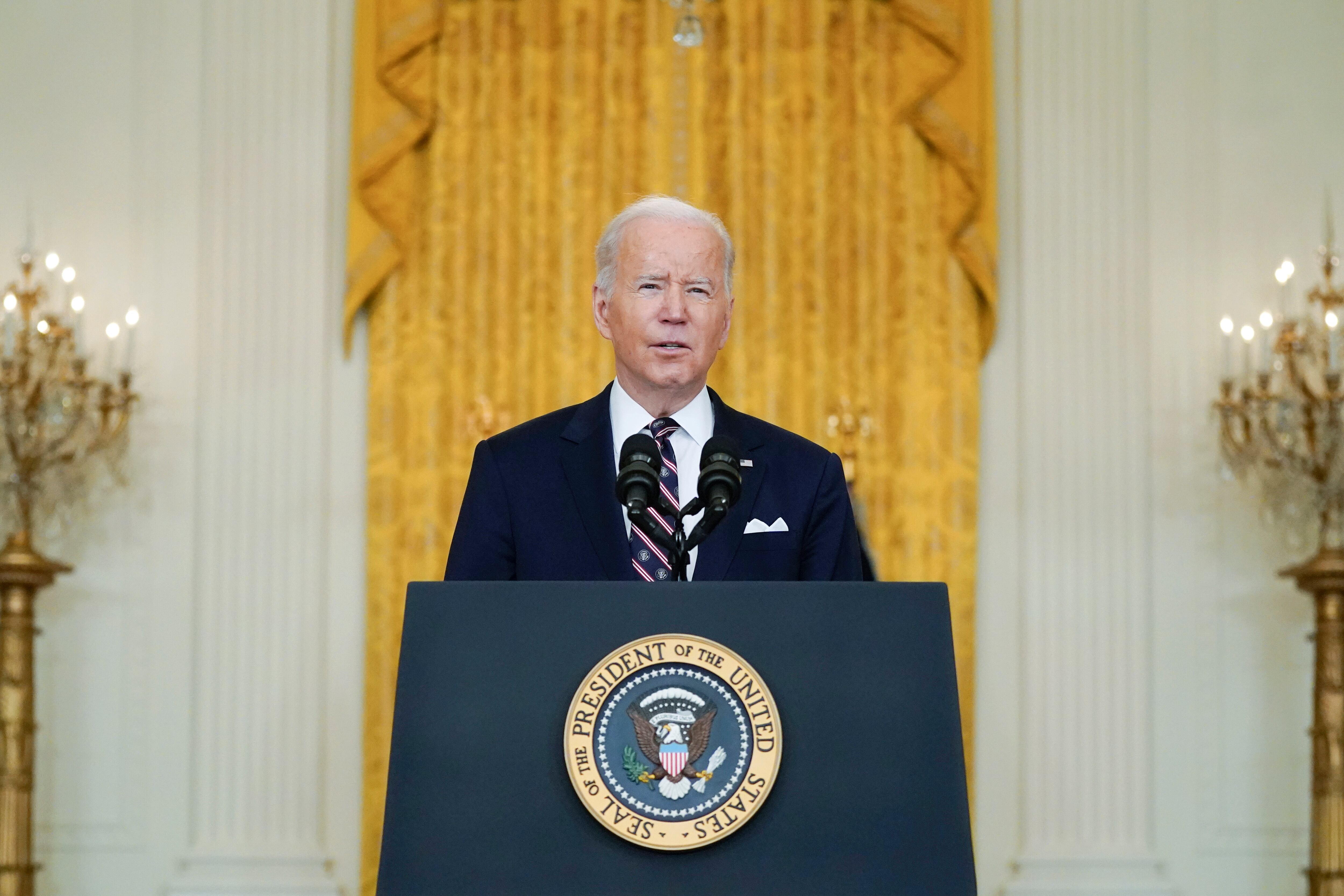
President Joe Biden said Tuesday that the U.S. will begin to impose sanctions on Russia, calling recent troop movement into Ukraine an 'invasion.' Biden and other government officials including from the State Department have begun to classify the Russian troop movement as an invasion after Russian President Vladimir Putin ordered troops to two independent Ukrainian areas in an alleged "peacekeeping" mission — which the West considers an act of aggression. Biden said Russia will continue to pay 'an even steeper price' if it continues sending troops into Ukraine. What happens next? Will Putin find a way around these sanctions? Ariel Cohen, senior fellow at the Atlantic Council, joins Closing Bell to discuss Biden's remarks, how the West will protect Ukraine since it doesn't belong to NATO, and more.
Russian lawmakers have given President Vladimir Putin a military force authorization in Ukraine, and President Biden has described Putin's announcement declaring the independence of two provinces within Ukraine and his subsequent deployment of peacekeepers as tantamount to "invasion. David Tafuri, a former Obama campaign foreign policy advisor and Bush State Department official, joined Cheddar News to discuss. "The Ukrainian military occupies more than 70 percent of those provinces still," Tafuri said, noting Putin alleged having a responsibility to defend those regions. "This would put Ukrainian forces and Russian forces right at each other engaged. And that might be how the war starts."
The major indexes ended Tuesday's session sharply lower due to escalating tensions between Russia and Ukraine. Bill Stone, Chief Investment Officer at The Glenview Trust Company, joins Cheddar News' Closing Bell, where he reminds viewers that Wall Street doesn't like uncertainty, and more of the recent losses are due to geopolitics than inflation.
Karim Hijazi, CEO of Prevailion, joins Cheddar News' Closing Bell, where he says that crypto's decentralized nature will pose obstacles for the FBI's new crypto unit, but it will also make progress with items such as managing fraudulent exchanges.
The Retail Industry Leaders Association released a report alleging the safety risks, economic losses, and potential job losses they link to a surge in shoplifting crimes in the United States. Lisa LaBruno, senior EVP of retail operations at the trade organization, joined Cheddar News to discuss the impact of websites that allow for the resale of unverified goods and passing the INFORM Consumers Act to stamp it out. “We need to hold the online marketplaces accountable for being a favored venue for criminals to resell stolen product," LaBruno said. "And that is exactly what the INFORM Act is designed to do."
The East-West faceoff over Ukraine has escalated dramatically, with Russian lawmakers authorizing President Vladimir Putin to use military force outside his country and President Biden and European leaders responding by slapping sanctions on Russian oligarchs and banks.
Stocks closed broadly lower Tuesday after Russia sent forces into Ukraine’s eastern region and the U.S., European Union and U.K. responded with economic sanctions.