Washington state lawmakers are considering levying a 1 percent tax on "extraordinary intangible financial assets" of people whose personal wealth exceeds $1 billion. This includes assets such as cash, futures contracts, and publicly traded options — not income.
Washington Democrats have rallied around the measure as one way to help combat growing economic inequality in the state, which has only intensified during the pandemic.
"The conditions were there before the pandemic, but the pandemic has laid bare the true inequity in our tax code here in Washington state," State Rep. Noel Frame told Cheddar.
The representative said that Washington had the distinction of having the most regressive tax code in the country, with lower-income households paying disproportionately more than higher-income households. The state does not impose a personal income tax.
"I think it's egregious and out of step with our values as a state," she said.
Using confidential data from the IRS, U.S. Federal Reserve, and proprietary information from Forbes, the state estimated that the law would impact 100 taxpayers in Washington.
Among them are world-famous mega billionaires such as Jeff Bezos, Bill Gates, MacKenzie Scott, and Steve Ballmer, who would contribute the lion's share of the tax contributions.
Based on the latest data from Forbes, the Tax Foundation found that about 97 percent would come from those four individuals, though roughly a dozen people would be liable for the tax.
"I have to tell you that number is jaw-dropping to me," Frame said. "I think we know a few of those billionaires in our state, but it turns out there are many, many more."
If passed, the levy would be imposed starting January 1, 2022, for taxes due the following year.
Frame said another goal of the bill is to help fund existing tax credits for lower-income households, including a credit against the sales tax, which she said the state is overly reliant on. She added that about 47 percent of Washington's revenue in 2020 came from the sales tax, which is generally considered more regressive than other taxes.
"When you think about somebody who has a total household income of $24,000 or less, you can imagine how quickly the sales tax on those everyday purchases will add up as a share of your household income," she said.
State lawmakers are set to let the bill "simmer" over the next few weeks, Frame said.
Reshma Saujani, the founder of Girls Who Code and author of "Pay Up: The Future of Women and Work (and Why It's Different Than You Think), joined Cheddar to discuss the many challenges for women in the workplace after the upheaval caused by the pandemic and the solutions she presents.
Hate crimes from the start of 2022 against Asians reportedly more than doubled compared to 2021, according to the NYPD. Amid the surge of attacks, Amber Reed, the president and co-founder of the grassroots organization AAPI Montclair, joined Cheddar News to talk about how it's looking to help Asian Americans with classes and techniques to defend themselves. “We're seeing racism literally killing people who look like us, and these self defense classes are a chance for us to rewrite a narrative of victimhood into one of empowerment," she said. "We learn first how to be aware of our surroundings because we know that being distracted, appearing weak can make you a target, and then that we focus on disengagement."
White House press secretary Jen Psaki said Tuesday that she has tested positive again for COVID-19 and will not accompany President Joe Biden to Europe for meetings on Russia’s invasion of Ukraine.
Reshma Saujani, the founder of the nonprofit Girls Who Code, discusses the workplace inequities further exposed by the pandemic and her latest book, "Pay Up: The Future of Women and Work (and Why It's Different Than You Think).
Since Russia invaded Ukraine, the United States, along with much of the Western world, has imposed economic sanctions on Russia’s economy and its oligarchs. And these measures are costing these oligarchs — billions. So what exactly is an oligarch and what are their ties to Putin and the ongoing invasion? And will sanctioning them work?
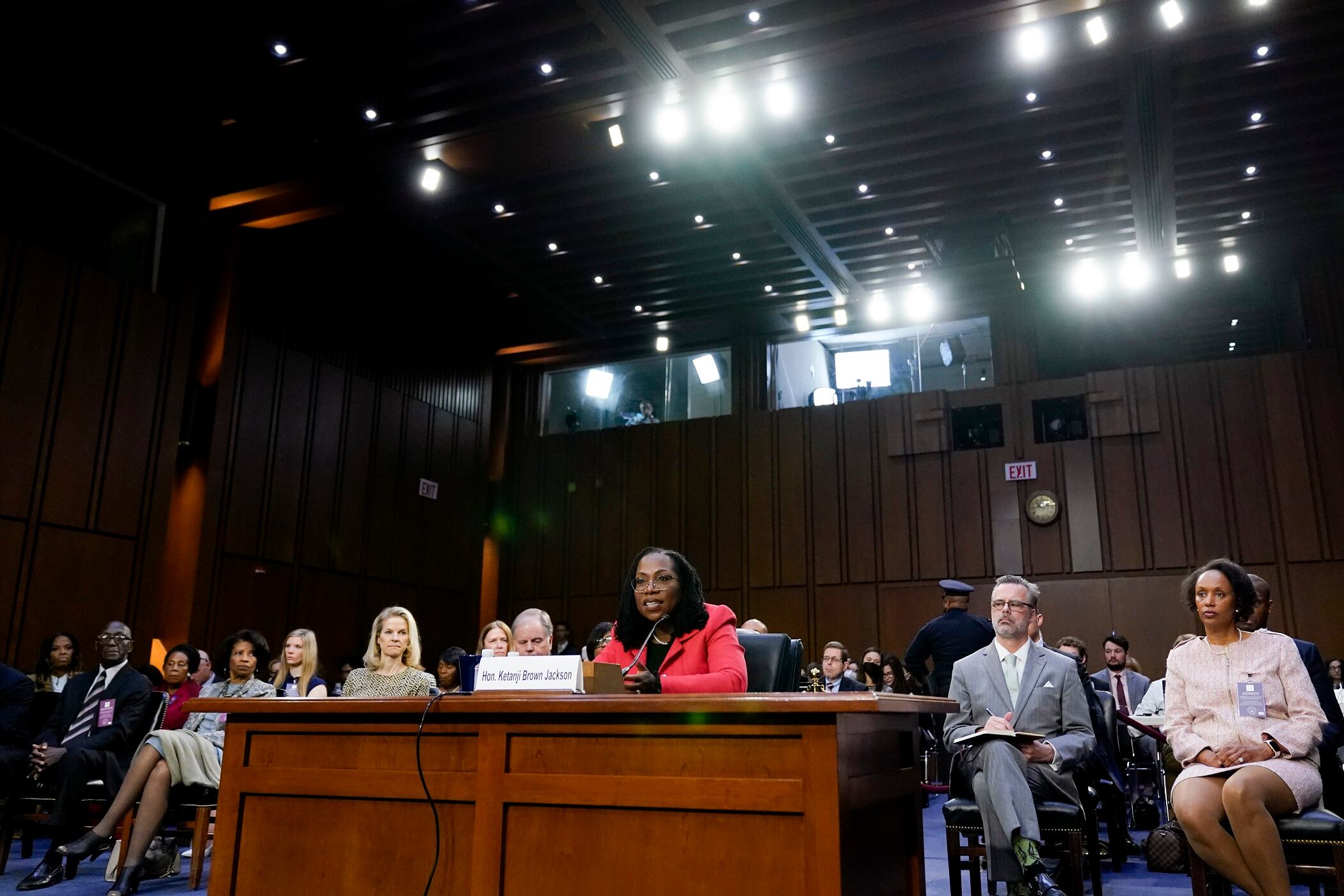
Ketanji Brown Jackson is forcefully defending her record as a federal judge, telling senators she will rule “from a position of neutrality” if she is confirmed as the first Black woman on the high court.
Ukraine remains defiant as the Russian invasion is approaching its fourth week. Cheddar News speaks with Former Obama Campaign Foreign Policy Advisor David Tafuri, on Russia’s war efforts so far and how it might shift tactics moving forward.
While investors soured on Fed Chair Jerome Powell's remarks on interest rates Monday, Anthony Saccaro, Founder and President at Providence Financial explains why he is supportive of the Fed's approach on Cheddar News' Closing Bell.
As Russia continues to wage war in Ukraine, 10 million of its citizens have fled their homes according to the UN, with more and more refugees flooding into other European countries. Nancy Dent, senior global communications officer for Europe and Asia at the aid group International Rescue Committee, joined Cheddar News to discuss the deteriorating conditions. “What's really clear from my time at the border today, in particular, is that people really are fleeing for their lives now," she said. "Two million people, 60 percent of the refugee population from Ukraine is now in Poland, and people are arriving with smaller bags really unprepared."