*By Alisha Haridasani*
New evidence suggests that Google's all-to-real sounding voice assistant may not be as life-like as it first seemed, raising questions about the status of the company's A.I. capabilities.
A [demo](https://www.youtube.com/watch?v=bd1mEm2Fy08) last month of the A.I.-powered Duplex voice assistant showed it interacting with humans to make a restaurant reservation and a haircut appointment. But some people are saying it was faked.
Axios’s Dan Primack [pointed out](https://www.axios.com/google-ai-demo-questions-9a57afad-9854-41da-b6e2-5e55b619283e.html) that the people picking up the calls in the two demos don't identify themselves, as is the norm when small businesses receive phone calls. There was also no ambient noise in the phone calls, and neither the hair salon or the restaurant asked for the caller’s phone number for the booking.
“The whole conceit of Google Duplex is that a robot would have a conversation with a human on the other end, potentially without a human having to jump in,” said Dana Wollman, executive editor at Engadget. “So people do want to feel that this interaction was real and authentic.”
The more likely scenario is that Google may have edited the recording, protecting the businesses or the privacy of the people who answered the call, said Wollman.
“I think it is still possible that it was based on a real exchange,” she said. “If I was in Google’s PR department I would probably want to be able to show a real working demo.”
Google hasn't directly responded on the record to journalists asking about the authenticity of the recordings.
For the full interview, [click here](https://cheddar.com/videos/googles-duplex-dupe).
Ed Butowsky, managing partner at Chapwood Investments, joined Wake Up With Cheddar to break down the disappointing takeaways from Spotify's Q4 earnings report, which sent the stock plunging.
Google parent company Alphabet saw yet another successful quarter reporting its final earnings report for 2021 on Tuesday. The tech giant beat Wall Street expectations across the board with much of that success owed to not only the growth of its cloud business, but also its multi-platform advertising. Joanna O'Connell, Principal Analyst at Forrester explains why advertising may be one of the keys to Alphabet’s future success.
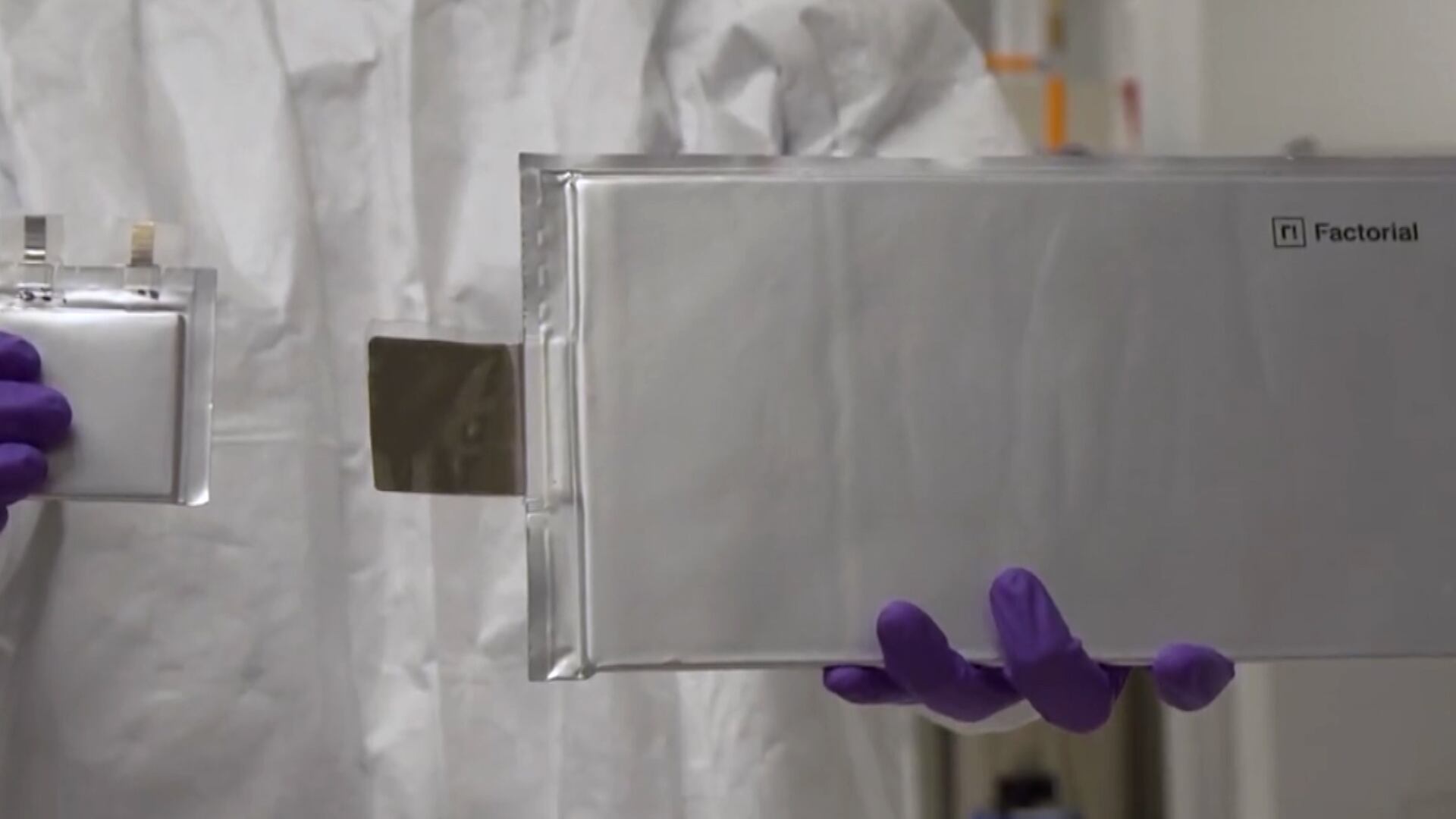
Solid-state battery maker Factorial Energy recently raised $200 million in a Series D round led by Mercedes-Benz and Stellantis. Factorial says the funding will be used to accelerate commercial production and deployment of its solid-state battery technology, which the company says is safer, and offers up to 50% more driving range than current lithium-ion technology. Factorial also has joint development agreements (announced in late 2021) with Mercedes-Benz, Stellantis, and Hyundai, three of the top 10 global automotive manufacturers, to commercialize its batteries. Factorial CEO Siyu Huang joined Cheddar News' Closing Bell to discuss.
Google's parent company Alphabet reported blockbuster fourth quarter earnings, boosted by better-than-expected Google ad revenue and Google Cloud revenue. The results sent Alphabet's stock soaring, and the company could come close to hitting a $2 trillion market valuation similar to other tech giants Apple and Microsoft. The company also announced a 20-for-1 stock split, which would make shares more accessible to would-be investors. Mark Lehmann, CEO at JMP Securities, a Citizens Company, joins Closing Bell to discuss Alphabet's earnings report, whether the company will reach a $2 trillion market cap, its stock split, and more.
David Malott, founder and chief architect at AI PlanetWorks joins Cheddar News to discuss the release of its augmented reality NFTs for the metaverse called 'TERA.'
Jess Hunichen and Emily Ward, co-founder of Shine Talent Group join Cheddar News to talk about The BodCon conference and how it empowers men and women to feel confident.