By Stan Choe and Alex Veiga

Wall Street was split on Monday, as continued gains for technology and health care stocks helped cover up for more prevalent losses elsewhere.

The S&P 500 ended the day at a virtual standstill, up just 0.39 points at 2,930.19, despite a lot of movement going on underneath. It rallied back from an earlier loss of 0.9% in the morning.

The Dow Jones Industrial Average fell 109.33 points, or 0.4%, to 24,221.99, while the Nasdaq composite added 71.02, or 0.8%, to 9,192.34.

Through the muddled day, one of the market’s few points of clarity was that investors continue to love technology stocks.

Even with the coronavirus pandemic throwing the global economy into disarray, tech stocks in the S&P 500 have been remarkably resilient. They’re up 4.1% for 2020 as investors look for companies that can be winners in both a ”normal” and a stay-at-home economy.

Apple rose 1.6%, Nvidia added 3.2% to return to a record and Advanced Micro Devices climbed 4.8% for one of Monday’s biggest gains in the S&P 500.

This year’s second-best sector has been health care, which has trimmed its loss for 2020 to just 1%.

Biotech stocks were particularly strong Monday. And Cardinal Health had the biggest gain in the S&P 500, up 6.7%, after reporting stronger-than-expected earnings for its latest quarter, partly because of increased pharmaceutical sales due to the pandemic.

Those gains helped to make up for 69% of stocks falling in the S&P 500. It also leaves the index within reach of its highest level since early March.

“People are looking ahead, and they’re saying, ‘OK, the pandemic has happened, and the damage has swept through our economy and our businesses, and now we’re planning on the growth after the carnage, so we’re valuing equities as if we’re going to go back to a decent growth environment,’” said Mike Zigmont, head of trading and research at Harvest Volatility Management.

The S&P 500 has rallied 31% since late March, at first on relief after the Federal Reserve and Capitol Hill pledged massive amounts of aid for the economy. More recently, some investors have focused on the possibility of a strong recovery later this year, after governments reopen economies and lift business-shutdown orders meant to slow the spread of the coronavirus.

That optimistic view took some hits Monday, though, as worries rose about the possibility of new waves of infections hitting countries that are further ahead in lifting lockdown measures. Investors pointed to small but disconcerting increases of infections in South Korea, China, and elsewhere.

The worries helped lead companies whose profits are most closely tied to the strength of the economy to the market’s biggest losses.

“I don’t know why investors are feeling so comfortable with those expectations,” Zigmont said of forecasts for a turnaround in profit growth in 2021 and 2022. “They are so far away, and there’s so much uncertainty between now and then, and yet investors seem to be OK” with paying up in anticipation that companies will hit those targets.

Financial stocks fell 1.9% for the biggest loss among the 11 sectors that make up the index. Bank stocks have been hit hard this year on worries that the recession will lead to a wave of households and businesses defaulting on their loans. Bank of America dropped 4.2% Monday, and Citigroup lost 4.9%.

Energy companies and raw-material producers also fell on worries that a weaker global economy will need less oil and fewer basic building blocks.

The data streaming in on the economy remain oppressively bad. After a report on Friday showed U.S. employers cut a record-setting 20.5 million jobs in April, Italy reported Monday its largest-ever drop in industrial production. More data reports this week include U.S. unemployment claims and retail sales and Australian jobs.

Companies remain uncertain about the future, with many opting to give no financial forecasts during their latest quarterly earnings reports.

Even outside the possibility of a resurgence of infections, many analysts see other reasons for skepticism. Strategists at Goldman Sachs said the market appears to be downplaying a drop-off in buybacks and dividends as companies look to preserve cash, the threat of more U.S.-China trade tensions, and the possibility that the upcoming U.S. elections could lead to higher corporate tax rates.

Most of all, companies themselves are talking about how uncertain the recovery looks, which stands in stark relief to the quick, vigorous rebound that the stock market seems to be assuming will happen.

Japan’s Nikkei 225 rose 1%, while stocks in Shanghai were close to flat. South Korean stocks fell 0.5%. In Europe, the French CAC 40 fell 1.3%, and Germany’s DAX lost 0.7%. The FTSE 100 in London edged up 0.1%.

The yield on the 10-year Treasury rose to 0.70% from 0.68% late Friday.

Benchmark U.S. crude oil fell 60 cents, or 2.4%, to settle at $24.14 a barrel Monday. Brent crude oil, the international standard, fell $1.34, or 4.3% to $29.60 a barrel.

___

AP Business Writer Joe McDonald contributed.
Share:
More In Business
Crypto Group's Bid to Win Copy of U.S. Constitution Falls Short
A group of crypto enthusiasts pooled over $40 million dollars in an attempt to win a copy of the U.S. Constitution last week. However, their efforts came up short, as hedge fund billionaire Ken Griffin emerged as the victor in a $43.2 million Sotheby's auction. Matt Cutler, CEO & Co-Founder of Blocknative, joins Cheddar News' Closing Bell, where he explains why ConstitutionDAO ultimately came up short.
Gparency Raises $15 Million to Revolutionize Commercial Real Estate Industry
Gparency, a company that says its mission is to revolutionize the commercial mortgage industry, raised $15 million in its first funding round - representing the largest ever seed round in the commercial real estate space. Gparency's service will allow landlords and real estate developers to receive funding directly from banks, without the need for a mortgage broker. The company says its new approach will give power back to the consumer. Gparency founder and CEO Ira Zlotowitz joins Cheddar News' Closing Bell to discuss.
Markets, Treasuries Tick Up Amid Jerome Powell's Re-Nomination to Fed Chair Position
President Joe Biden announced Monday he is re-nominating Federal Reserve Chairman Jerome Powell after weeks of speculation that he would choose Democrat and Fed Governor Lael Brainard to fill the role. Biden could be looking for continuity as the U.S. continues to grapple with COVID-19 and high inflation, and investors could be on the same page: markets and treasuries ticked up after the White House made the announcement. MarketWatch Senior Reporter Greg Robb joins Cheddar News' Closing Bell to discuss Powell's re-nomination, what we can expect from the Fed's December meeting, whether it will speed up its taper timeline, and more.
Biden Choice to Keep Jerome Powell at Fed Was 'Path of Least Resistance'
President Joe Biden named Jerome Powell, initially appointed by President Trump, to keep his seat as the chair of the Federal Reserve on Monday amid the ongoing challenges of the pandemic, inflation, and unemployment. David Beckworth, a former international economist for the Treasury Department and a senior fellow with the Mercatus Center, joined Cheddar to discuss what he sees as the practicality of Biden's decision. "What Powell brings to the table is he's built up political capital with Republicans and Democrats," he said. "It's easy for him to get the job done. I think in one way he was the path of least resistance for the president."
Supply Chain Issues and Regulatory Cost Blamed for Surging Housing Costs
As housing prices continues to rise, Tim Rood, managing director at the real estate finance solutions company SitusAMC, joined Cheddar's "Closing Bell" to talk about what is driving up the costs, attributing it to supply chain constraints and regulatory expenses. Rood stated that the federal government's response to the 2008 financial crisis has added to the growing price tags. "The government came down super hard on banks and independent mortgage companies because of the defaults," he said.
How COVID, Conflict & Climate Change Adds to Food Insecurity Ahead of Thanksgiving
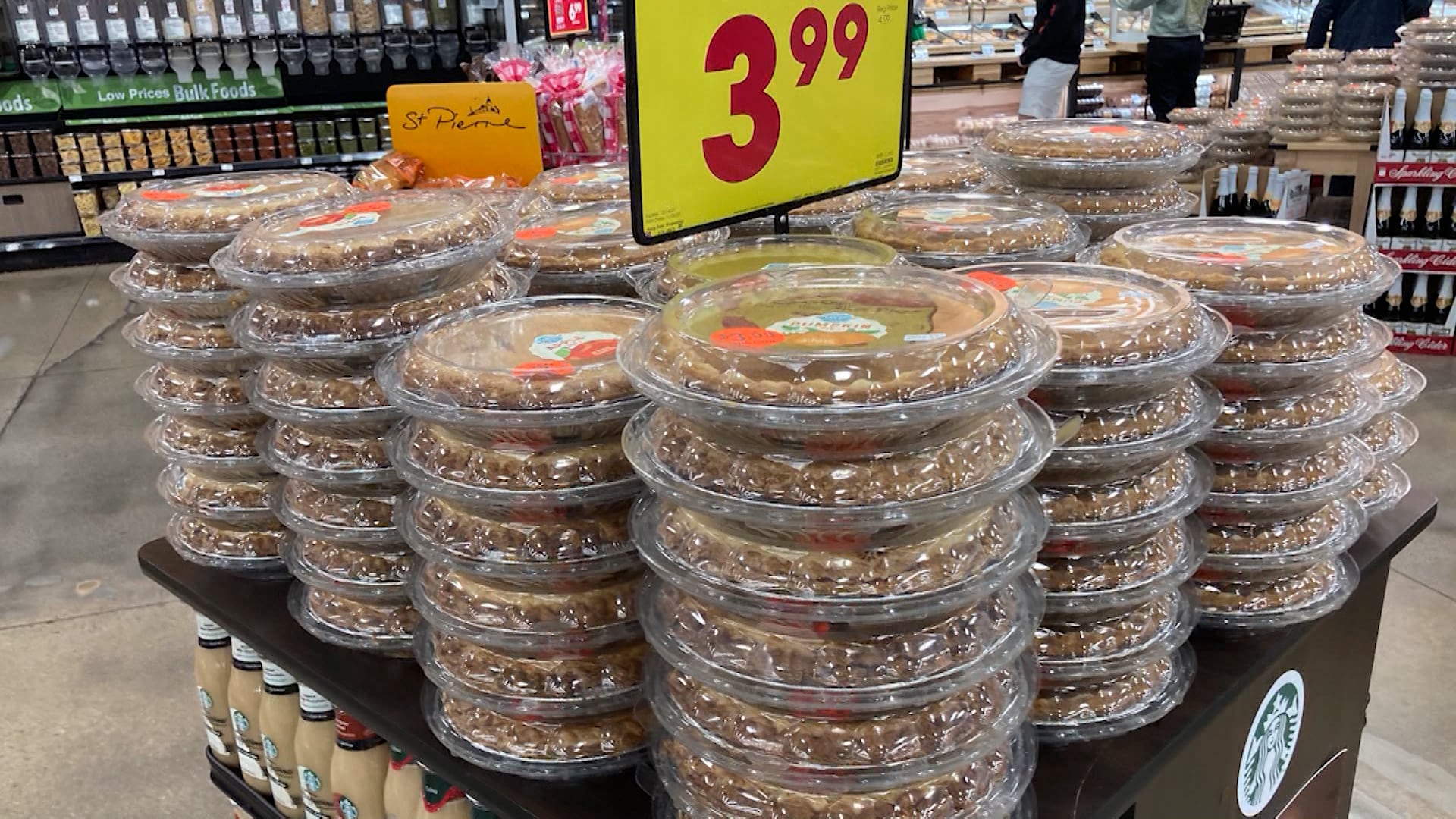
Colleen Kelly, CEO of Concern Worldwide US, joined Cheddar to discuss food insecurity concerns as the cost of this year's Thanksgiving dinner has surged amid record inflation. Kelly also talked about the ongoing issues derailing global supply chains and raising food prices, which undercuts efforts to tackle food insecurity in the United States and around the world. "Everything that hits the U.S. hits countries that are in extreme poverty even harder, and as you can imagine there were three major things affecting this in the last year: climate change, COVID, and conflict," she said.
Papa Johns CEO on the Pizza Chain's Rebrand — Including No More Menu Boards
Papa Johns has a new look for its logo, graphics, and storefronts. CEO Rob Lynch joined Cheddar's "Closing Bell" to talk about the timing of the rebrand following its ongoing success through the pandemic. Patrons entering revamped locations will notice a lack of menu boards thanks to customer smartphone use and glass panels to allow customers to watch pizzas being made by hand. "Everyone has a menu board in their pocket in the form of their phone," Lynch said. "Eighty percent of our business is ordered digitally, whether it's web-based or our fastest-growing channel being app-based."
Elizabeth Holmes to Resume Theranos Testimony
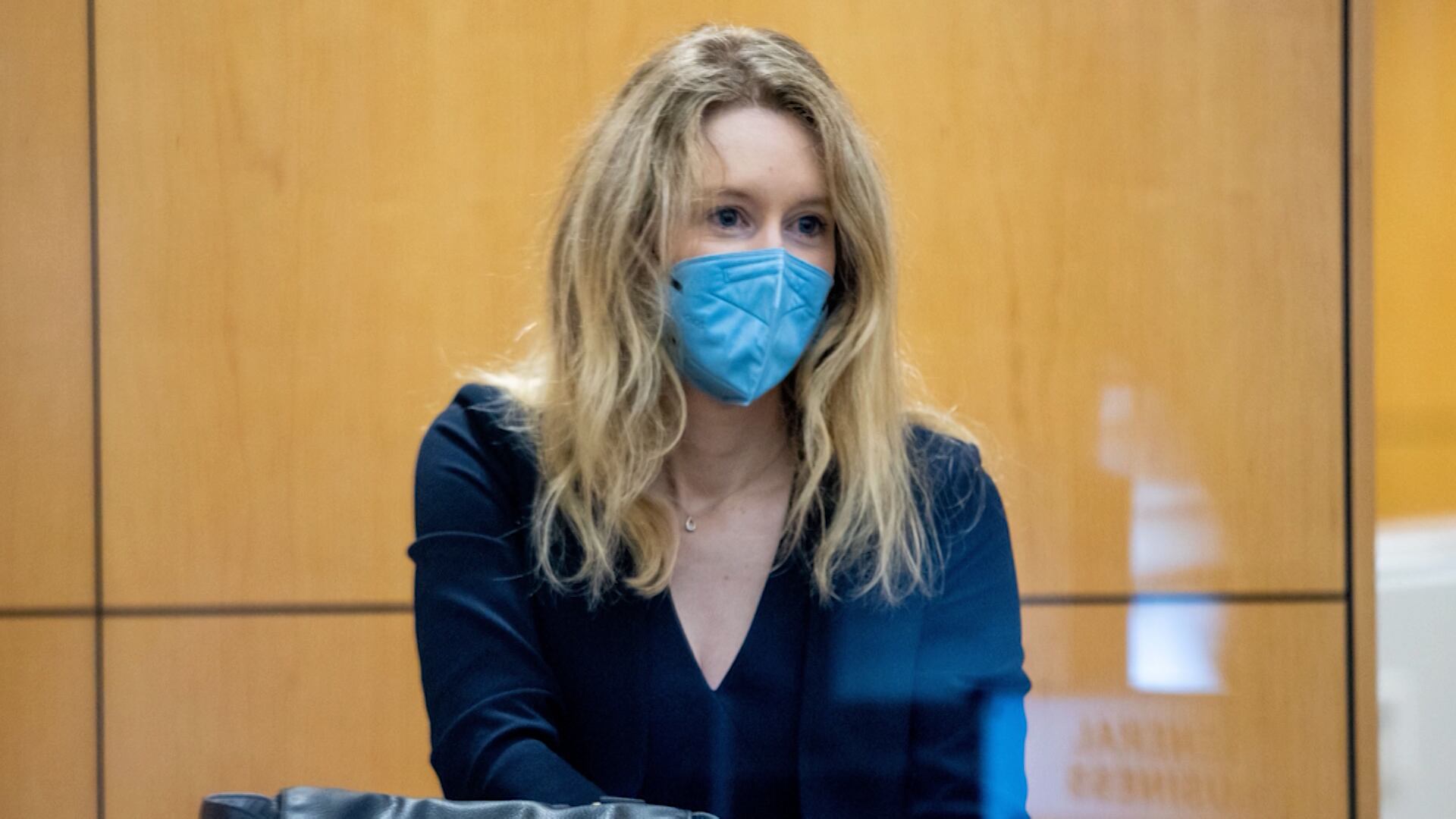
In a surprise turn of events, Elizabeth Holmes took the stand in her own defense on Friday and is expected to continue her testimony later today. Holmes, who founded a blood testing start-up Theranos back in 2003, faces 11 counts of wire fraud as well as conspiracy to commit wire fraud. Aron Solomon, Chief Legal Analyst, Esquire Digital joined Cheddar's Opening Bell to discuss.
Jerry Rice and Jaqui Rice Gold on What Makes G.O.A.T. Fuel Energy Drink Unique, Lakers Sponsorship
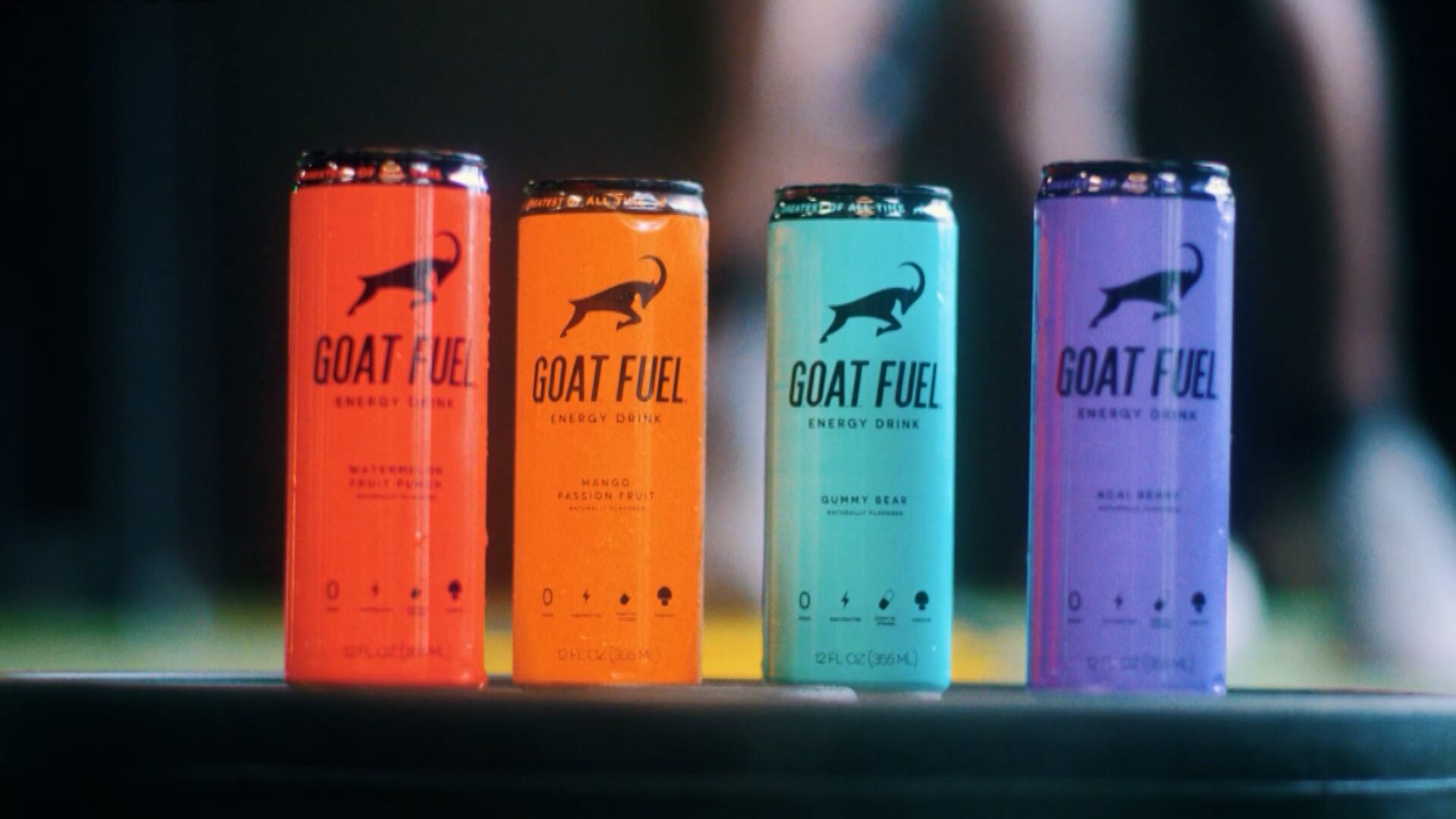
NFL Hall of Famer Jerry Rice and his daughter/business partner Jaqui Rice Gold joined Cheddar's "Between Bells" to talk about their energy drink G.O.A.T. Fuel. The pair talked about launching the brand during the height of the pandemic and what makes it different from competing brands. "The thing that separates us from the other energy drinks is we have cordyceps mushrooms in the drink," he said. "You're not going to have the jitters or anything like that." The duo also discussed the Los Angeles Lakers making it the official energy drink of its organization and what that means for the growth of the brand.
Load More