Wall Street was split on Monday, as continued gains for technology and health care stocks helped cover up for more prevalent losses elsewhere.
The S&P 500 ended the day at a virtual standstill, up just 0.39 points at 2,930.19, despite a lot of movement going on underneath. It rallied back from an earlier loss of 0.9% in the morning.
The Dow Jones Industrial Average fell 109.33 points, or 0.4%, to 24,221.99, while the Nasdaq composite added 71.02, or 0.8%, to 9,192.34.
Through the muddled day, one of the market’s few points of clarity was that investors continue to love technology stocks.
Even with the coronavirus pandemic throwing the global economy into disarray, tech stocks in the S&P 500 have been remarkably resilient. They’re up 4.1% for 2020 as investors look for companies that can be winners in both a ”normal” and a stay-at-home economy.
Apple rose 1.6%, Nvidia added 3.2% to return to a record and Advanced Micro Devices climbed 4.8% for one of Monday’s biggest gains in the S&P 500.
This year’s second-best sector has been health care, which has trimmed its loss for 2020 to just 1%.
Biotech stocks were particularly strong Monday. And Cardinal Health had the biggest gain in the S&P 500, up 6.7%, after reporting stronger-than-expected earnings for its latest quarter, partly because of increased pharmaceutical sales due to the pandemic.
Those gains helped to make up for 69% of stocks falling in the S&P 500. It also leaves the index within reach of its highest level since early March.
“People are looking ahead, and they’re saying, ‘OK, the pandemic has happened, and the damage has swept through our economy and our businesses, and now we’re planning on the growth after the carnage, so we’re valuing equities as if we’re going to go back to a decent growth environment,’” said Mike Zigmont, head of trading and research at Harvest Volatility Management.
The S&P 500 has rallied 31% since late March, at first on relief after the Federal Reserve and Capitol Hill pledged massive amounts of aid for the economy. More recently, some investors have focused on the possibility of a strong recovery later this year, after governments reopen economies and lift business-shutdown orders meant to slow the spread of the coronavirus.
That optimistic view took some hits Monday, though, as worries rose about the possibility of new waves of infections hitting countries that are further ahead in lifting lockdown measures. Investors pointed to small but disconcerting increases of infections in South Korea, China, and elsewhere.
The worries helped lead companies whose profits are most closely tied to the strength of the economy to the market’s biggest losses.
“I don’t know why investors are feeling so comfortable with those expectations,” Zigmont said of forecasts for a turnaround in profit growth in 2021 and 2022. “They are so far away, and there’s so much uncertainty between now and then, and yet investors seem to be OK” with paying up in anticipation that companies will hit those targets.
Financial stocks fell 1.9% for the biggest loss among the 11 sectors that make up the index. Bank stocks have been hit hard this year on worries that the recession will lead to a wave of households and businesses defaulting on their loans. Bank of America dropped 4.2% Monday, and Citigroup lost 4.9%.
Energy companies and raw-material producers also fell on worries that a weaker global economy will need less oil and fewer basic building blocks.
The data streaming in on the economy remain oppressively bad. After a report on Friday showed U.S. employers cut a record-setting 20.5 million jobs in April, Italy reported Monday its largest-ever drop in industrial production. More data reports this week include U.S. unemployment claims and retail sales and Australian jobs.
Companies remain uncertain about the future, with many opting to give no financial forecasts during their latest quarterly earnings reports.
Even outside the possibility of a resurgence of infections, many analysts see other reasons for skepticism. Strategists at Goldman Sachs said the market appears to be downplaying a drop-off in buybacks and dividends as companies look to preserve cash, the threat of more U.S.-China trade tensions, and the possibility that the upcoming U.S. elections could lead to higher corporate tax rates.
Most of all, companies themselves are talking about how uncertain the recovery looks, which stands in stark relief to the quick, vigorous rebound that the stock market seems to be assuming will happen.
Japan’s Nikkei 225 rose 1%, while stocks in Shanghai were close to flat. South Korean stocks fell 0.5%. In Europe, the French CAC 40 fell 1.3%, and Germany’s DAX lost 0.7%. The FTSE 100 in London edged up 0.1%.
The yield on the 10-year Treasury rose to 0.70% from 0.68% late Friday.
Benchmark U.S. crude oil fell 60 cents, or 2.4%, to settle at $24.14 a barrel Monday. Brent crude oil, the international standard, fell $1.34, or 4.3% to $29.60 a barrel.
December's jobs report was weaker than expected: the economy only added 199,000 nonfarm payrolls compared to an estimate of 422,000. However, the unemployment rate hit a new pandemic-era low of 3.9%, beating expectations. One thing to consider is the fact that the impact of the COVID-19 omicron variant is not factored into these results as the read is taken around the middle of the month. So — how might the variant impact job reports over the next few months? Mark Zandi, Chief Economist at Moody's Analytics, joins Cheddar News' Closing Bell to discuss December's jobs numbers, his 2022 labor market outlook, how COVID-19 will continue to impact the labor market, and more.
Digital medical care provider Pear Therapeutics rang the closing bell on the Nasdaq Friday and President and CEO Dr. Corey McCann, joined Cheddar to talk about how the company plans to grow the business of software-based therapeutics and how the first FDA authorized prescription digital therapeutics company will go about treating illnesses like insomnia and addiction. "These really are pieces of software. In many cases, they're apps and in the cases of our addiction products, these are based on something called cognitive behavioral therapy or CBT," he said. "These products change the patient's brain circuitry to help them be abstinent, to help them stay in treatment, and that's exactly what we see in randomized clinical trials and that's what we see in the real world." He also addressed the ongoing mental health crises brought on by the pandemic. **copy updated to remove IPO information as Pear Therapeutics went public in December**
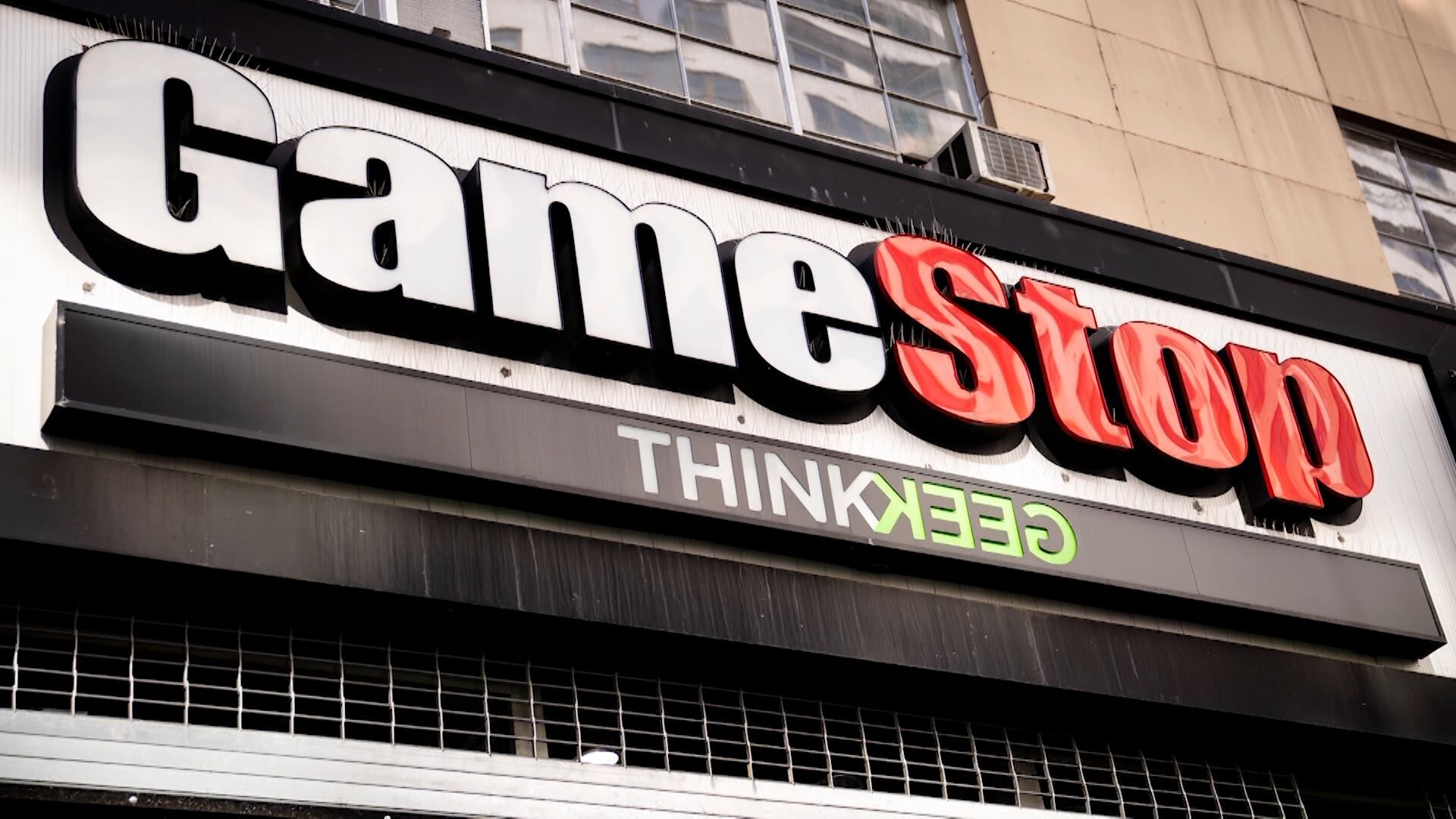
Gamestop shares were up on The Wall Street Journal report that the video game retail company plans to enter the NFT and crypto space. Adam Hollander, the founder of Hungry Wolves NFT, joined Cheddar to break down how it could be a lifeline for the struggling meme stock darling. "They're not resigning themselves to becoming the next Blockbuster story, and so while people may not be buying as many video games in a retail environment anymore, NFTs, in particular, people are starting to expect more gaming utility on the backend — at least for a variety of projects — and I personally think its a very smart move for them to do this," Hollander told Cheddar.
On Saturday, New York will join neighboring New Jersey and Connecticut in authorizing mobile sports betting. Matt Kalish, president and co-founder of Draftkings North America, joined Cheddar to talk about the landmark change that is estimated to rake in $500 million in annual tax revenue on a potential billion-dollar market. Kalish also addressed the possibility that legalized sports betting in the Empire State could cannibalize his company's revenues in the bordering states. "It's pretty inconvenient, you know, to go across the border to make a bet. And people were doing it, but I think it really stifled a lot of the opportunity," he said. "So while there's some of that going on, I think really a tremendous amount, like a giant percent, of New York will be very incremental."
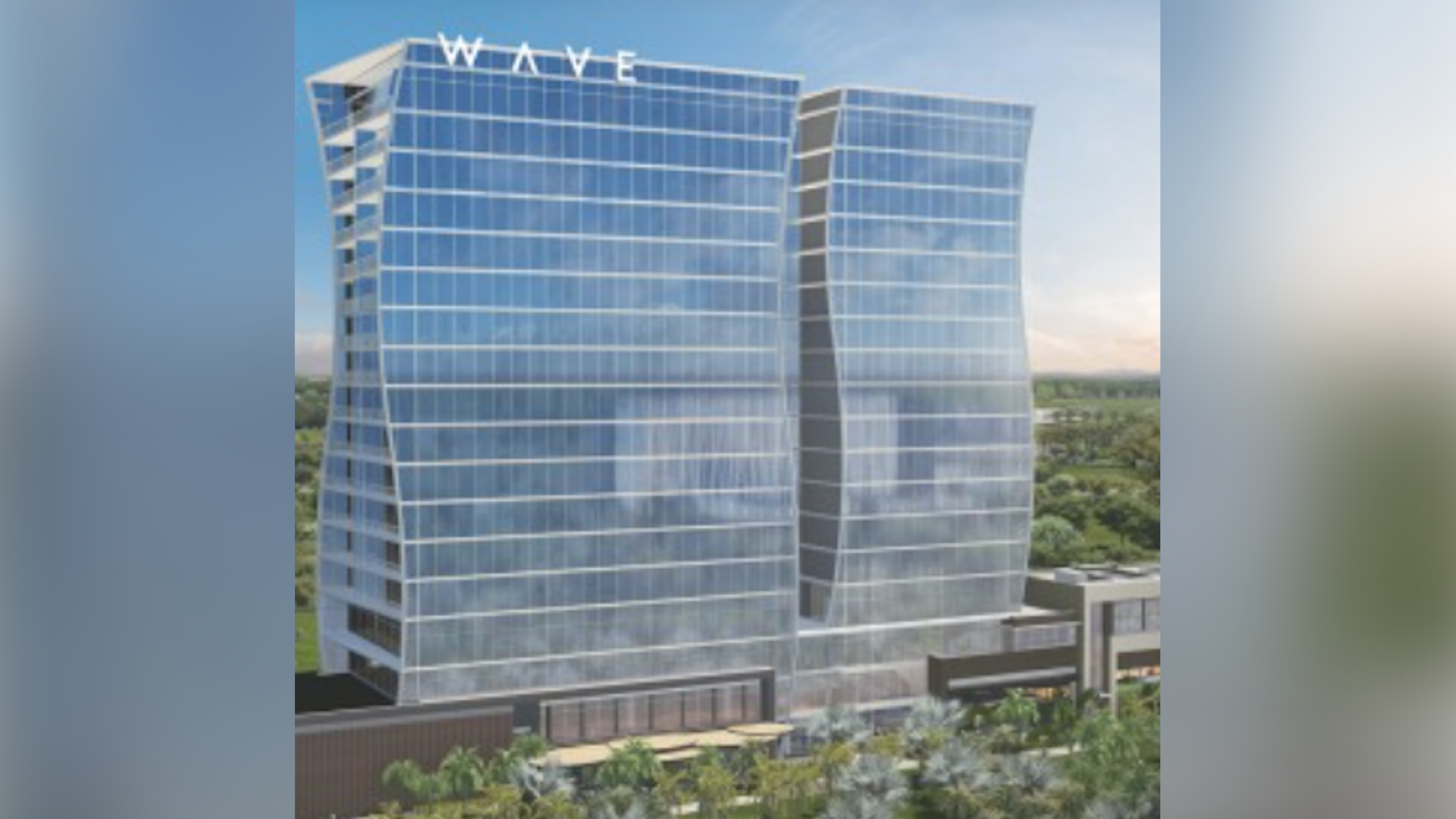
James Tattersall, director of sales and marketing for Lake Nona Wave Hotel, talks about the hotel's initiatives to foster diversity and how these amenities champion inclusivity in the Orlando area.
Desmond Howard, former NFL wide receiver and Modelo college football playoff ambassador, joins Cheddar News to talk about the Modelo sweepstakes honoring the 30th anniversary of his iconic punt return.
Satoshi Island is looking to become the world's first blockchain-driven economy. James Law, the chief architect of the planned private community, joined Cheddar to discuss the vision for the potential crypto capital of the world and how it will be brought to life. For people looking to live on the island, Law said they will be able to purchase land and homes and even design their own dwellings both in real life and via the metaverse. "Satoshi Island has already been digitally scanned. We have an absolute digital twin already in our metaverse," he said. Citizenship applications are expected to be launched via NFTs, he told Cheddar.
Satellite launch service Virgin Orbit has gone public on the Nasdaq via a SPAC merger with NextGen Acquisitions with a valuation of about $3.2 billion. CEO Dan Hart joined Cheddar's "Between Bells" from in front of his LauncherOne rocket in New York City's Times Square to talk about what's next after the IPO, an upcoming "Above the Clouds" mission to deliver commercial and national security payloads, and the benefits of their rockets being launched from commercial 747 aircraft. "We can launch anywhere in the world," he said. "There are almost 80 space agencies across the world, for instance, and about 10 of them have space launch. We can give them a space flight capability overnight by taking a runway and turning it into a spaceport."
CEO Tim Cook made a staggering $98.7 million in total compensation for 2021. The majority of Cook's earnings came from stocks along with his salary of $3 million. Apple recently became the first publicly traded U.S. company to have crossed the $3 trillion valuation mark.
Tech and entertainment giant Sony appears to be getting serious about automaking. An electric concept SUV — the Vision S-02 — was unveiled at CES 2022 and is slated to be produced by a new subdivision, Sony Mobility. This comes after the company revealed the Vision S concept Sedan at CES 2020.