By Stan Choe and Damian J. Troise
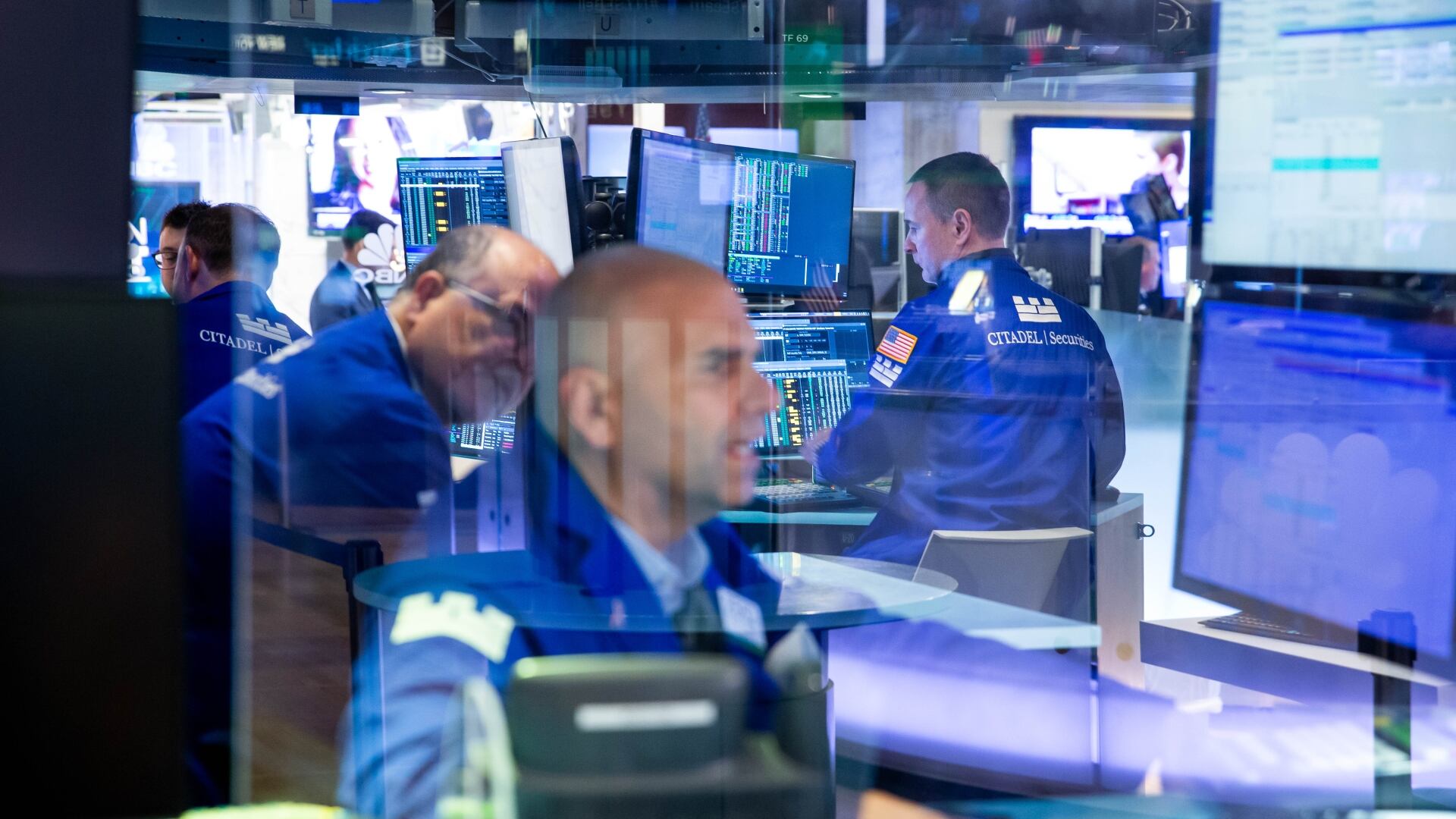
Stocks fell on Wall Street Tuesday after reports on the economy came in weaker than expected.
The S&P 500 dropped 23.91 points, or 0.6%, to 4,100.60 to break a four-day winning streak. The Dow Jones Industrial Average fell 198.77, or 0.6%, to 33,402.38, and the Nasdaq composite sank 63.13, or 0.5%, to 12,126.33.
Investors are still split on whether the U.S. economy will fall into a recession and how badly corporate profits are set to drop. The biggest question remains what the Federal Reserve will do next with interest rates after hiking them furiously over the last year to get high inflation under control.
The reports on job openings and factory orders released Tuesday may have heightened recession fears. But they may also give the Fed reason to hold rates steady at its next meeting, for the first time in more than a year, offering a possible upside for markets.
One report showed employers advertised 9.9 million job openings in February, a sharper fall-off than economists expected. The Fed has been paying close attention to the numbers because the job market has remained so strong despite higher rates. The hope is that a softening in the number of openings could take some pressure off inflation without having to throw many people out of work.
A separate report showed that factory orders weakened in February more than economists expected. That could give the Fed another reason to hold off on hiking rates again to beat inflation, which has been slowing but remains too high.
“It's all suggesting that the economy is slowing down, which was the Fed's intent all along in terms of raising rates,” Michael Arone, chief investment strategist for SPDR business at State Street Global Advisors.
What the Fed does has such a grip on Wall Street because higher interest rates undercut inflation by slowing the entire economy, which raises the risk of a recession. They also hurt prices for stocks, bonds and other investments.
A potentially more impactful report will arrive Friday, when the U.S. government gives the latest monthly update on how many jobs were created across the country.
Some relatively encouraging data on inflation came in from other parts of the world Tuesday.
In Europe, a survey by the European Central Bank showed expectations for inflation in the coming year is falling among consumers in the region. That’s key because lower expectations can help the economy avoid a vicious cycle where inflation keeps building momentum.
A separate report also showed inflation at the wholesale level in the region slowed by more in February than economists expected.
In Australia, the country's central bank kept its key interest rate unchanged at 3.60%. It said it wanted time to see how its past hikes to interest rates are working through the system.
While Australia’s economy is much smaller than that of the U.S. or European Union, its central bank and that of New Zealand tend to “set the tone for monetary policy cycles,” Ipek Ozkardeskaya of Swissquote.com said in a commentary.
In the U.S., traders flipped bets back toward the Fed holding steady on rates at its meeting next month. A day earlier, a slight majority was betting on another increase in rates. That helped yields in the bond market to fall.
The yield on the 10-year Treasury fell to 3.34% from 3.42% late Monday. It helps set rates for mortgages and other important loans. The two-year Treasury, which moves more on expectations for the Fed, dropped to 3.82% from 3.97%.
Longer term, there seems to be more confidence on Wall Street that the Fed will have to cut rates later this year.
That has helped to buoy stocks, particularly technology and other high-growth companies, because rate cuts tend to act like steroids for markets. But the Fed has been consistent in saying it does not expect any rate cuts this year.
Critics also are skeptical, saying inflation still remains too high for the Fed’s liking. And any cut in rates would likely come only if the economy were in much weaker shape, something that could torpedo stocks too.
Tuesday's weaker-than-expected readings on the economy follow a report on Monday that showed U.S. manufacturing continues to shrink faster than economists forecast.
Given such weakness, this is “not the time to chase growth,” suggested Mark Haefele, chief investment officer of UBS Global Wealth Management.
On Wall Street, shares of Virgin Orbit plunged 23.2% to 15 cents after the company filed for Chapter 11 bankruptcy protection. It's been contending with the fallout of a failed mission this year and increasing difficulty in raising funding for future missions.
Stocks in industries whose profits are closely tied to the strength of the economy also fell more than the rest of the market, such as industrial and energy companies. Valero Energy fell 8% for one of the biggest losses in the S&P 500.
Oil prices swung through the day before adding to their big gains from Monday, when they shot higher on worries about tighter supplies.
Benchmark U.S. crude rose 29 cents to $80.71 per barrel. Brent crude, the international standard, rose a penny to $84.94 per barrel.
___
___
AP Business Writers Elaine Kurtenbach and Matt Ott contributed.