By Stan Choe, Damian J. Troise, and Alex Veiga
Updated 6:00 pm ET
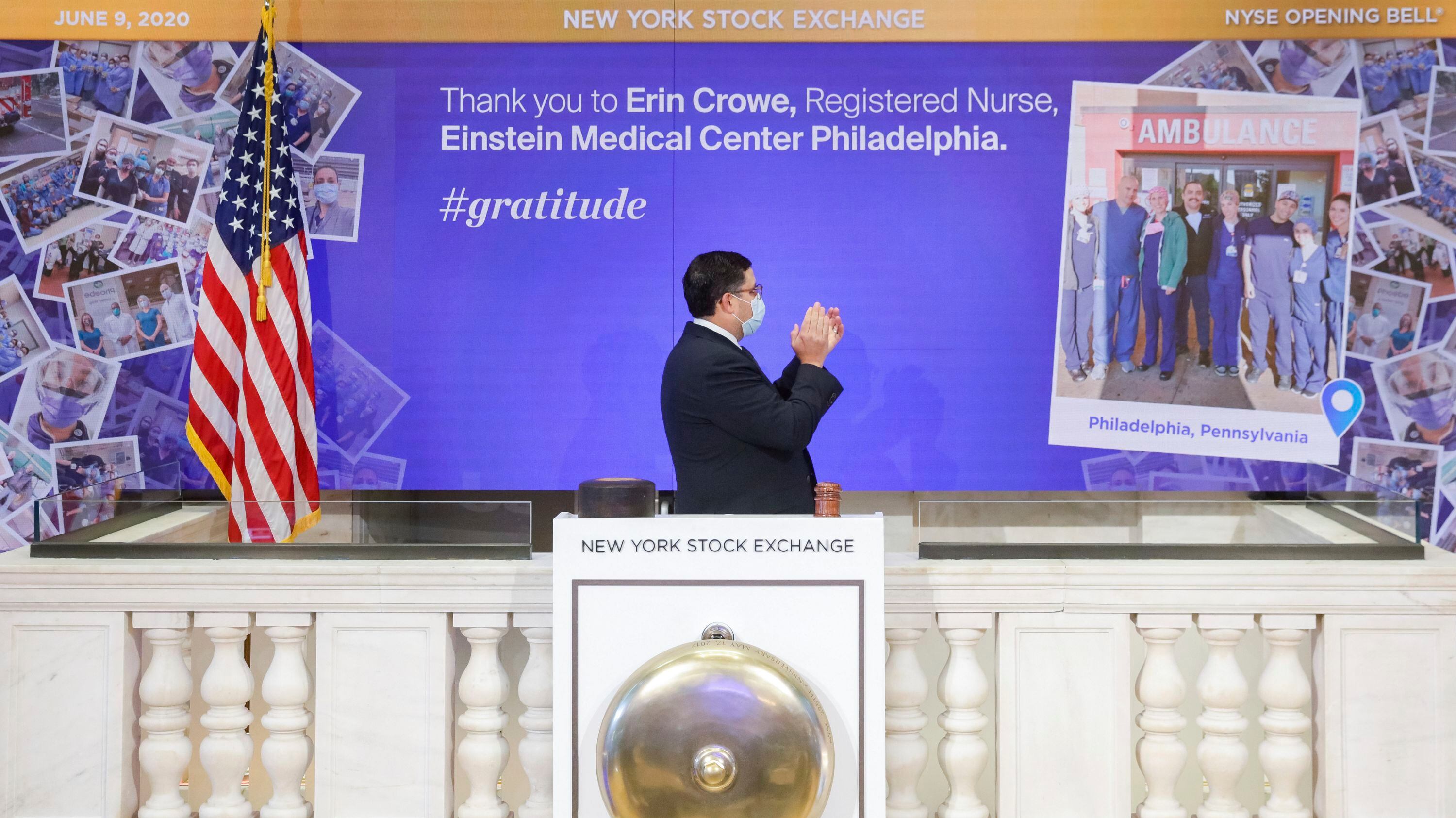
Wall Street hit the brakes Tuesday, a day after its remarkable, weekslong rally brought the S&P 500 back to positive for the year and the Nasdaq to a record high.
The benchmark index fell 0.8%, its largest loss in almost three weeks, as traders cashed in on some of the market's recent gains. Financial, industrial and health care stocks led the slide. Technology companies were among the gainers, helping to push the Nasdaq to another all-time high.
Skeptics have been saying for weeks that Wall Street’s huge rally, which reached 44.5% between late March and Monday, may have been overdone. The economy has given glimmers of hope that the recession could end relatively quickly as governments lift their lockdown orders, but the strength and speed of the stock market’s rebound has easily outpaced expectations for a recovery in the broader economy and corporate profits.
“Today is actually a pretty mild digestion of recent gains, and I think it’s long overdue,” said Sam Stovall, chief investment strategist at CFRA.
The S&P 500 lost 25.21 points to 3,207.18. The index is now back in the red for the year and remains 5.3% below its all-time high set in February. The Dow Jones Industrial Average dropped 300.14 points, or 1.1%, to 27,272.30. The Nasdaq composite rose 29.01 points, or 0.3%, to 9,953.75.
In another sign of increased caution, the yield on the 10-year Treasury yield fell to 0.83% from 0.88% late Monday. It tends to move with investors’ expectations of the economy and inflation, though it’s still well above the 0.64% level where it started last week.
Wall Street has been generally rising since late March, at first on relief following emergency rescues by the Federal Reserve and Congress. More recently, investors have begun piling into companies that would benefit most from a reopening economy that’s growing again.
Banks, airlines, energy companies, and others that rely heavily on economic growth have been leading the way in recent weeks. They got a big boost on Friday when the government said that employers added jobs to their payrolls last month, even though economists expected millions to be cut. Investors took it as a sign that the economy could pull out of the recession that began in February relatively quickly.
Those companies went into reverse on Tuesday. American Airlines and Alaska Air Group both fell more than 8% a day after they were near the top of the leaderboard. Marathon Oil skidded 9.1%.
Travel-related companies that have been among the hardest-hit stocks due to the outbreak piled up more losses. Norwegian Cruise Line sank 10.2%, while Carnival slid 7.5%.
Technology and communication services stocks were among the gainers. Chipmaker Advanced Micro Devices climbed 6.5% and Netflix, a big winner during the coronavirus lockdown, gained 3.5%.
Smaller stocks also pulled back following a 10.2% rally in a little more than a week. The Russell 2000 index of small-cap stocks fell 29.84 points, or 1.9%, to 1,507.05.
European stock markets closed broadly lower. Germany’s DAX lost 1.6% after the country reported that its exports fell by a quarter in April. France’s CAC 40 also slid 1.6%, and the FTSE 100 in London dropped 2.1%. Asian markets ended mixed.
Oil prices rose. Benchmark U.S. crude oil for July delivery rose 2% to settle at $38.94 a barrel. Brent crude oil for August delivery rose 0.9% to $41.18 a barrel.
Investors have grown to expect negative economic data, given the widespread impact on businesses and consumers from the outbreak, and are more likely to react to unexpected positive news, like Friday’s surprising jobs report, Stovall said.
“Unless — since so many states are now reopening — we start to see a pretty sharp upward tick in virus cases,” he said. “Then, I think, Wall Street starts to worry that the government will start leaning toward shutting down once again.”
The next big milestone for markets is coming Wednesday when the Federal Reserve announces its decision on monetary policy following a two-day meeting. The Fed’s promise of immense, unprecedented amounts of aid helped stocks begin their rally, and investors want to see what their reaction will be to the recent upturn in job numbers.
___
AP Business Writers Yuri Kageyama and Tom Krisher contributed.


