By Tammy Webber and Hannah Fingerhut
With the coronavirus now surging anew, voters ranked the pandemic and the economy as top concerns in the race between President Donald Trump and Democratic rival Joe Biden, according to AP VoteCast, a national survey of the electorate.
Voters were especially likely to call the public health crisis the nation’s most important issue, with the economy following close behind. Fewer named health care, racism, law enforcement, immigration or climate change.
After eight months and 232,000 deaths, the candidates faced a dissatisfied electorate. Many voters said they have been personally affected by the virus. Roughly 6 in 10 said the country is going in the wrong direction.
The survey found that Trump's leadership loomed large in voters' decision-making. Nearly two-thirds of voters said their vote was about Trump — either for him or against him.
Here’s a snapshot of who voted and what matters to them, based on preliminary results from AP VoteCast, a nationwide survey of more than 127,000 voters and nonvoters conducted for The Associated Press by NORC at the University of Chicago.
Read more: Cheddar Poll: Biden Leads Trump as COVID Edges Economy as Voters' Top Issue
FACING THE PANDEMIC
About 4 in 10 voters said the coronavirus pandemic is the top issue facing the nation. Roughly 3 in 10 called the economy and jobs most important. Trump, who has downplayed the virus, sought to focus his campaign on the pre-pandemic economy, while Biden has said the economy won't improve unless the virus is controlled.
Voters were more likely to think the government should prioritize limiting the spread of the coronavirus — even if it damages the economy — than to say the economy should be the top priority.
Roughly half of voters said the coronavirus situation in the U.S. is not at all under control. About 6 in 10 voters said the economy is in poor shape, while about 4 in 10 said economic conditions are excellent or good.
THE PANDEMIC'S PERSONAL IMPACT
From lost jobs and income to missed milestones, voters felt the impact of the pandemic personally as the coronavirus swept the country.
An overwhelming majority of voters said the coronavirus pandemic has affected them personally. About 4 in 10 said their household lost a job or income. Roughly half said they missed out on a major event, and about 2 in 10 said that a close friend or family member died from the virus.
Voters see their financial situations as holding steady despite the fragile economy. About 7 in 10 said their personal finances are stable; roughly 2 in 10 said they are falling behind. Just about 1 in 10 said they are getting ahead financially.
VOTING
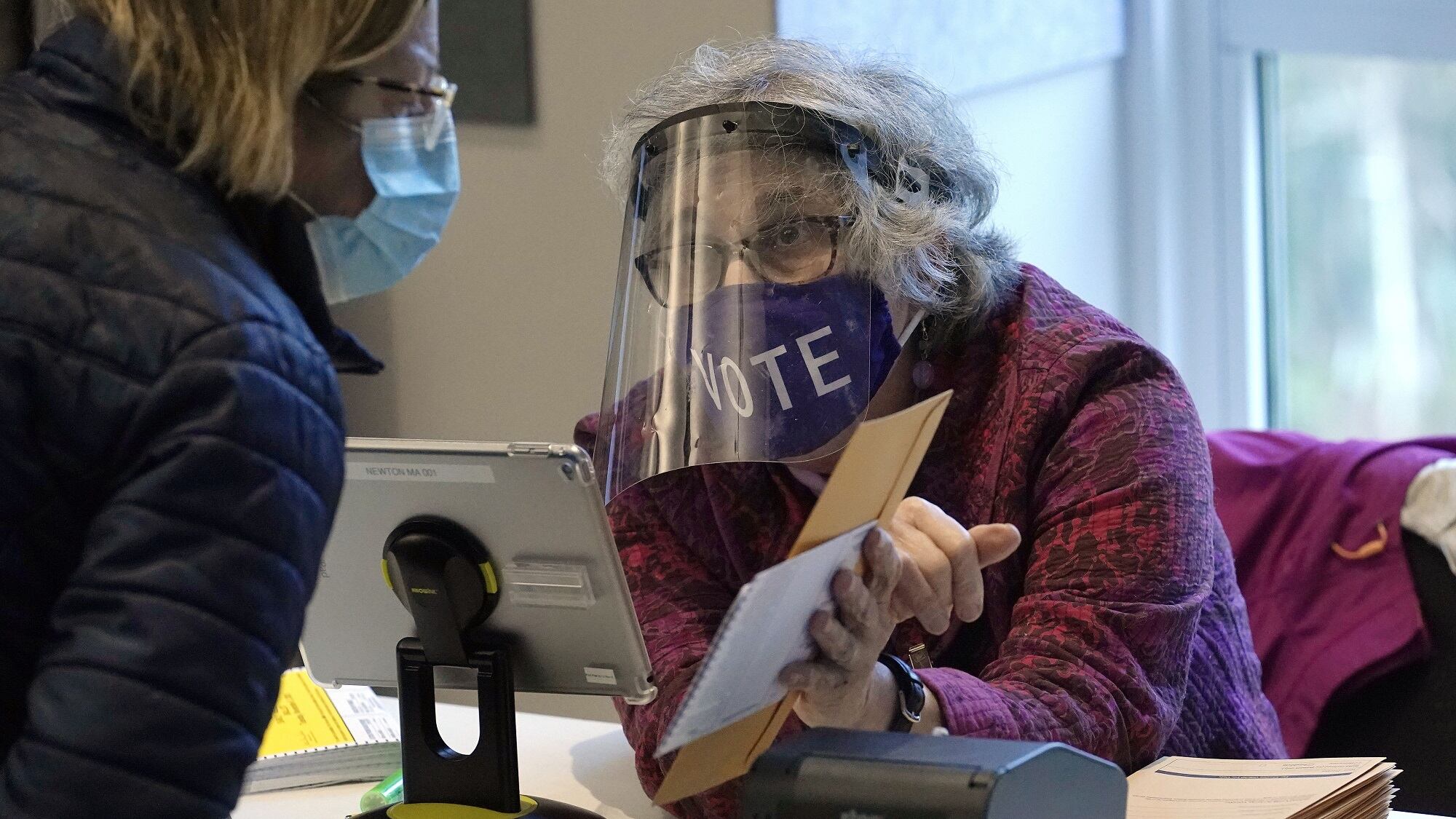
Voters did not stay on the sidelines, with experts predicting total votes will exceed the 139 million cast in 2016. About 101 million people voted ahead of Election Day.
Roughly three-quarters said they've known all along who they were supporting in this election.
Voters were measured in their confidence that the vote count would be accurate — despite Trump seeking to sow doubts about the integrity of the vote count.
About a quarter of voters said they are very confident that the votes in the election will be counted accurately, while 4 in 10 were somewhat confident. Roughly 3 in 10 said they are not confident in an accurate vote count.
RACIAL UNREST
After a summer of protests and sometimes-violent clashes over racial inequality in policing, about half of voters call racism a “very serious” problem in U.S. society. Roughly 3 in 10 say it’s somewhat serious; about 2 in 10 say it’s not a serious problem. Similar shares call racism a serious problem in policing in this country.
About a third of voters said police in the U.S. are too tough on crime; fewer — about a quarter — said police are not tough enough. About 4 in 10 think police handle crime about right.
But compared with the pandemic and the economy, relatively few voters — about 1 in 10 — deemed racism or law enforcement the country’s top issue. Even fewer, 4%, called law enforcement most important.
Webber reported from Fenton, Michigan.
AP VoteCast is a survey of the American electorate conducted by NORC at the University of Chicago for Fox News, NPR, PBS NewsHour, Univision News, USA Today Network, The Wall Street Journal and The Associated Press. The survey of 106,240 voters was conducted for eight days, concluding as polls closed. Interviews were conducted in English and Spanish. The survey combines a random sample of registered voters drawn from state voter files; self-identified registered voters conducted using NORC’s probability based AmeriSpeak panel, which is designed to be representative of the U.S. population; and self-identified registered voters selected from nonprobability online panels. The margin of sampling error for voters is estimated to be plus or minus 0.4 percentage points. Find more details about AP VoteCast’s methodology at https://ap.org/votecast.