Volkswagen is making its first all-electric SUV available to American customers with deliveries to U.S. dealerships beginning this month.
"Obviously there's a movement at hand, and Volkswagen likes to lead and likes to be part of the movement," Volkswagen Group of America CEO Scott Keogh told Cheddar. "We think electric vehicles are ready to explode. It's already happening worldwide, and we want to be part of the lead."
The ID.4 model is currently manufactured in Germany and China but will begin U.S. production in 2022. Volkswagen's plant in Chattanooga, Tennessee, will produce the electric vehicle locally.
Keogh said the ID.4 was competitive at $39,995 but noted that the federal tax credit for electric vehicles helped put the model right in the "sweet spot" for the U.S. car market.
"Make no mistake, I think it is important," he said of the credit. "This is technology we want to have adopted. It's technology we want embraced by all American consumers, and certainly, the $7,500 tax credit helps build and lengthen that runway to get this off the ground."
The German automaker's stock price has soared in recent weeks, even as industry leader Tesla's sky-high valuation has shrunk.
Keogh attributed this to "old auto" showing its strength in the new electric vehicle market.
"In any competitive industry, there never is just a number one," he said. "There's always a two, and there's always a three, and frankly Volkswagen has now joined the game."
He also said the market is responding to the company's commitment to the Paris Climate Agreement, and its plan to reach net-zero emissions by 2050.
"The market buys the future. The market believes the future, and right now they're believing us."
As for how the ID.4 stacks up to Tesla's Model Y, another fully electric SUV, Keogh touted Volkswagen's sales infrastructure and market penetration.
"We have 650 dealers across the country," he said. "They've been trained. We have EV specialists. They're ready to sell the car. They're ready to service the car. They're ready to embrace the car."
This footprint, he added, gives the company an edge in capturing new customers in the electric vehicle market, which is more important than clawing customers away from Tesla.
"We need internal combustion engine owners to look at this car," he said.
Aaron Jefferson, VP of product at Luminar, joined Cheddar to discuss partnering with automaker Volvo to bring its LIDAR (light detection and ranging) tech into autonomous cars capable of safely driving on the highway. While companies like Tesla have come under fire due to safety issues with its self-driving technology, Jefferson noted how his company's tech differs. "Our LIDAR, its iris sensor that's really set for production, is able to sense, understand, and give the vehicle confidence to react accordingly such that you don't have these same types of issues," he said. The Ride Pilot technology in Volvo vehicles will be rolled out in California following safety testing.
The fintech app backed by billionaire Mark Cuban called Dave made its public debut on the Nasdaq Thursday via a SPAC merger. CEO and co-founder Jason Wilk spoke to Cheddar's Kristen Scholer about the IPO and how his company's services distinguish it from traditional banks. "Customers come to us because they're tired of paying $20 billion of overdraft fees, and they come to Dave, they download our app, and within minutes they can get access to $250 of no interest credit, which we give them through our own proprietary machine learning model," he told Cheddar.
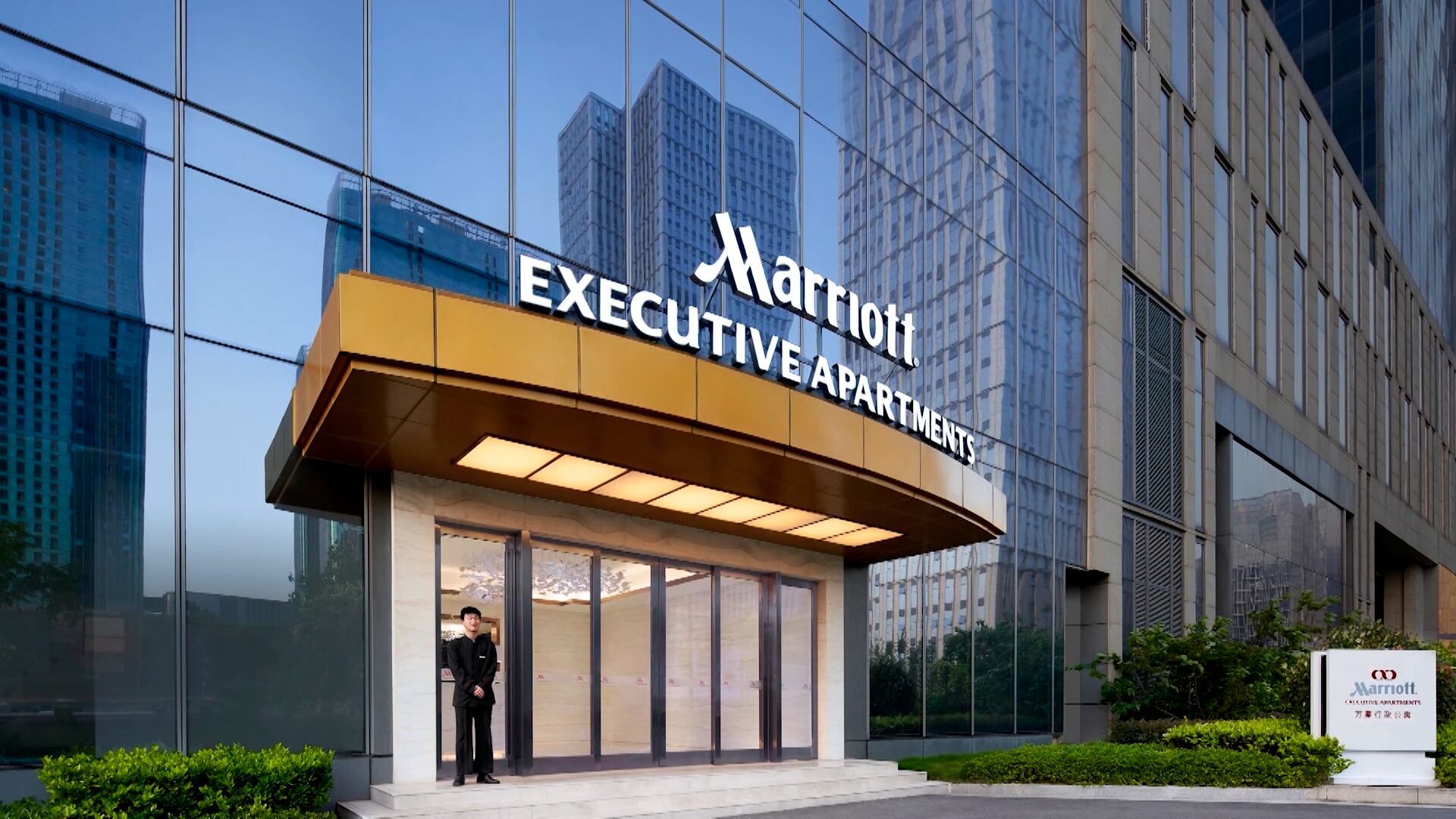
Stephanie Linnartz, president of Marriott International, joined Cheddar's "Closing Bell" to talk about the launch of the Marriott Design Lab, a new facility within its Bethesda, Maryland, headquarters to explore innovative tech offerings for bolstering the guest experience. "It's all around figuring out how we can innovate in the guest room in the public space, looking at how we can use robotics, improve sustainability, etcetera," she said. Some short-term changes in the future Linnartz also noted is an expansion of the chain's mobile capabilities to make check-in and check-out an easier process for guests, as well as mobile room service, from the feedback it received during the pandemic.
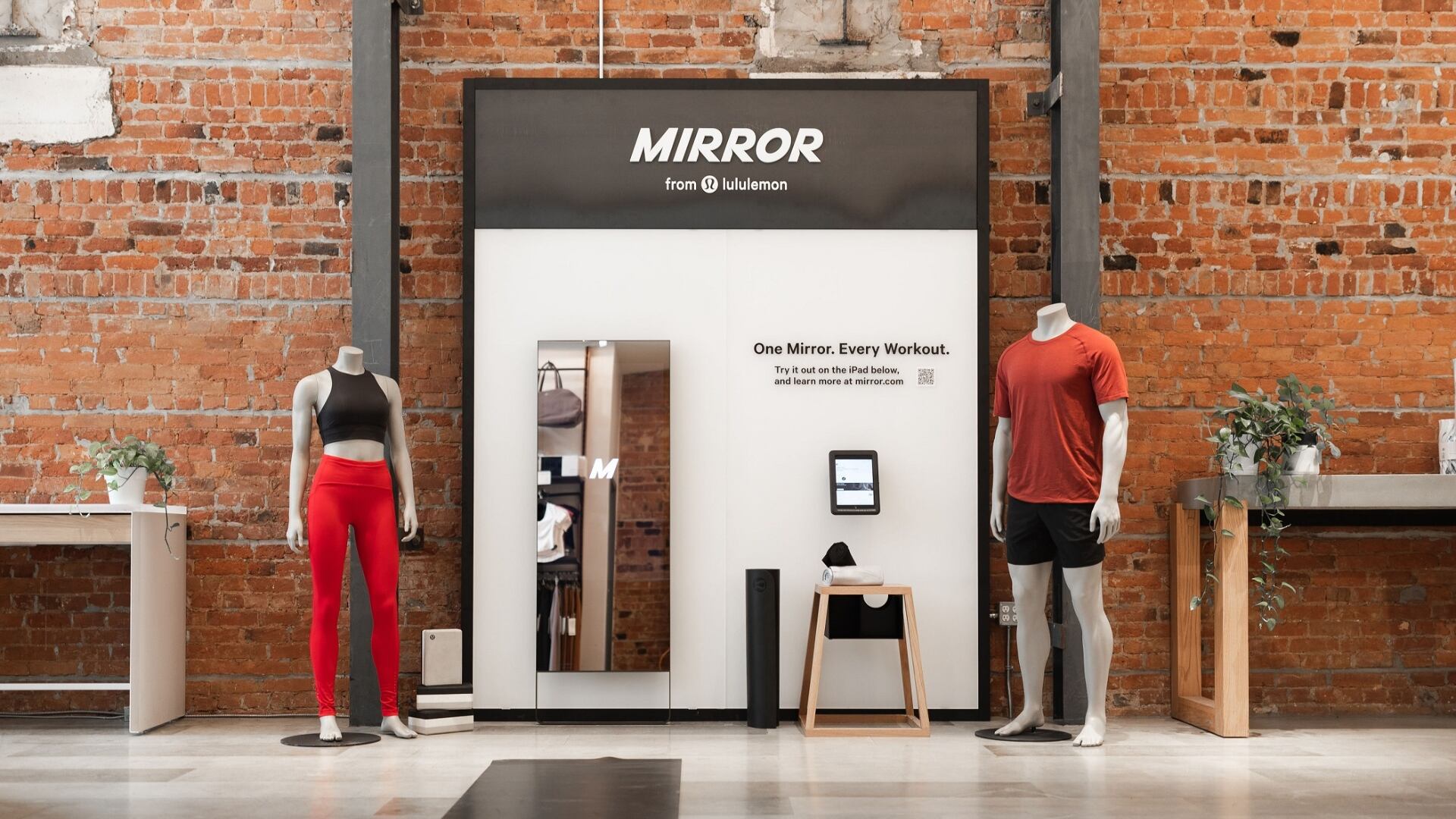
Nike has initiated a lawsuit against athletic apparel retailer and competitor Lululemon over claims of patent infringement. The sneaker giant is claiming the technology in their rival's MIRROR home gym was patented back in 1983.
Adi Robertson, senior reporter at The Verge, joins Cheddar News to break down the battle between two NFT collections by Phunky Ape Yacht Club and PHAYC that are selling plagiarized Bored Ape Yacht Club designs.
Following the attack on the Capitol last year, several major corporations promised to no longer pour funds into the campaigns of Republican lawmakers who supported the January 6 insurrection. But not all have stood firm on their word. Among those that did keep to their promise were Nike, American Express, and Walgreens.
Maja Vujinovic, managing director of investment and advisory firm OGroup LLC, spoke to Cheddar about factors impacting the price of a Bitcoin. She attributed some of the drop-offs in the cryptocurrency's value to inflation and expects the space to continue being volatile. Vujinovic also stated that Bitcoin is here stay and will continue to expand, opening the door for legislators to establish regulation around cryptocurrencies.
Chris Johnson, CEO of Johnson Research Group, breaks down how the Feds decision impacts economic growth and highlights certain sectors within tech that offer a hedge on inflation.