North Carolina's high-tech Research Triangle may get even more advanced in years to come.
The Tar Heel State announced on Friday that it is exploring options to bring Virgin Hyperloop One technology to the Raleigh-Durham-Chapel Hill corridor, which has grown into a hub for technology companies and research universities.
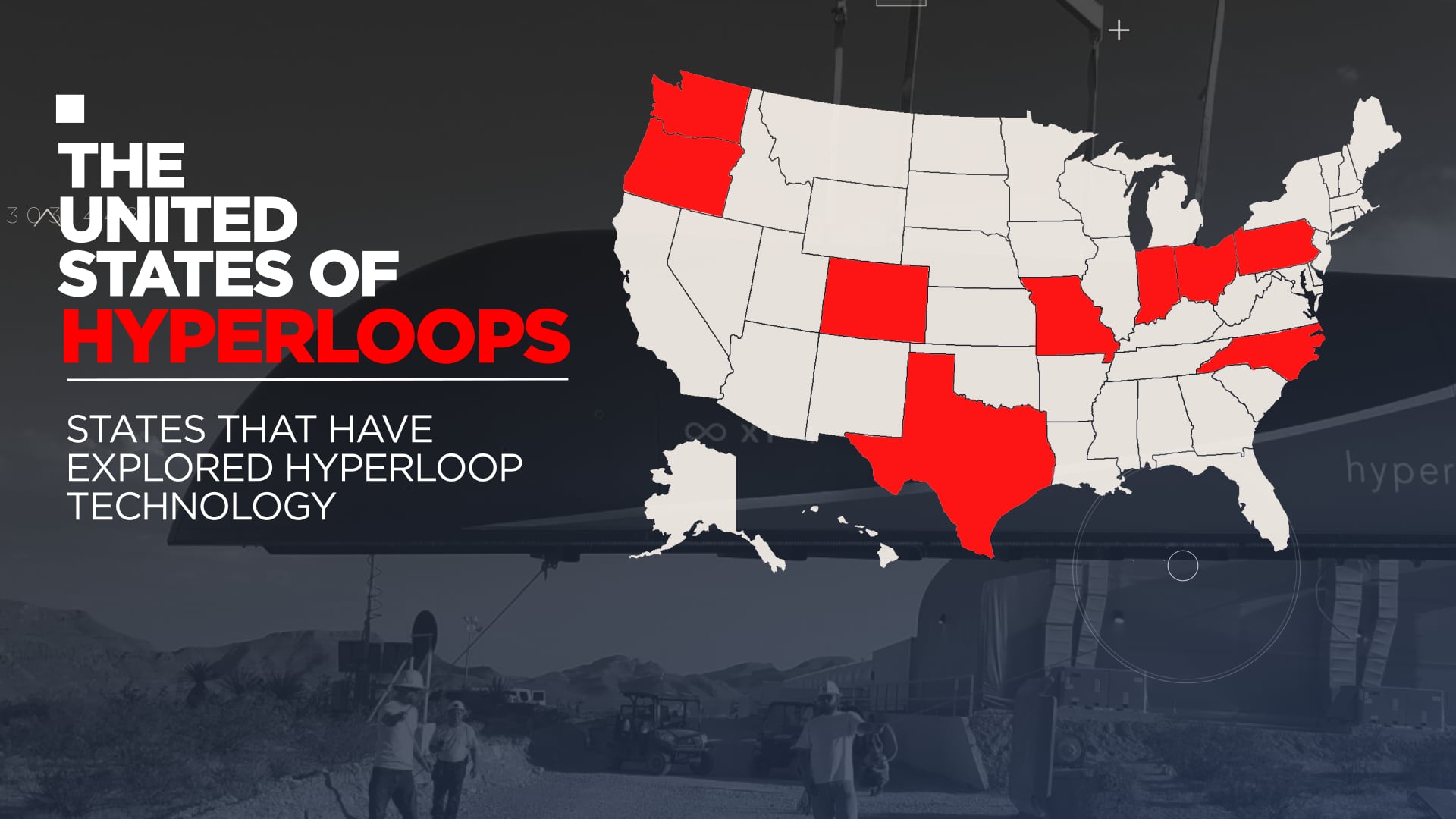
"You can literally begin to start thinking about the cities like they're metro stops," Jay Walder, the CEO of Virgin Hyperloop One, told Cheddar. North Carolina's inquiry makes it the ninth state to explore hyperloop as a potential regional transportation system.
"We have stopped our imagination somewhere around 1956, which is when the interstate highway system was created, and it is time to restart our imagination," Walder said.
Virgin Hyperloop One, which was developed by Virgin founder Richard Branson, is the first company to successfully operate a full-scale hyperloop vehicle system, which uses electric propulsion and electromagnetic levitation in depressurized tubes to propel vehicles at hundreds of miles per hour.
"Imagine being in a super-fast vehicle that is completely smooth, no turbulence moving at airline speed," Walder added.
Although still in its early stages, hyperloop technology is proving to be a far faster, safer, and more environmentally friendly alternative to traditional forms of transportation, according to the company.
"The Research Triangle area is uniquely positioned from a technology focus, spatial layout, and favorable mid-East Coast location to benefit from a hyperloop travel solution that could quickly link America's R&D cities of Raleigh and Durham with each other and with neighboring regions in the southeast and mid-Atlantic," Joe Milazzo II, the executive director of North Carolina's Regional Transportation Alliance, said in a statement.
Trips between Raleigh, Durham, and Chapel Hill are expected to be under 10 minutes, according Virgin Hyperloop One's initial estimates.
"You can take it a step further — Raleigh-Durham to Washington DC it just over 35 minutes," Walder told Cheddar.
Vacasa is the largest full-service vacation rental property management company in the United States. Today, it announced the launch of a new homeowner app to help users monitor how the company is managing their vacation rental homes. It comes as consumer confidence in travel is on the rise ahead of the holiday season. Vacasa CEO Matt Roberts joined Cheddar News' Closing Bell to discuss.
Gaming publisher Kepler Interactive secured $120 million in funding from the Chinese gaming firm NetEase. This investment comes as the global gaming market explodes with projections to cross the $200 billion mark as early as 2023. Lindsey Rostal, Co-Founder and Game Director of Timberline Studio, one of the founding studios at Kepler joined Cheddar News' Closing Bell for more.
Everyone is stepping into the NFT space, including the Grammys. 'Oneof' is entering a three-year partnership with The Recording Academy to release exclusive NFTs commemorating the 64th, 65th, and 66th Annual Grammy Awards. A portion of the proceeds will also go to The Recording Academy's scholarship fund. Adam Fell, co-founder and board member of Oneof and the president of Quincy Jones Productions, joins Cheddar News to discuss the announcement.
Jean Foster, SVP of marketing and communications for the Consumer Technology Association, joins Cheddar News to preview what attendees can expect from this year's trade show.
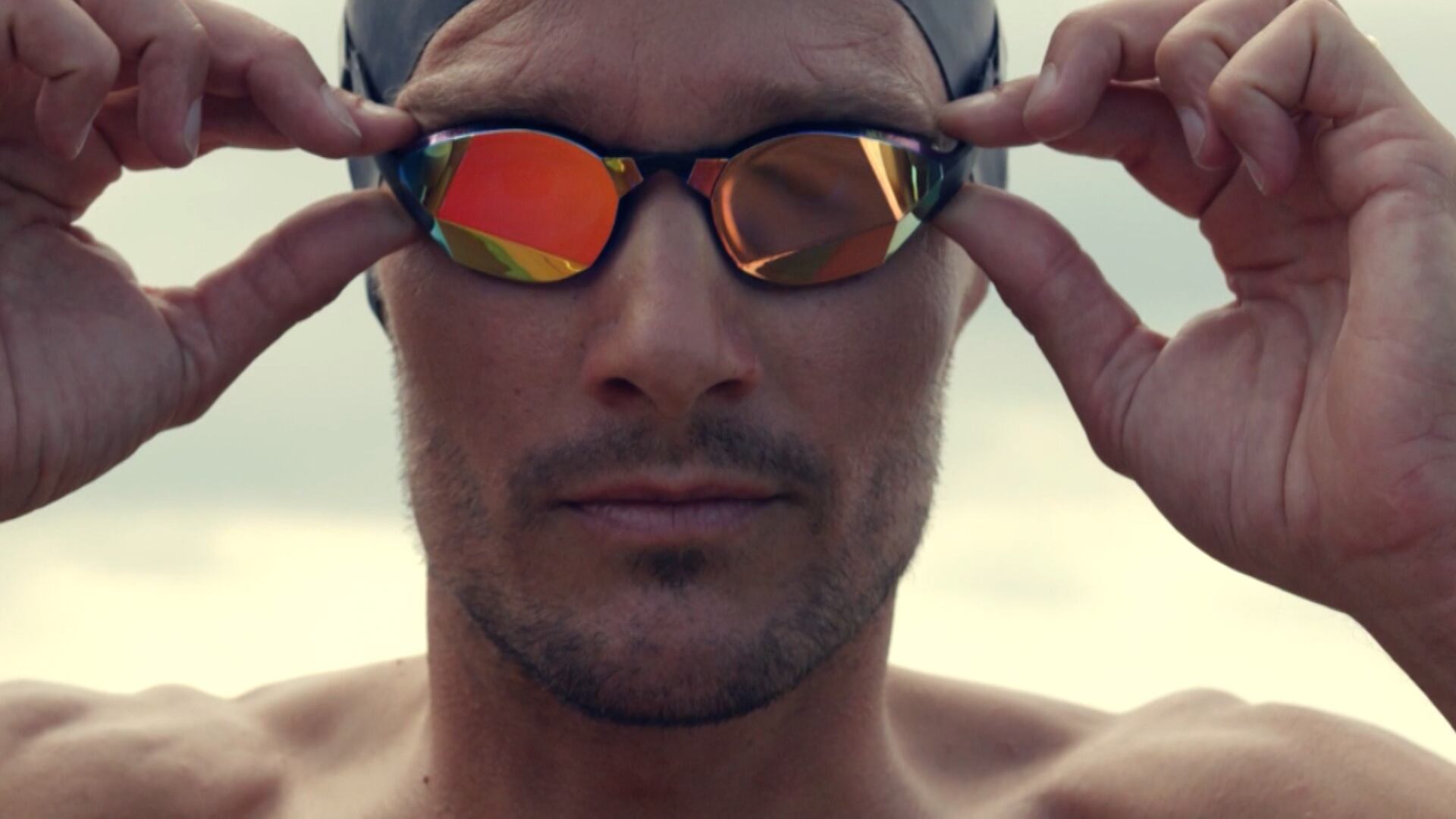
'THEMAGIC5' produces swimming goggles that contour the face using advanced robot technologies and 3D printing. Both of the company's founders Bo Haaber and Rasmus Barfred went on ABC's 'Shark Tank' and caught a $1 million deal. The duo join Cheddar News to talk about what the new funding means for the company.
Things are looking up for everyone's favorite crypto. Bitcoin rallied nearly 40% in October, hitting a record high of $66,975. That was the biggest single-month percentage rally since December 2020. On Monday morning, Bitcoin was trading 2.4% higher while Ethereum and Dogecoin were trading at 1.71% and 3.95%. Ben Armstrong, founder of BitBoy Crypto, joins Cheddar News to talk about the latest in the crypto space.
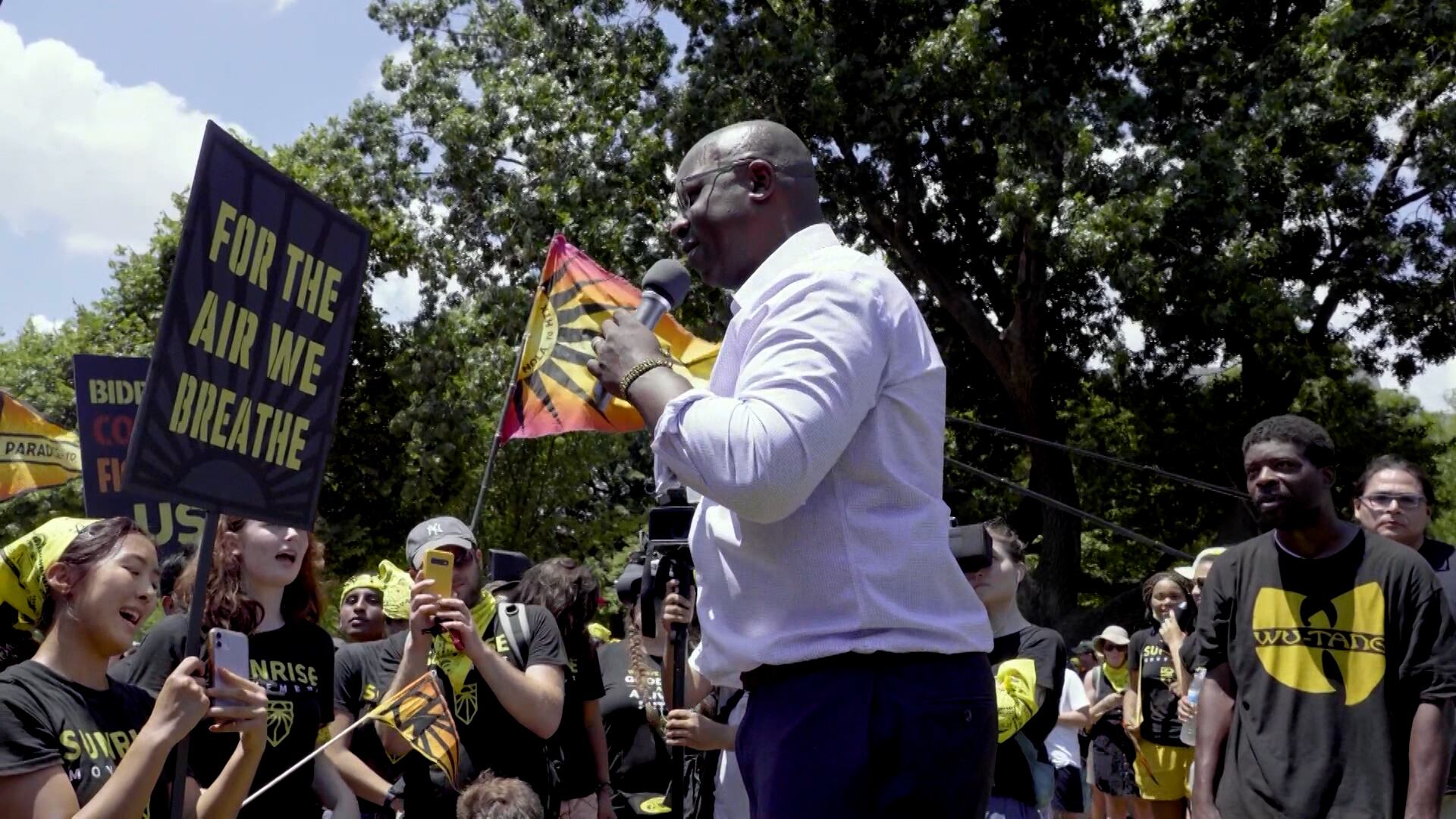
John Paul Mejia, the national spokesperson for the Sunrise Movement, joined Cheddar to talk about what the youth activist group wants to see from President Joe Biden as he attends the COP26 climate summit. Mejia admonished the president for having little to deliver on his own climate agenda domestically while at the conference. "We need the president to follow through with his promises because, frankly, it's a matter of life or death not only for communities here in the United States but also those looking to us around the world," he said.
Markets opened higher after the Dow and S&P 500 closed at record highs on Tuesday. It comes amid a slew of strong corporate earnings reports. Frances Newton Stacy, Director of Strategy, Optimal Capital, joined Cheddar's Opening Bell.
Amazon plans to launch its first prototype satellites for Project Kuiper, an internet-from-space venture, in 2022. It's the first major step in the e-commerce giant's plan to rival SpaceX by building a network of satellites in space, providing internet to rural, underserved communities around the world. Loren Grush, senior science reporter for the Verge, discusses the project and how it could transform internet access moving forward.
While Facebook didn't unveil a name change in its Q3 results, it did reveal a new reporting structure, separating its revenue into two separate businesses: its slate of social networking apps, and Facebook reality labs.
This distinction comes as Facebook continues to ramp up its augmented and virtual reality efforts as it plots its foray into the metaverse. Angelo Zino, Senior Industry Analyst, CFRA Research, joined Cheddar's Opening Bell to discuss.