North Carolina's high-tech Research Triangle may get even more advanced in years to come.
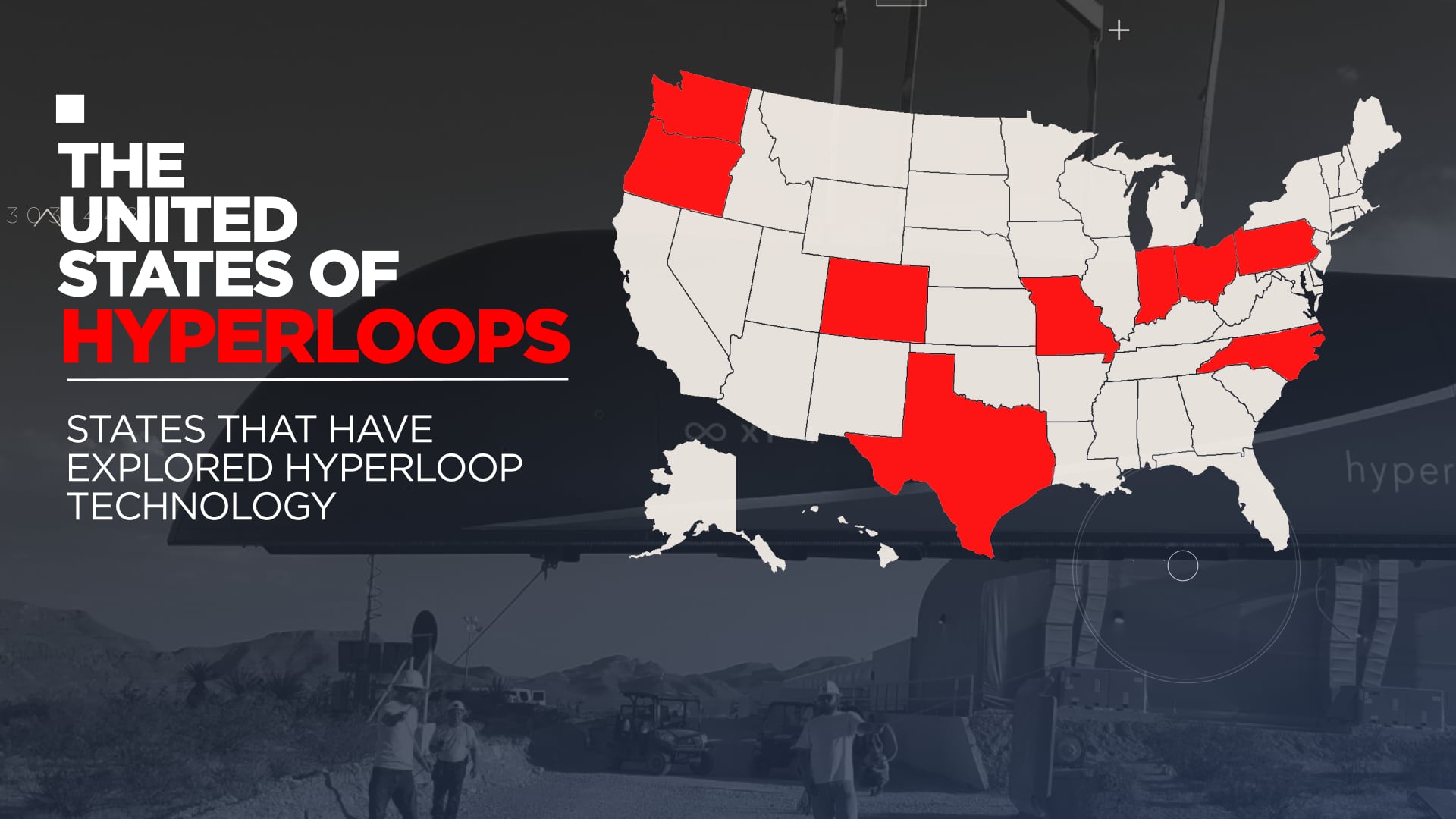
The Tar Heel State announced on Friday that it is exploring options to bring Virgin Hyperloop One technology to the Raleigh-Durham-Chapel Hill corridor, which has grown into a hub for technology companies and research universities.
"You can literally begin to start thinking about the cities like they're metro stops," Jay Walder, the CEO of Virgin Hyperloop One, told Cheddar. North Carolina's inquiry makes it the ninth state to explore hyperloop as a potential regional transportation system.
"We have stopped our imagination somewhere around 1956, which is when the interstate highway system was created, and it is time to restart our imagination," Walder said.
Virgin Hyperloop One, which was developed by Virgin founder Richard Branson, is the first company to successfully operate a full-scale hyperloop vehicle system, which uses electric propulsion and electromagnetic levitation in depressurized tubes to propel vehicles at hundreds of miles per hour.
"Imagine being in a super-fast vehicle that is completely smooth, no turbulence moving at airline speed," Walder added.
Although still in its early stages, hyperloop technology is proving to be a far faster, safer, and more environmentally friendly alternative to traditional forms of transportation, according to the company.
"The Research Triangle area is uniquely positioned from a technology focus, spatial layout, and favorable mid-East Coast location to benefit from a hyperloop travel solution that could quickly link America's R&D cities of Raleigh and Durham with each other and with neighboring regions in the southeast and mid-Atlantic," Joe Milazzo II, the executive director of North Carolina's Regional Transportation Alliance, said in a statement.
Trips between Raleigh, Durham, and Chapel Hill are expected to be under 10 minutes, according Virgin Hyperloop One's initial estimates.
"You can take it a step further — Raleigh-Durham to Washington DC it just over 35 minutes," Walder told Cheddar.
Tatenda Musapatike, Founder of the Voter Formation Project and former Political Ad Specialist at Facebook, joined Cheddar to discuss the outsized role social media plays in politics.
Amazon founder Jeffrey Bezos took to the stage at the U.N.'s COP26 Climate Summit to unveil a new plan to combat climate change, but some say it might do more harm than good. Justine Calma, Science Reporter at The Verge, joined Cheddar to discuss.
The electric vehicle space is about to see a whole new shift in its market particularly in Taxi Industry. Ride-Hailing apps like Uber and Lyft though could be left behind from this era since they cannot force their drivers to drive specific cars. Executive Analyst from ISeeCars.Com, joined Cheddar to discuss more.
a.k.a Brands, an accelerator for next-gen, direct-to-consumer fashion brands like Princess Polly, released its first earnings report as a publicly-traded company with strong results. CEO Jill Ramsey joined Cheddar's "Opening Bell" to discuss the company's recent quarter and how the company has grown since its IPO in September.
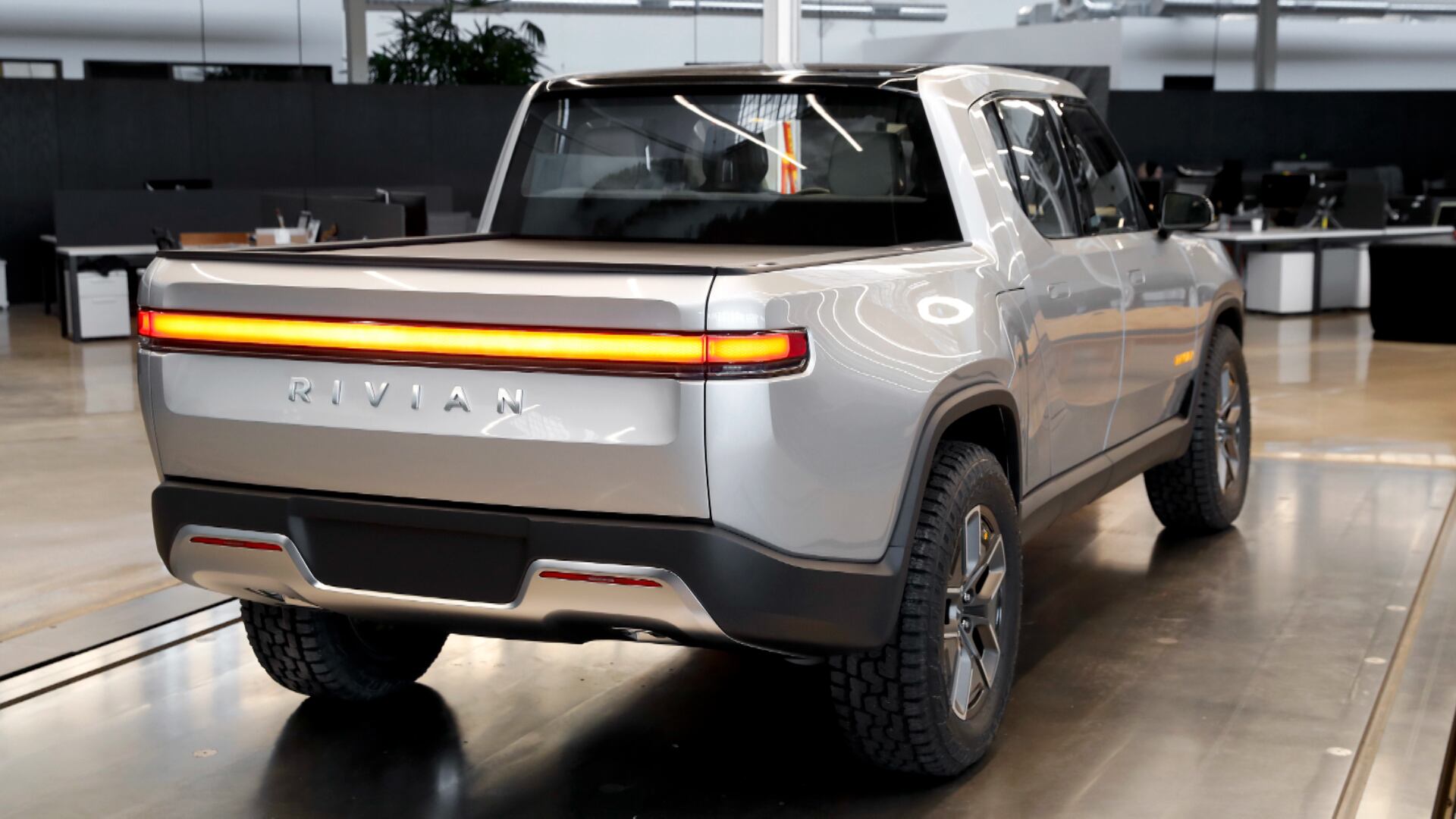
Rivian is set to makes its market debut as the biggest IPO since Facebook in 2021. The EV maker priced its stock above the expected range at $78 apiece, allowing it to raise a whopping $11.9 billion. Matt Toole, director of deals intelligence at Refinitiv, joined Cheddar to discuss Rivian's highly anticipated IPO and how it's sending the already booming IPO market even higher.
A judge shot down a request by Apple to hold off on changes to payment options in the app store that would allow companies like Epic Games to use external payment systems. Apple had sought a stay that could delay making changes for years but the judge ordered them to implement fixes by December. The tech giant plans to appeal.
Twitter has officially launched its paid subscription service, Twitter Blue, which provides subscribers with a number of new features, including the option to edit tweets, post 10-minute videos, and view ad-free news articles.
Wood modification technology company Kebony recently raised $34 million in its latest funding round. The company's patented technology transformed sustainable softwood using leftover materials and makes it into a product that behaves like premium hardwood. The process has the potential to transform the global construction industry, as it is cost-effective and eco-friendly. Kebony CEO Norman Willemsen joined Cheddar News' Closing Bell to discuss.