North Carolina's high-tech Research Triangle may get even more advanced in years to come.
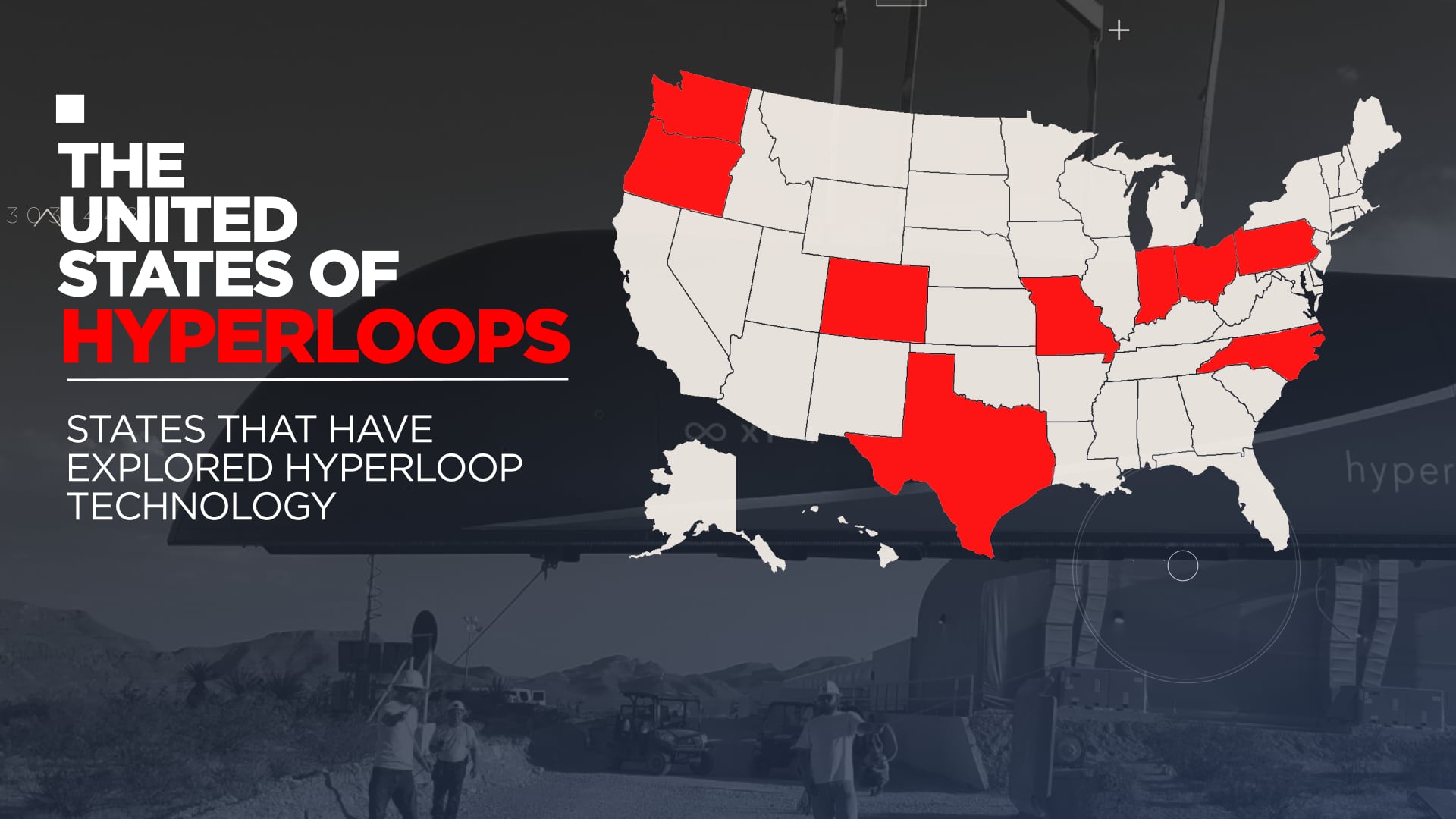
The Tar Heel State announced on Friday that it is exploring options to bring Virgin Hyperloop One technology to the Raleigh-Durham-Chapel Hill corridor, which has grown into a hub for technology companies and research universities.
"You can literally begin to start thinking about the cities like they're metro stops," Jay Walder, the CEO of Virgin Hyperloop One, told Cheddar. North Carolina's inquiry makes it the ninth state to explore hyperloop as a potential regional transportation system.
"We have stopped our imagination somewhere around 1956, which is when the interstate highway system was created, and it is time to restart our imagination," Walder said.
Virgin Hyperloop One, which was developed by Virgin founder Richard Branson, is the first company to successfully operate a full-scale hyperloop vehicle system, which uses electric propulsion and electromagnetic levitation in depressurized tubes to propel vehicles at hundreds of miles per hour.
"Imagine being in a super-fast vehicle that is completely smooth, no turbulence moving at airline speed," Walder added.
Although still in its early stages, hyperloop technology is proving to be a far faster, safer, and more environmentally friendly alternative to traditional forms of transportation, according to the company.
"The Research Triangle area is uniquely positioned from a technology focus, spatial layout, and favorable mid-East Coast location to benefit from a hyperloop travel solution that could quickly link America's R&D cities of Raleigh and Durham with each other and with neighboring regions in the southeast and mid-Atlantic," Joe Milazzo II, the executive director of North Carolina's Regional Transportation Alliance, said in a statement.
Trips between Raleigh, Durham, and Chapel Hill are expected to be under 10 minutes, according Virgin Hyperloop One's initial estimates.
"You can take it a step further — Raleigh-Durham to Washington DC it just over 35 minutes," Walder told Cheddar.
Healthcare workforce management platform ShiftMed
recently announced a $45 million funding round.
The company's platform connects nurses and healthcare professionals to hospitals and other healthcare providers.
ShiftMed's new funding comes amid widespread labor shortages in the healthcare sector. The company's CEO Todd Walrath joins Cheddar News' Closing Bell to discuss.
With only two days left until Christmas, last-minute shoppers are facing major issues caused by supply chain shortages and the rising omicron variant. Kristen Gall, president of Rakuten Rewards, joins Cheddar News to discuss.
Supply chain issues have become one of the biggest roadblocks for the U.S. EV market, with production woes likely to stunt the industry's growth in 2022. Rich Steinberg, electric vehicle expert and industry advisor, told Cheddar that the Biden administration investing in domestic mining for essential minerals used in battery manufacturing — such as lithium — could help alleviate the bottlenecks. "Some of those same materials are available domestically, they just haven't been prioritized," he said, noting the paradox between green tech and "dirty" mining. "The good news is that there are ways to extract those materials cleanly."
California-based startup Indi EV is gearing up to release its first crossover vehicle incorporating a supercomputer that will allow, among other things, gaming. Andre Hudson, head of design at Indi EV, joined Cheddar to talk about the launch of the Indi One and how the company is distinguishing itself from leaders in the EV space like Tesla. He also talked about the tech behind the Indi One and noted that the car's computer system will enable people to run applications and even create their own. "As a company, we fundamentally saw a major disconnect between how people transition into their cars using the digital devices in their life," Hudson said
Cheddar is looking back at the 12 biggest buzzwords of the year leading up to Christmas. The term for Day 12 is Web3. Definition: (noun) Also known as Web 3.0, a version of the internet where data is decentralized and based on peer-to-peer technologies.
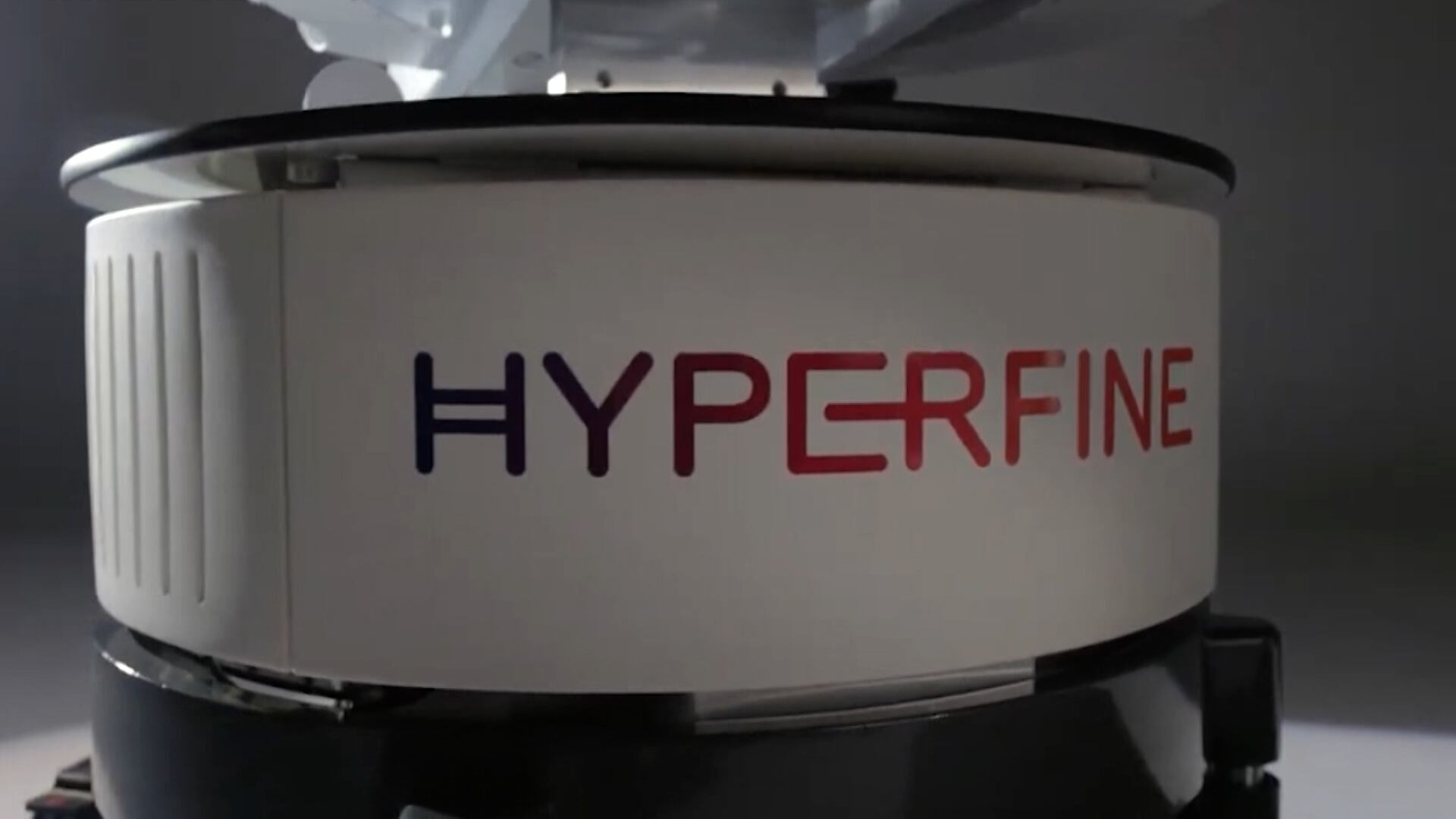
Hyperfine, the pioneer of the very first FDA-approved portable MRI device, made its public debut on the Nasdaq via a SPAC merger. CEO Dave Scott joined Cheddar's "Opening Bell" to discuss the IPO launch, the company's valuation at $580 million, and the impact of its machine called Swoop. "We can roll an MRI system, our MRI Swoop system, right into the room where you are, right up to your patient bedside, and scan you right there and get an image in less than an hour," he explained.
Social media platform TikTok was the most visited website in 2021, topping Google, Facebook, Microsoft, and Apple, according to IT security company Cloudflare.