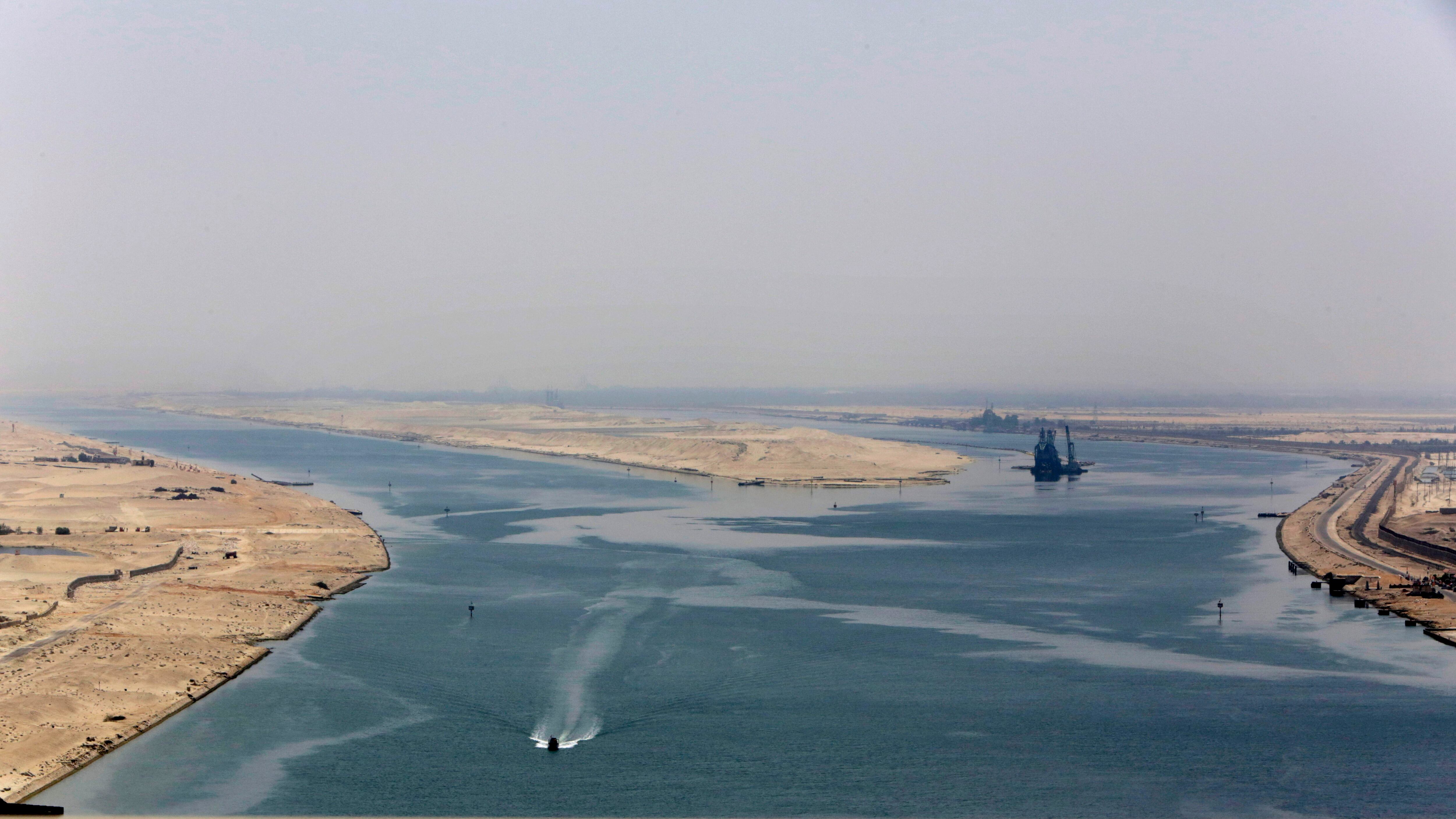
FILE - In this Aug. 6, 2015 file photo, an army zodiac secures the entrance of the new section of the Suez Canal in Ismailia, Egypt. (AP Photo/Amr Nabil, File)
A bulk carrier vessel became wedged Thursday in Egypt’s Suez Canal, briefly blocking traffic in one lane of crucial global waterway, Egyptian authorities said.
The Suez Canal Authority said in a statement that the Panama-flagged Coral Crystal ran aground in a double-lane stretch of the canal, forcing the officials to redirect other vessels in the convoy to the other lane.
It said the canal’s tugboats managed to float the south-bound vessel, which carries cargo weighing 43,000 tons. The Coral Crystal then resumed its voyage, the canal said.
Officials have not said what caused the vessel to run aground.
The ship was built in 2012 with a length of nearly 225 meters (738 feet) and a width of over 32 meters (104 feet). It was en route to Port Sudan on the Red Sea, according to Traffic Marine, a vessel tracking firm.
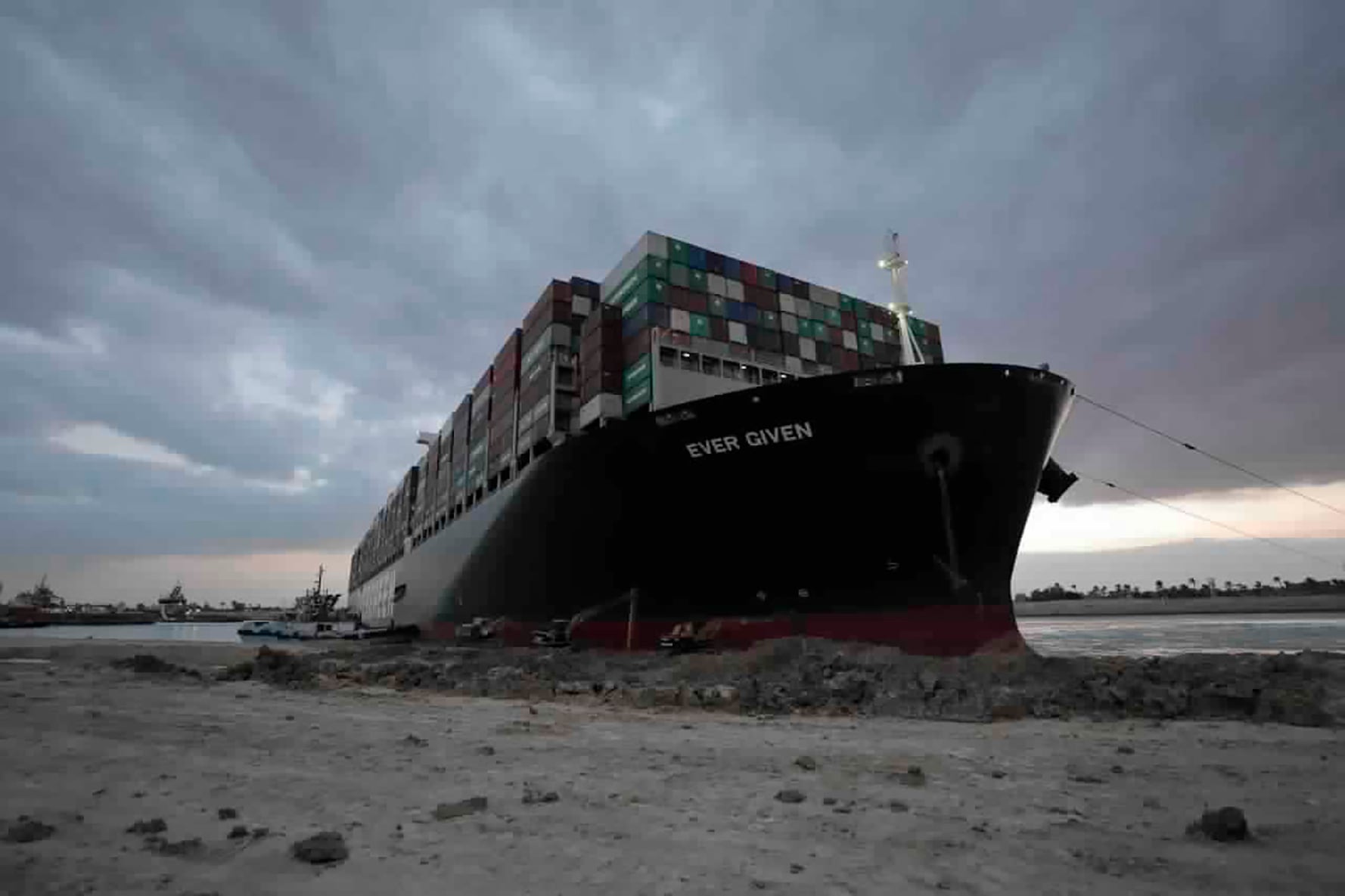
Thursday’s incident came less than six months after the massive Panama-flagged Ever Given ran aground in the single-lane stretch of the canal. The hulking vessel blocked the canal for six days before being released in a massive salvage effort by a flotilla of tugboats.
The blockage earlier this year disrupted global shipment. About 10% of world trade flows through the canal, a pivotal source of foreign currency to Egypt. Some 19,000 vessels passed through the canal last year, according to official figures.
In this March 28, 2021 photo, released by the Suez Canal Authority, tug boats and diggers work to free the Panama-flagged, Japanese-owned Ever Given, which is lodged across the Suez Canal. (Suez Canal Authority via AP, File)
Ben Soffer, aka @boywithnojob, discusses his journey from social media influencer to entrepreneur and why he wanted to enter the competitive drink space. Watch!
StockstoTrade.com Technical Trainer, Tim Bohen, discusses why he thinks Trump is doing what he is doing and how it will affect the market going forward.
Jacob Sonenshine, Stock Pick Writer at Barron's, unpacks the current state of the markets, Trump's tariffs and if more volatility is on the way. Watch!
RedFin's Chen Zhao joins Cheddar to breakdown the current state of the housing market in the United States and what prospective homebuyers need to know. Watch!
That's what his former Commerce secretary says in this interview. Plus: IRS audits, TV news ratings, nasty insults, Minecraft, Prada, and the Panama Canal.