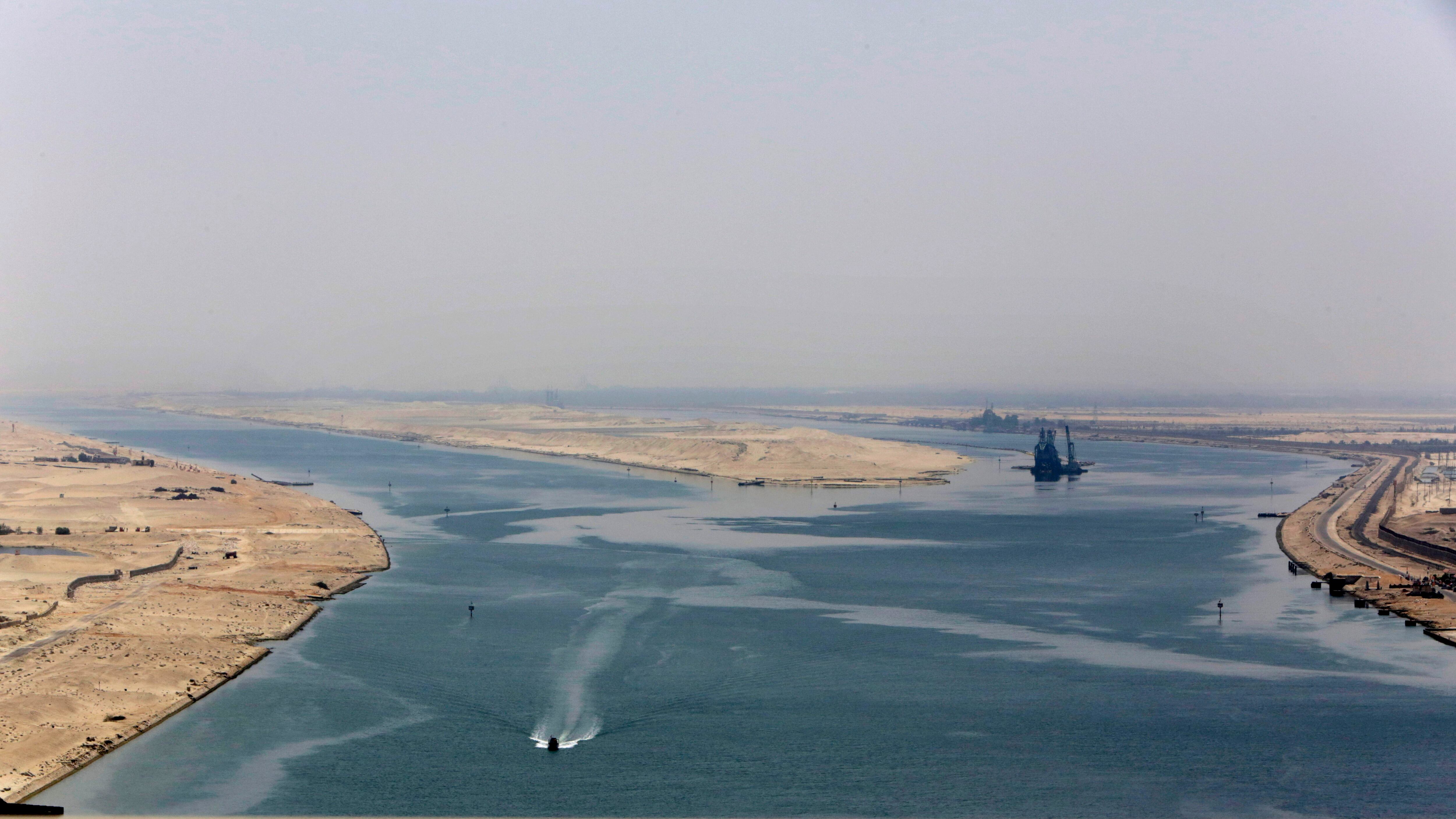
FILE - In this Aug. 6, 2015 file photo, an army zodiac secures the entrance of the new section of the Suez Canal in Ismailia, Egypt. (AP Photo/Amr Nabil, File)
A bulk carrier vessel became wedged Thursday in Egypt’s Suez Canal, briefly blocking traffic in one lane of crucial global waterway, Egyptian authorities said.
The Suez Canal Authority said in a statement that the Panama-flagged Coral Crystal ran aground in a double-lane stretch of the canal, forcing the officials to redirect other vessels in the convoy to the other lane.
It said the canal’s tugboats managed to float the south-bound vessel, which carries cargo weighing 43,000 tons. The Coral Crystal then resumed its voyage, the canal said.
Officials have not said what caused the vessel to run aground.
The ship was built in 2012 with a length of nearly 225 meters (738 feet) and a width of over 32 meters (104 feet). It was en route to Port Sudan on the Red Sea, according to Traffic Marine, a vessel tracking firm.
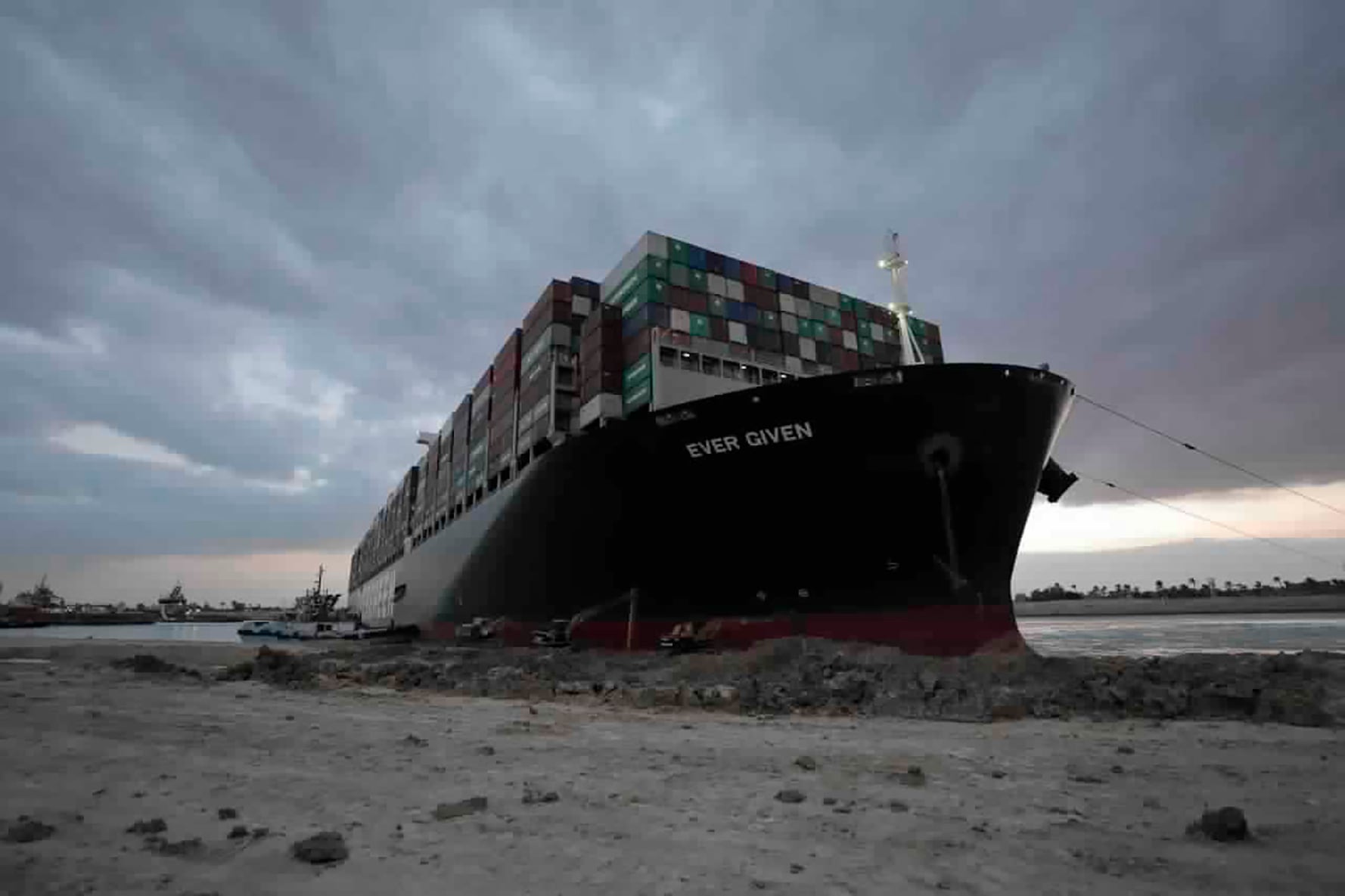
Thursday’s incident came less than six months after the massive Panama-flagged Ever Given ran aground in the single-lane stretch of the canal. The hulking vessel blocked the canal for six days before being released in a massive salvage effort by a flotilla of tugboats.
The blockage earlier this year disrupted global shipment. About 10% of world trade flows through the canal, a pivotal source of foreign currency to Egypt. Some 19,000 vessels passed through the canal last year, according to official figures.
In this March 28, 2021 photo, released by the Suez Canal Authority, tug boats and diggers work to free the Panama-flagged, Japanese-owned Ever Given, which is lodged across the Suez Canal. (Suez Canal Authority via AP, File)
Karl Farmer, Vice President and Portfolio Managers at Rockland Trust Bank, breaks down why inflation and interest rates may stick at these levels, and why Bitcoin still carries some risks.
If you wince at the grocery store checkout, you’re not alone. Wall Street Journal reporter Jesse Newman breaks down why prices are so high – and not going down anytime soon.
An inflation gauge favored by the Federal Reserve increased in January, the latest sign that the slowdown in U.S. consumer price increases is occurring unevenly from month to month. (Getty Images)
Glen Smith, CIO at GDS Wealth Management, shares how investors can allocate their assets as the market broadens and why he’s eyeing June for the first potential rate cut.
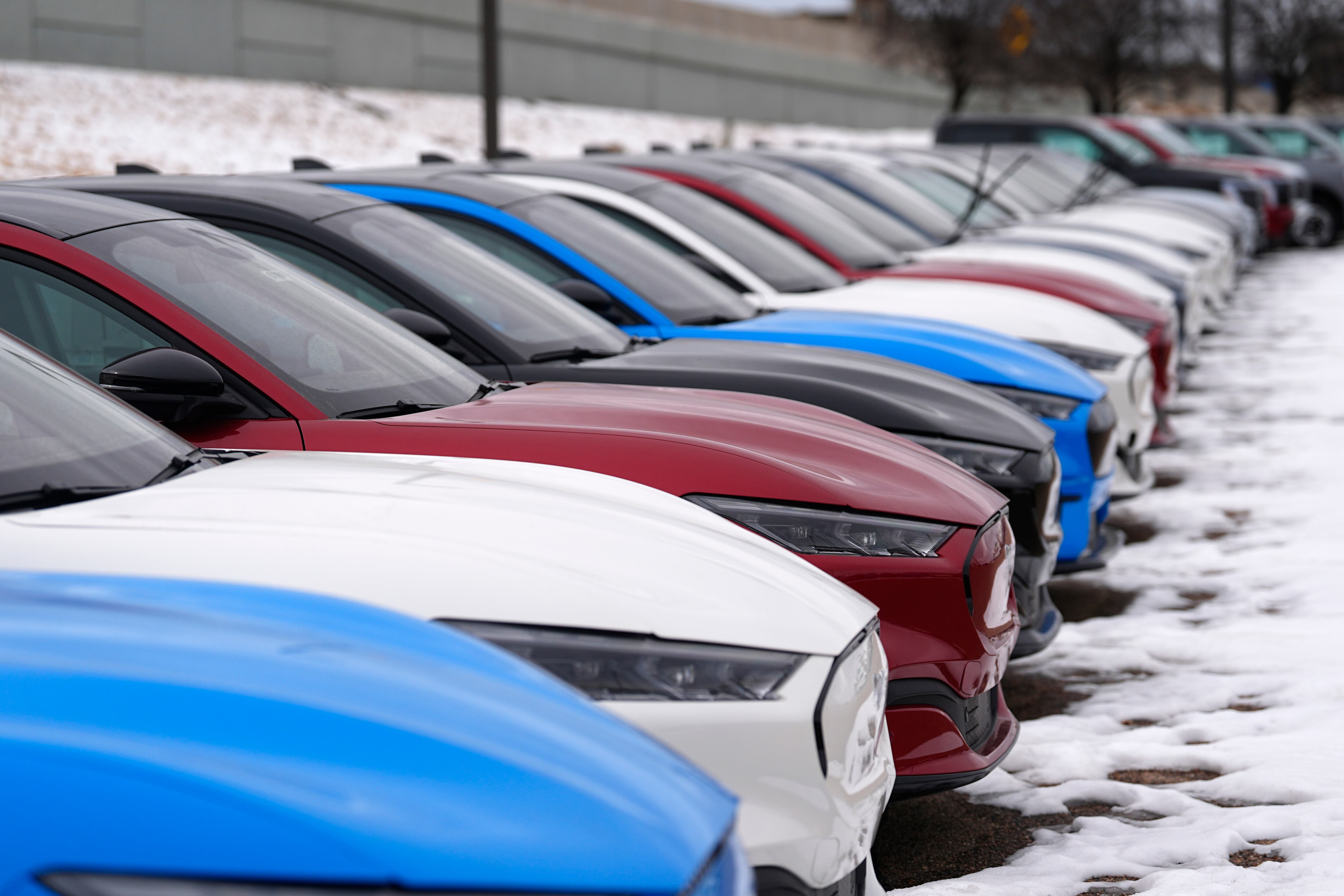
After years of price increases for cars and trucks in the United States, costs are slowing and in some cases falling, helping cool overall inflation and giving frustrated Americans more hope of finding an affordable vehicle.