Venezuela's New Cryptocurrency Is 'Dead on Arrival'
*By Amanda Weston*
Faced with a financial crisis, Venezuela has turned to cryptocurrency to fight rising inflation. But Eduardo Gómez, head of support at [Purse](https://purse.io/shop), said it may not be the best solution.
"The Venezuelan government is really now in a desperate situation," Gómez said Tuesday in an interview on Cheddar. "They're trying to get cash. They're trying to get money from international markets, and due to the U.S. sanctions, they're not able to do so."
Venezuelan President Nicolás Maduro outlined policies for the new digital currency, the petro, last Friday. One unit would equal the price of one barrel of oil, about $60 dollars, effectively devaluing the nation's existing currency, the bolivar, [by 96 percent](https://www.reuters.com/article/us-venezuela-currency/maduro-orders-96-percent-devaluation-in-hyperinflation-stricken-venezuela-idUSKBN1L22EZ).
Gómez said the government is trying to minimize the impact of economic sanctions from the U.S. It's an understandable priority ー The International Monetary Fund [estimates](https://blogs.imf.org/2018/07/23/outlook-for-the-americas-a-tougher-recovery/) inflation in Venezuela will reach 1 million percent this year. But Gómez said success for the latest petro strategy is highly unlikely.
"So far it has been a total failure," he said. "There's no real token out there. There's no real system in place. The technology has not been created yet. As, of now, it looks very bad for the government."
Venezuela's own parliament [believes](https://www.cnbc.com/2018/08/20/venezuela-is-pegging-its-economic-recovery-to-a-cryptocurrency--thats-widely-considered-a-scam.html) petro is being used illegally, and ICOindex has [labeled the currency a scam](https://icoindex.com/profile/petro-ptr).
Among the other moves announced by Maduro: raising the corporate tax rate, increasing previously-subsidized gas prices, and hiking the minimum wage by 3,000 percent.
Gómez pointed out that the current minimum wage, on which 70 percent of Venezuelans live, is about $1 per month. Such a low salary is the biggest hurdle for cryptocurrency adoption, Gómez said, since so many residents have barely any savings.
"Pretty much, petro is dead on arrival, as of now," Gómez said.
For full interview, [click here] (https://cheddar.com/videos/venezuela-looks-to-cryptocurrency-amid-financial-crisis).
The growth of the metaverse is bringing new challenges to managing safe, diverse communities. Helping Cheddar kick off Women's History Month, Tiffany Xingyu Wang, chief marketing officer for AI-powered content moderation company Spectrum Labs, joined Cheddar's Opening Bell to discuss how platforms can help create safer, more inclusive online communities in the metaverse and about her own experience as a woman in technology. "Trust is really the new digital transformation, and it should not be a siloed task solely belonging to chief security officers, to privacy officers, or the people who were given the task of trust and safety," she said. "It should be a priority for all the C suite and a whole company to rally around."
On this episode of Cheddar Innovates: Vision Marine Technologies CEO discusses how e-boats will play a role in the fight against the climate crisis; Lasso CEO breaks down how the design behind these compression socks can prevent injuries and improve performance; Cheddar gets a look at Curiosity Stream's 'The Tombs Of Egypt.'
Catriona Campbell, CTIO, UK and Ireland, EY, joins Cheddar News to discuss how business leaders can bridge the gap between their technology investments and their aspirations, and breaks down the human aspects of A.I.
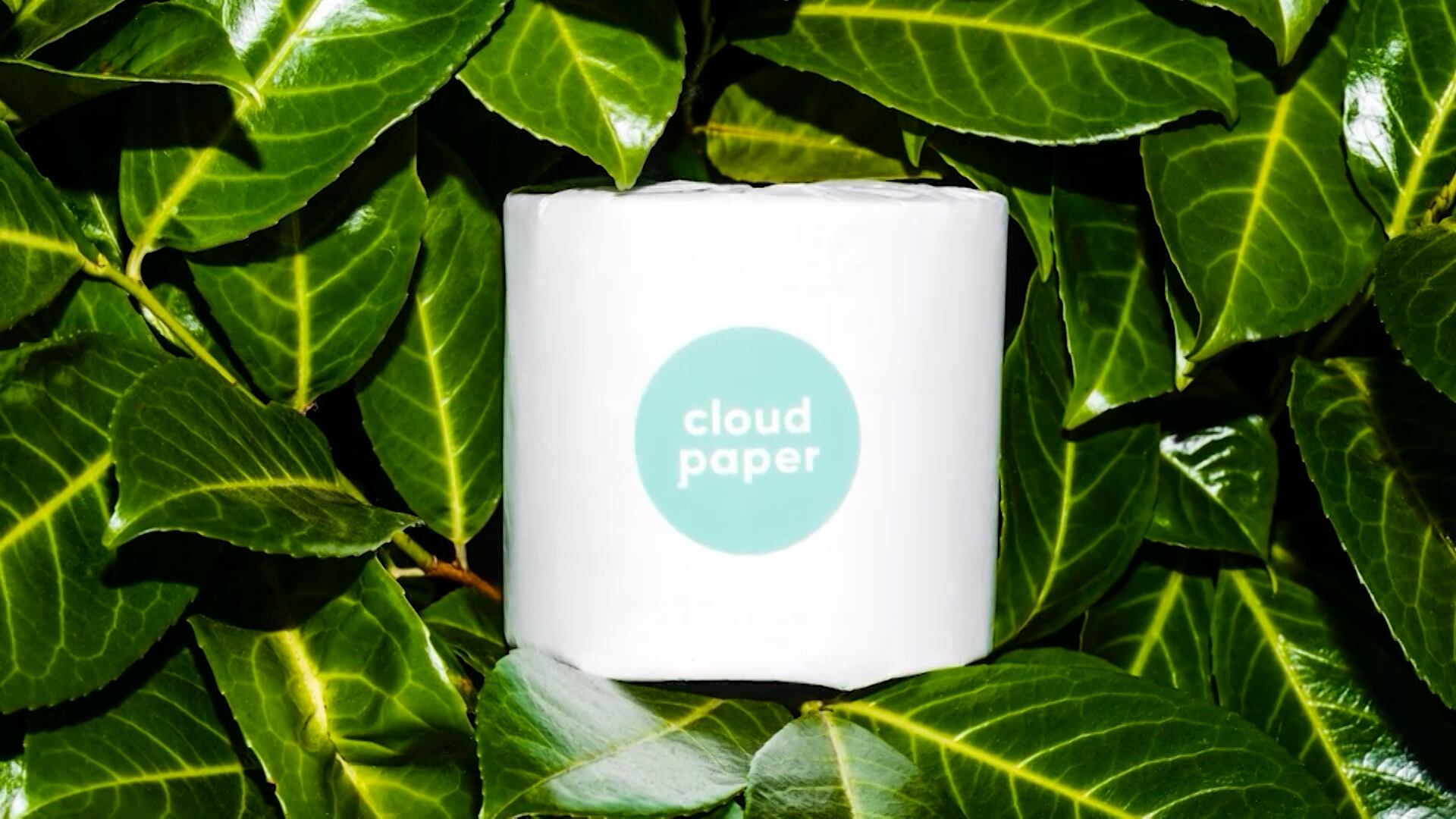
Bamboo-based toilet paper company Cloud Paper raised $5 million in a recent funding round. Its product is a bamboo-based alternative to traditional toilet paper made from trees, and its mission is to end the deforestation caused by traditional paper products. Cloud Paper says the raise will allow it to make significant investments in its supply chain, product development, and hiring. Ryan Fritsch, a co-founder of Cloud Paper, joined Cheddar News' Closing Bell to discuss.
The Biden Administration has now issued new guidelines when it comes to carbon capture. The new guidelines handed down this week encouraged the widespread use of climate attacks that traps and stores carbon emissions. The goal here is the process would help keep carbon out of the atmosphere without requiring a whole lot of change by big companies and manufacturing plants. Several scientists say that this method would be crucial to help us decrease the use of carbon emissions by the year 2050. Professor of Civil and Environmental Engineering at Stanford University, Mark Jacobson, joined Cheddar to discuss more.