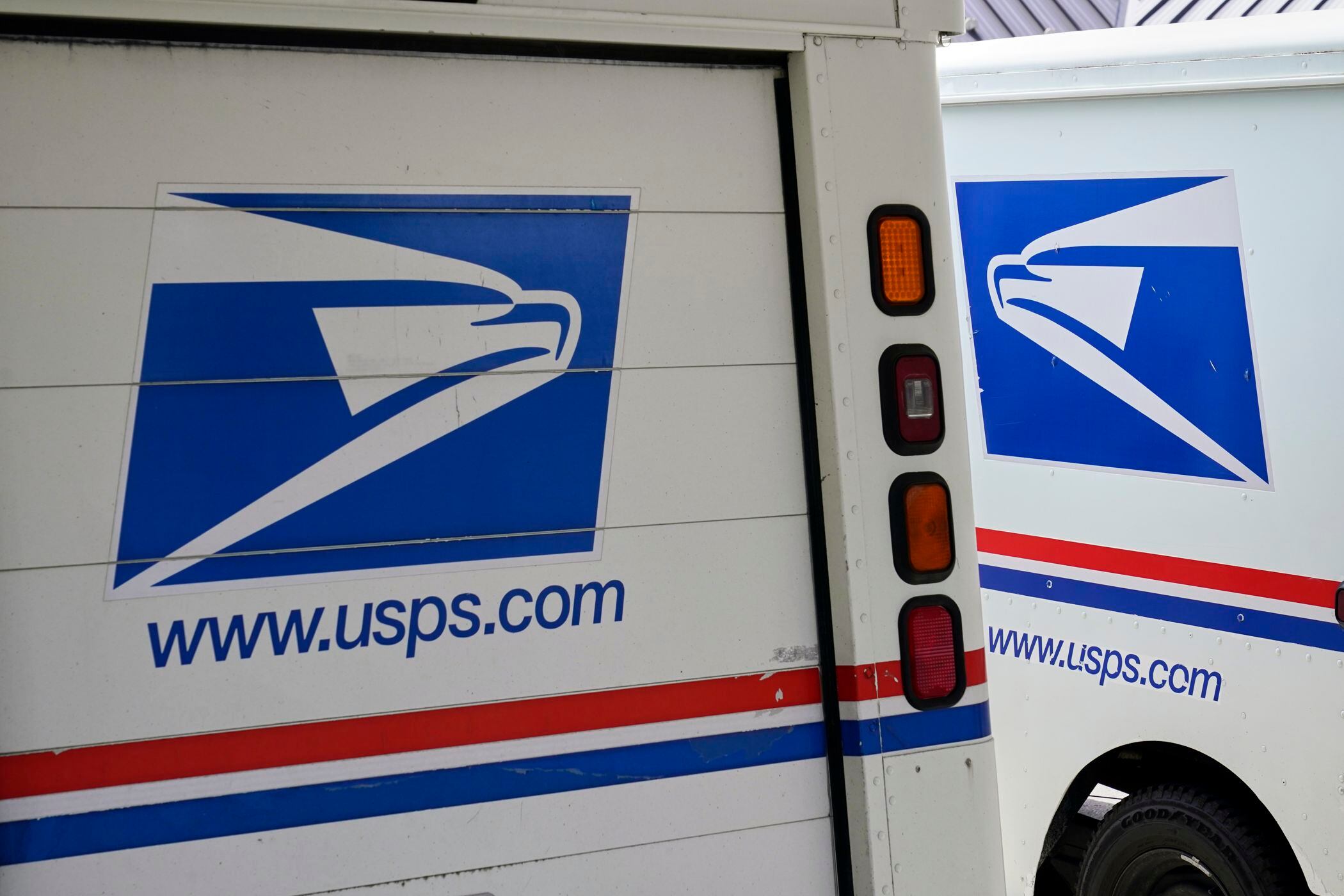
In this Aug. 18, 2020, file photo, mail delivery vehicles are parked outside a post office in Boys Town, Neb. The United States Post Office said Tuesday, Feb. 23, 2021 that it has chosen Oshkosh Defense to build its next-generation mail-delivery vehicle, part of an effort to make the USPS more environmentally friendly by switching a portion of its huge fleet to electric vehicles. (AP Photo/Nati Harnik, File)
The United States Post Office said Tuesday that it has chosen Oshkosh Defense to build its next-generation mail-delivery vehicle, part of an effort to make the USPS more environmentally friendly by switching a portion of its huge fleet to electric vehicles.
Oshkosh Defense, a division of Wisconsin-based Oshkosh Corp., will assemble 50,000 to 165,000 of the new Next Generation Delivery Vehicles at its existing U.S. manufacturing facilities. It will get an initial $482 million toward retooling and building out its factory.
USPS described the deal as the first part of a multibillion-dollar 10-year effort to replace its delivery vehicle fleet.
The choice of Wisconsin-based Oshkosh is a big miss for Ohio-based electric vehicle startup Workhorse Group, which put in an all-electric bid for the vehicles. Shares of Workhorse fell more than 47% Tuesday.
The postal service last updated its mail-delivery trucks 30 years ago, and there have been major changes in the service's operations since then. Traditional mail volumes have declined, while the service now delivers millions of packages from online retailers like Amazon that did not exist when the previous mail vehicle was introduced.
The new vehicles will have more room for packages and will be updated with modern safety and driveability standards like cameras, airbags, and collision avoidance systems. The vehicles will also be a combination of electric and gasoline-powered, but the gasoline-powered new vehicles will have the ability to be retrofitted with new electric systems in the future.
April is Earth month, and while the green revolution might feel far away, the founder of climate VC Siam Capital says it’s on it’s way, and, even better: it won't cost you more.
From snow in April to heatwaves in December, it’s hard to plan a trip in a climate change world. Startup Sensible Weather thinks weather-based travel reimbursements are the solution.
Between corporate debt and the widening gap between ‘the haves and the have nots,’ there are reasons to be cautious about the economy, even with interest rate cuts on their way.
If the A.I. hype hasn’t given you enough of a reason to be excited (and a little terrified), the CEO of Zapata AI says the next frontier is designing bridges or creating pharmaceutical drugs.
Stocks are near record highs, inflation is moderating, and analyst Deiya Pernas is 'optimistic' the U.S. is heading for a soft landing without a recession – which is good news for your wallet.
Google co-founders Larry Page and Sergey Brin loved pulling pranks, so much so they began rolling outlandish ideas every April Fools' Day not long after starting their company more than a quarter century ago.
Sam Bankman-Fried co-founded the FTX crypto exchange in 2019 and quickly built it into the world’s second most popular place to trade digital currency. It collapsed almost as quickly — by the fall of 2022, it was bankrupt.