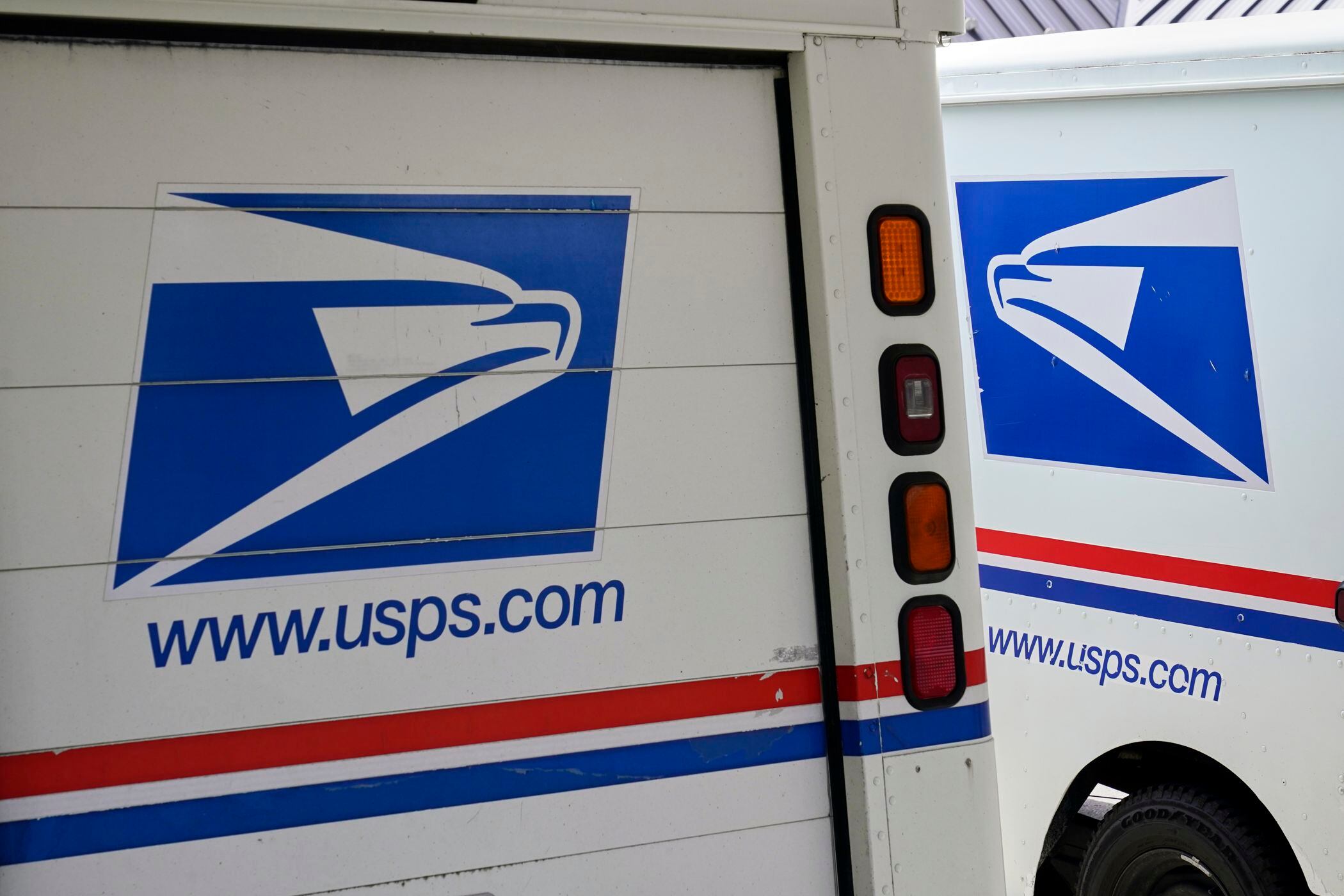
In this Aug. 18, 2020, file photo, mail delivery vehicles are parked outside a post office in Boys Town, Neb. The United States Post Office said Tuesday, Feb. 23, 2021 that it has chosen Oshkosh Defense to build its next-generation mail-delivery vehicle, part of an effort to make the USPS more environmentally friendly by switching a portion of its huge fleet to electric vehicles. (AP Photo/Nati Harnik, File)
The United States Post Office said Tuesday that it has chosen Oshkosh Defense to build its next-generation mail-delivery vehicle, part of an effort to make the USPS more environmentally friendly by switching a portion of its huge fleet to electric vehicles.
Oshkosh Defense, a division of Wisconsin-based Oshkosh Corp., will assemble 50,000 to 165,000 of the new Next Generation Delivery Vehicles at its existing U.S. manufacturing facilities. It will get an initial $482 million toward retooling and building out its factory.
USPS described the deal as the first part of a multibillion-dollar 10-year effort to replace its delivery vehicle fleet.
The choice of Wisconsin-based Oshkosh is a big miss for Ohio-based electric vehicle startup Workhorse Group, which put in an all-electric bid for the vehicles. Shares of Workhorse fell more than 47% Tuesday.
The postal service last updated its mail-delivery trucks 30 years ago, and there have been major changes in the service's operations since then. Traditional mail volumes have declined, while the service now delivers millions of packages from online retailers like Amazon that did not exist when the previous mail vehicle was introduced.
The new vehicles will have more room for packages and will be updated with modern safety and driveability standards like cameras, airbags, and collision avoidance systems. The vehicles will also be a combination of electric and gasoline-powered, but the gasoline-powered new vehicles will have the ability to be retrofitted with new electric systems in the future.
CEOs of social media platforms like Facebook, TikTok, and more meet with lawmakers Wednesday about how they are protecting children from sexual exploitation.
San Francisco 49ers president Al Guido discusses what goes into preparing for Super Bowl LVIII, building a championship-ready team, and how Taylor Swift and streaming are both bringing new fans to the NFL.
A $1 billion loss from a six-week strike did not crash GM's net income last year, which instead rose 12% — and the automaker expects improvement in 2024, too.
Accrue CEO and founder Michael Hershfield explains why Americans' credit card delinquencies are on the rise, advice on what can help, and the key difference between Boomers and Gen Z when it comes to money.
Senior Economist at Morning Consult Kayla Bruun shares thoughts on what to expect from the Fed's January meeting and where monetary policy is headed, as well as how consumers are faring.
Former Medtronic CEO and author of 'True North' Bill George explains the steps Boeing leadership must take to regain client and consumer trust after 737 Max 9 production was stopped.
Amazon blamed "regulatory hurdles" for calling off its proposed acquisition of robot vacuum maker iRobot. Not even a Roomba could clean up the deal's antitrust scrutiny.
To celebrate Flutter Entertainment's debut on the NYSE, FanDuel CEO Amy Howe shares her thoughts on the company's plans for growth, the future of online sportsbetting, and Super Bowl Sunday.
Investopedia's Caleb Silver shares thoughts on the upcoming Fed meeting, why individual investors are still slightly skeptical, and what he's looking for from mega cap tech earnings.