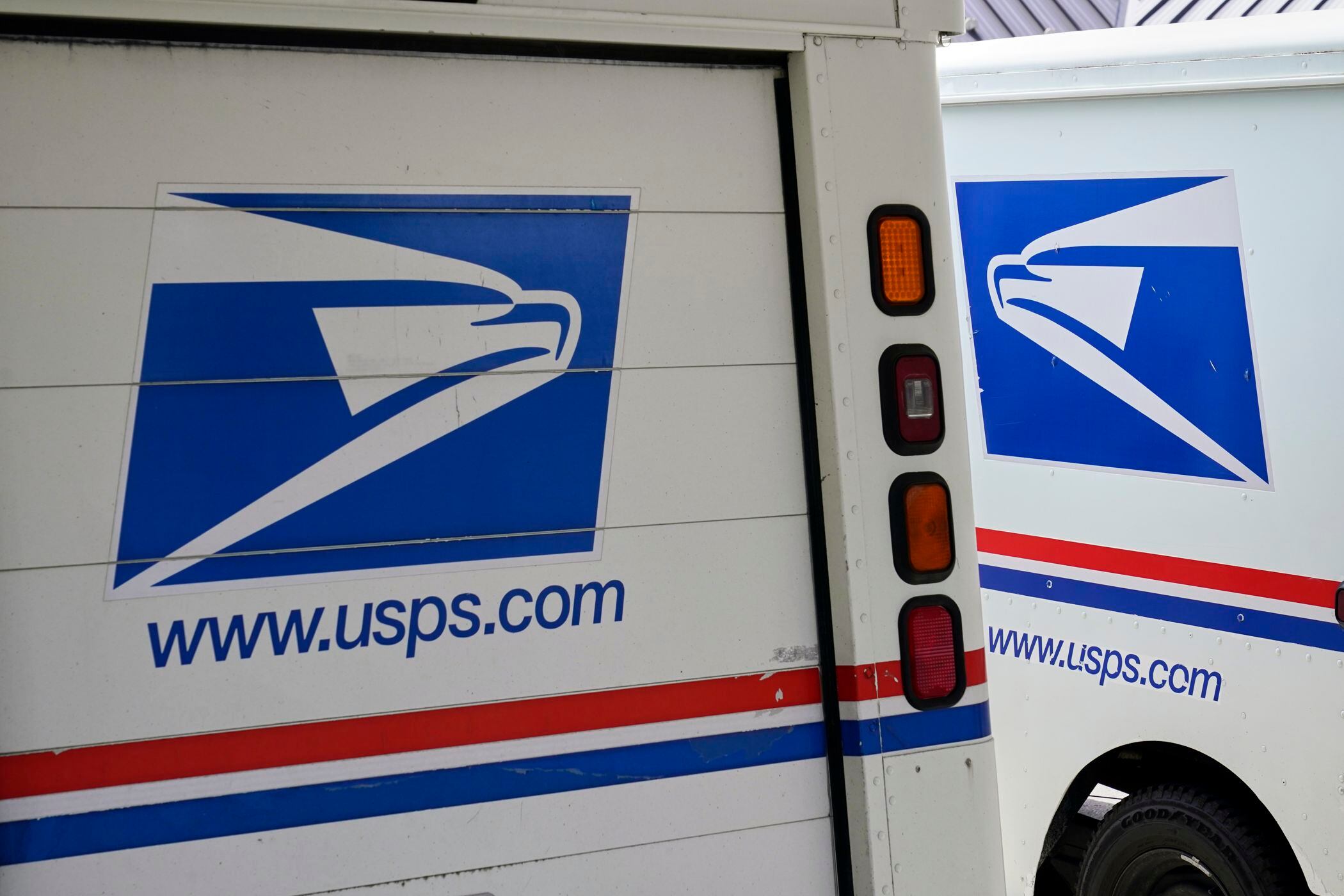
In this Aug. 18, 2020, file photo, mail delivery vehicles are parked outside a post office in Boys Town, Neb. The United States Post Office said Tuesday, Feb. 23, 2021 that it has chosen Oshkosh Defense to build its next-generation mail-delivery vehicle, part of an effort to make the USPS more environmentally friendly by switching a portion of its huge fleet to electric vehicles. (AP Photo/Nati Harnik, File)
The United States Post Office said Tuesday that it has chosen Oshkosh Defense to build its next-generation mail-delivery vehicle, part of an effort to make the USPS more environmentally friendly by switching a portion of its huge fleet to electric vehicles.
Oshkosh Defense, a division of Wisconsin-based Oshkosh Corp., will assemble 50,000 to 165,000 of the new Next Generation Delivery Vehicles at its existing U.S. manufacturing facilities. It will get an initial $482 million toward retooling and building out its factory.
USPS described the deal as the first part of a multibillion-dollar 10-year effort to replace its delivery vehicle fleet.
The choice of Wisconsin-based Oshkosh is a big miss for Ohio-based electric vehicle startup Workhorse Group, which put in an all-electric bid for the vehicles. Shares of Workhorse fell more than 47% Tuesday.
The postal service last updated its mail-delivery trucks 30 years ago, and there have been major changes in the service's operations since then. Traditional mail volumes have declined, while the service now delivers millions of packages from online retailers like Amazon that did not exist when the previous mail vehicle was introduced.
The new vehicles will have more room for packages and will be updated with modern safety and driveability standards like cameras, airbags, and collision avoidance systems. The vehicles will also be a combination of electric and gasoline-powered, but the gasoline-powered new vehicles will have the ability to be retrofitted with new electric systems in the future.
Karl Farmer, Vice President and Portfolio Managers at Rockland Trust Bank, breaks down why inflation and interest rates may stick at these levels, and why Bitcoin still carries some risks.
If you wince at the grocery store checkout, you’re not alone. Wall Street Journal reporter Jesse Newman breaks down why prices are so high – and not going down anytime soon.
An inflation gauge favored by the Federal Reserve increased in January, the latest sign that the slowdown in U.S. consumer price increases is occurring unevenly from month to month. (Getty Images)
Glen Smith, CIO at GDS Wealth Management, shares how investors can allocate their assets as the market broadens and why he’s eyeing June for the first potential rate cut.
After years of price increases for cars and trucks in the United States, costs are slowing and in some cases falling, helping cool overall inflation and giving frustrated Americans more hope of finding an affordable vehicle.
Missed out on the Nvidia wave? Oh course you did — you’re reading this article aren’t you, instead of luxuriating on a white-sand beaches of Bali. But here are at least four other promising semiconductor stocks to add to your portfolio.