In this July 21, 2020, file photo, pall bearers carry a casket with the body of Lydia Nunez, who died from COVID-19, after a funeral service at the Metropolitan Baptist Church in Los Angeles. The U.S. death toll from the coronavirus has eclipsed 400,000 in the waning hours in office for President Donald Trump, whose handling of the crisis has been judged by public health experts to be a singular failure. (AP Photo/Marcio Jose Sanchez, File)
The U.S. death toll from the coronavirus eclipsed 400,000 on Tuesday in the waning hours in office for President Donald Trump, whose handling of the crisis has been judged by public health experts a singular failure.
The running total of lives lost, as compiled by Johns Hopkins University, is nearly equal to the number of Americans killed in World II. It is about the population of Tulsa, Oklahoma; Tampa, Florida; or New Orleans. It is equivalent to the sea of humanity that was at Woodstock in 1969.
It is just short of the estimated 409,000 Americans who died in 2019 of strokes, Alzheimer’s, diabetes, flu and pneumonia combined.
And the virus isn't finished with the U.S. by any means, even with the arrival of the vaccines that could finally vanquish the outbreak: A widely cited model by the University of Washington projects the death toll will reach nearly 567,000 by May 1.
While the Trump administration has been credited with Operation Warp Speed, the crash program to develop and distribute coronavirus vaccines, Trump has repeatedly downplayed the threat, mocked masks, railed against lockdowns, promoted unproven and unsafe treatments, undercut scientific experts and expressed scant compassion for the victims.
Even his own bout with COVID-19 seemed to leave him unchanged.
The White House defended the administration.
“We grieve every single life lost to this pandemic, and thanks to the president’s leadership, Operation Warp Speed has led to the development of multiple safe and effective vaccines in record time, something many said would never happen," said White House spokesman Judd Deere.
President-elect Joe Biden takes office on Wednesday.
The nation reached the 400,000 milestone in just under a year. The first known deaths from the virus in the U.S. were in early February 2020, both of them in Santa Clara County, California.
While the count is based on figures supplied by government agencies around the world, the real death toll is believed to be significantly higher, in part because of inadequate testing and cases inaccurately attributed to other causes early on.
It took four months to reach the first 100,000 dead. It took just over a month to go from 300,000 to 400,000.
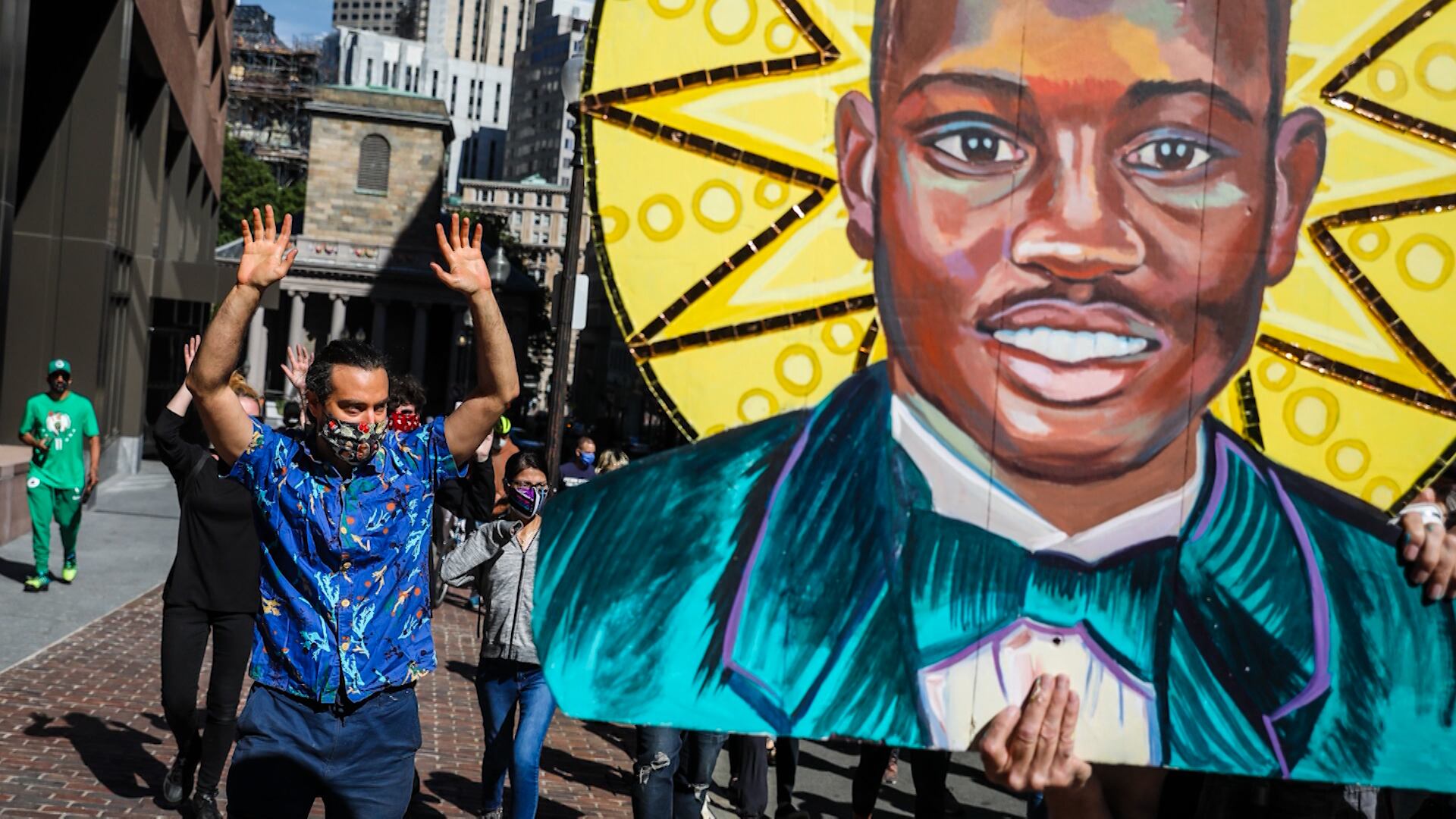
All three defendants in the Ahmaud Arbery killing were found guilty today on numerous charges including felony murder. Criminal Defense Attorney Anthony Hall joined Cheddar to discuss.
Bitcoin has officially entered bear market territory. The cryptocurrency is down 20% from an all-time high of nearly $69,000 dollars, which it hit earlier this month. Experts mark the new potentially vaccine-resistant coronavirus variant as the reason for the dip. Patrick McConlogue, CEO of Overlin, joins Cheddar News to discuss.
Carlo and Baker cover the latest developments with the Omicron variant, and break down what we know and what we still don't. Plus, a relatively tame Black Friday, and more.
U.S. markets were open for an abbreviated session on the day after Thanksgiving, and the day saw a market meltdown. The Dow dropped more than 900 points for its worst day of the year. Matt Orton, Chief Market Strategist at Carillon Tower Advisers, joined Cheddar News' Closing Bell to discuss.
For the first time in the National Dog Show's 20-year-history on NBC, a canine was crowned Best in Show for the second year in a row. Claire, a Scottish deerhound, was the repeat winner, and David Frei, expert analyst and host of the National Dog Show Presented by Purina, joined Cheddar to discuss the historic victory. "It's never happened in the 20 years that we've done this show," he said. "She looks great right now. She's at the top of her game, she's the number three show dog in the country, and has become the top winning Scottish deerhound of all time, breaking her grandmother's record."
Lucien Etori, VP, executive strategy director at R/GA., joined Cheddar News to discuss how retailers are handling supply chain disruptions this shopping season, and how retailers are building better experiences for customers during these ongoing issues.
Amber McMillan, vice president of weight loss and digital fitness at Life Time, joins Cheddar News to discuss how post-pandemic gym visits can improve mental wellness.
From supply chain shortages to high food costs, food banks are scrambling to serve their communities this Thanksgiving. According to Feeding America, while demand from the beginning of the pandemic has gone down, one in eight people in the U.S. may experience food insecurity this year. Anna McGovern, chief supply chain officer with Food Bank for New York City, joins Cheddar News to discuss the impact of inflation and supply chain issues.
The biggest shopping day of the year is approaching - Black Friday - and the following week is known as Cyber Week, the biggest time of the year for online shopping. But for many companies and consumers, the holiday shopping season is already underway. Retailers have been getting creative in their attempts to lure customers amid ongoing supply chain issues, inflation, and the pandemic that could impact sales. Lionesque Group CEO and founder Melissa Gonzalez joins Cheddar News' Closing Bell to discuss.