By Robert Burns, Matthew Lee, and Ellen Knickmeyer
With security rapidly deteriorating in Afghanistan, the United States is sending in an additional 3,000 troops to help evacuate some personnel from the U.S. Embassy in Kabul, officials said Thursday.
Pentagon spokesman John Kirby said one Army and two Marine infantry battalions will enter Afghanistan within the next two days to assist at the Kabul airport with the partial embassy evacuation.
State Department spokesman Ned Price said diplomatic work will continue at the Kabul embassy.
“Our first responsibility has always been protecting the safety and the security of our citizens serving in Afghanistan, and around the world,” Price said at a State Department briefing, calling the the speed of the Taliban advance and resulting instability “of grave concern.”
Price insisted Thursday's move shouldn't be seen as encouraging an already emboldened Taliban and said, “We are committed to supporting Afghanistan and its people. That commitment remains.”
But the move suggests a lack of confidence by the Biden administration in the Afghan government's ability to provide sufficient diplomatic security in Kabul as a series of provincial capitals have fallen to a Taliban offensive this week.
Kirby said an additional 1,000 members of an Army-Air Force task force were going to the Gulf country of Qatar to help with visa processing for the ongoing evacuation of former translators and other Afghans who had worked with Americans in Afghanistan.
And an Army brigade combat team of up to 4,000 troops from North Carolina's Fort Bragg was going to Kuwait to be on standby in case more troops were needed for the embassy mission.
Kirby stressed the new deployments were a temporary mission focused only on the embassy drawdown and helping the State Department accelerate the visa processing for Afghan translators and others, not a move to get involved in the war again.
The U.S. has withdrawn most of its troops and formally ends its role in the war on Aug. 31. The Pentagon had kept about 650 troops in Afghanistan to support U.S. diplomatic security, including at the airport.
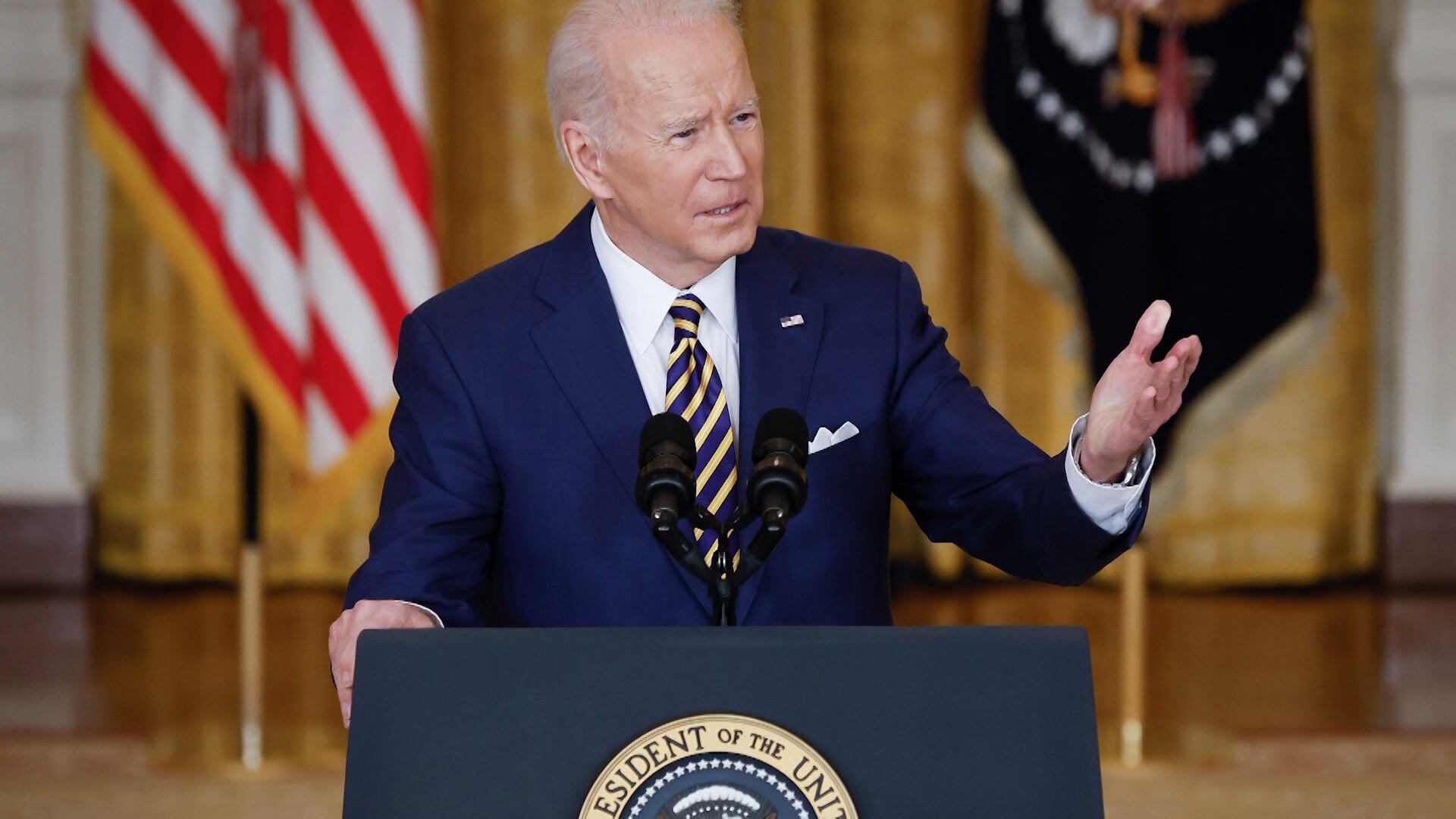
Afghan government forces are collapsing even faster than U.S. military leaders thought possible just a few months ago when President Joe Biden ordered a full withdrawal.
The Taliban, who ruled the country from 1996 until U.S. forces invaded after the 9/11 attacks, captured three more provincial capitals Wednesday and two on Thursday, the 10th and 11th the insurgents have taken in a weeklong sweep that has given them effective control of about two-thirds of the country. The insurgents have no air force and are outnumbered by U.S.-trained Afghan defense forces, but they have captured territory, including the country's third-largest city, Herat, with stunning speed.
In a new warning to Americans in Afghanistan, the second it has issued since Saturday, the U.S. Embassy in Kabul on Thursday again urged U.S. citizens to leave immediately. The advisory was released before the announcements in Washington about further reducing already limited staff at the embassy.
The United States continues to support the Afghan military with limited airstrikes, but those have not made a strategic difference thus far and are scheduled to end on Aug. 31. Biden could continue airstrikes beyond that date, but given his firm stance on ending the war, that seems unlikely.
The most recent American military assessment, taking into account the Taliban's latest gains, says Kabul could be under insurgent pressure by September and that the country could fall entirely to Taliban control within a couple of months, according to a defense official who discussed the internal analysis Wednesday on condition of anonymity.
Military officials watching the deteriorating situation said that so far the Taliban haven't taken steps to threaten Kabul. But it isn’t clear if the Taliban will wait until they have gained control of the bulk of the country before attempting to seize the capital.
The security of the U.S. diplomatic corps has been talked about for months, even before the Taliban's battlefield blitz. The military has long had various planning options for evacuating personnel from Afghanistan. Those options would largely be determined by the White House and the State Department.
A key component of the options would be whether the U.S. military would have unfettered access to the Kabul international airport, allowing personnel to be flown systematically out of the capital. In a grimmer environment, American forces might have to fight their way in and out if the Taliban have infiltrated the city.
—
Associated Press writer Lolita C. Baldor contributed to this report.
Updated on August 12, 2021, at 4:09 p.m. ET with the latest details.