By Matthew Brown, Terry Chea, Caleb Diehl and Camille Fassett
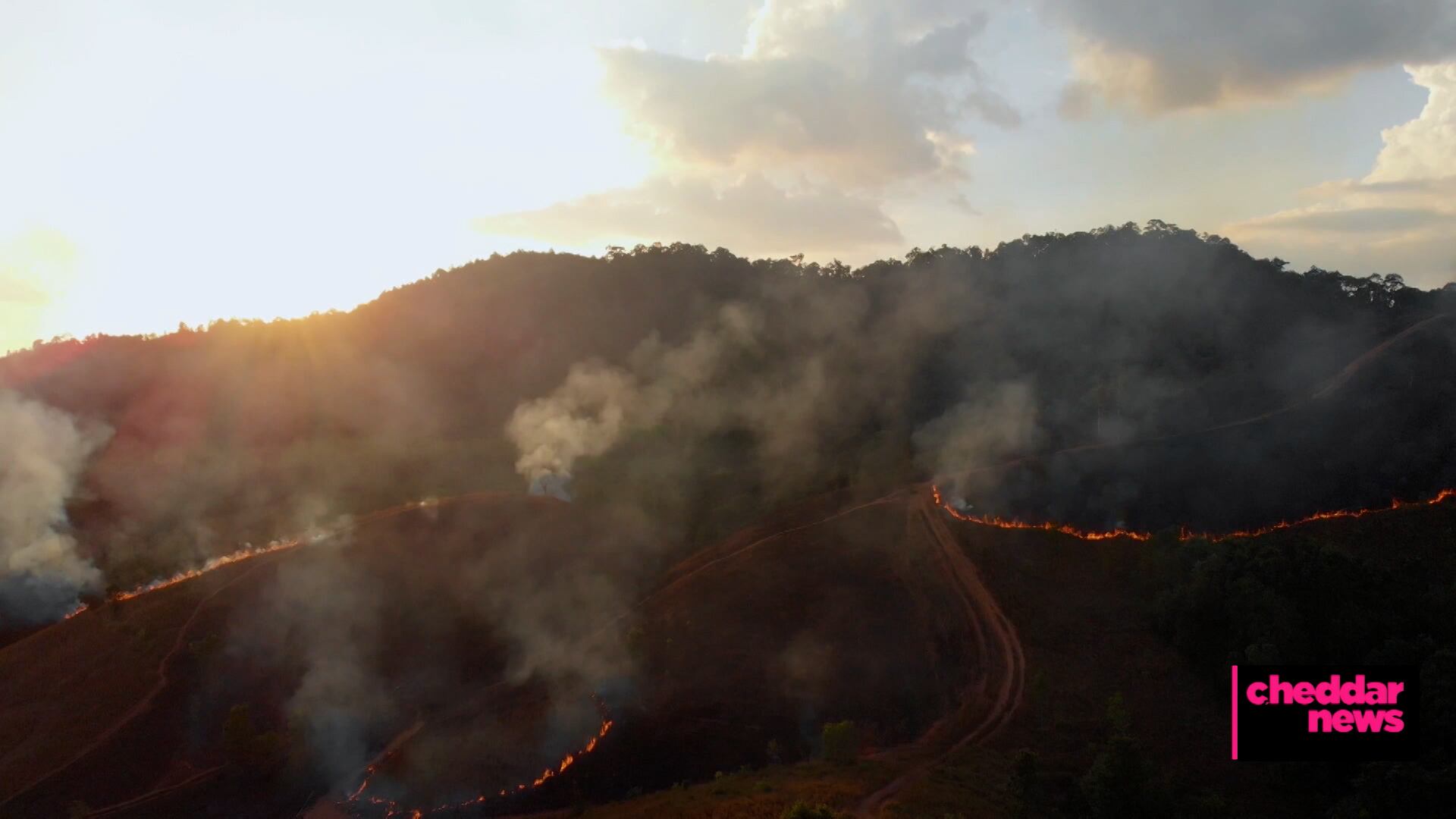
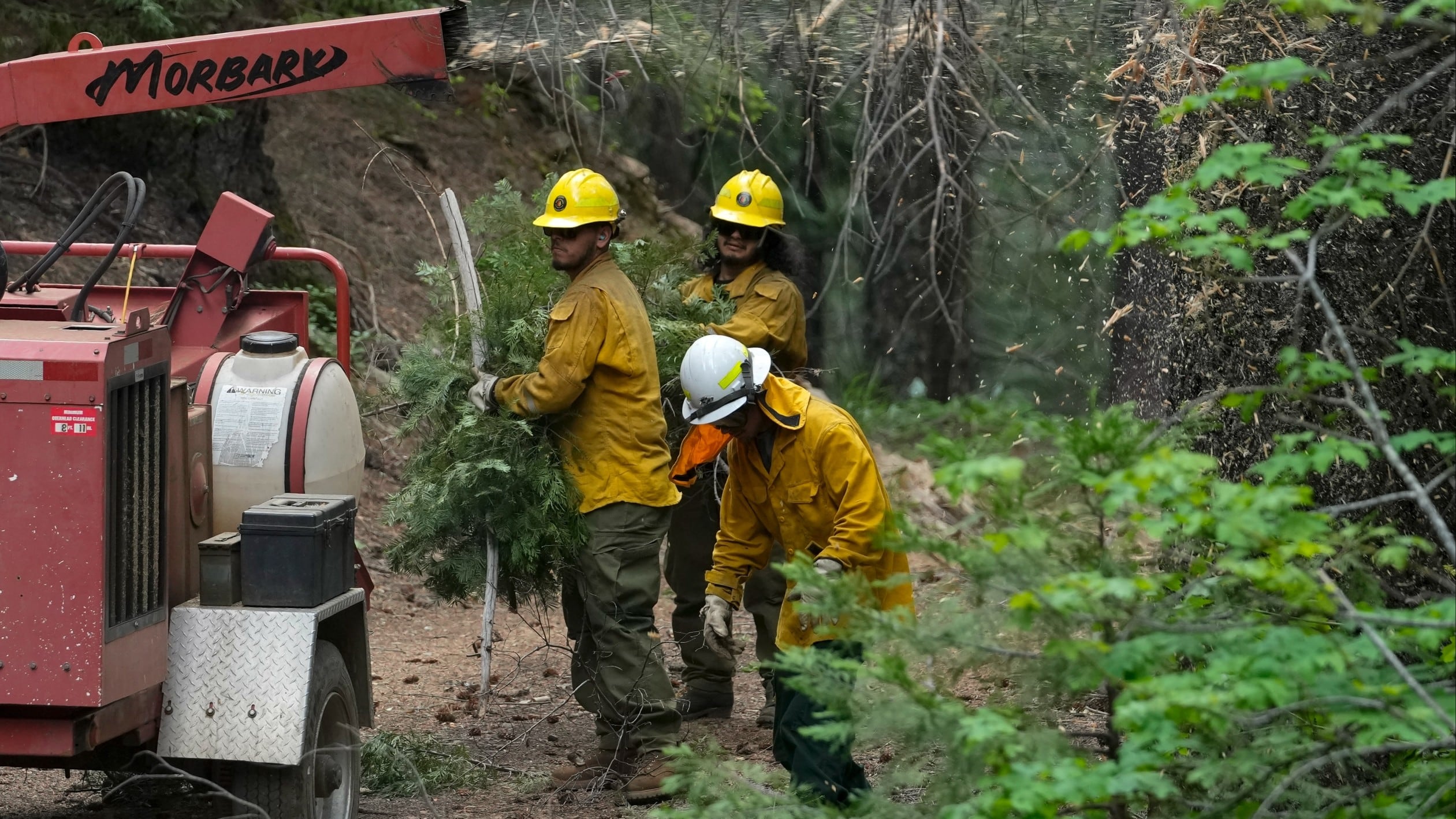
Using chainsaws, heavy machinery and controlled burns, the Biden administration is trying to turn the tide on worsening wildfires in the U.S. West through a multi-billion dollar cleanup of forests choked with dead trees and undergrowth.
Yet one year into what's envisioned as a decade-long effort, federal land managers are scrambling to catch up after falling behind on several of their priority forests for thinning even as they exceeded goals elsewhere. And they've skipped over some highly at-risk communities to work in less threatened areas, according to data obtained by The Associated Press, public records and Congressional testimony.
With climate change making the situation increasingly dire, mixed early results from the administration’s initiative underscore the challenge of reversing decades of lax forest management and aggressive fire suppression that allowed many woodlands to become tinderboxes. The ambitious effort comes amid pushback from lawmakers dissatisfied with progress to date and criticism from some environmentalists for cutting too many trees.
Administration officials in interviews and during testimony maintained that the thinning work is making a difference. Work announced to date, they said, will help lessen wildfire dangers faced by more than 500 communities in 10 states. But they also acknowledged finishing the task will require far more resources than what's already dedicated.
“As much money as we're receiving, it's not enough to take care of the problems that we are seeing, particularly across the West,” said Forest Service Chief Randy Moore. "This is an emergency situation in many places, and we are acting with a sense of urgency."
BIG MONEY FOR BIG PROBLEM
Congress in the last two years approved more than $4 billion in additional funding to prevent repeats of destructive infernos that have torched communities including in California, Colorado and Montana.
By logging and burning trees and low-lying vegetation, officials hope to lessen forest fuels and keep fires that originate on federal lands from exploding through nearby cities and towns.
The enormity of the task is evident in an aerial view of California's Tahoe National Forest, where mountainsides are colored brown and gray with the vast number of trees killed by insects and drought. After work on the Tahoe was delayed last year, Forest Service crews and contractors recently started taking down trees across thousands of acres.
“The forests as we know them in California and across the West, they’re dying. They’re being destroyed through fire. They’re dying from drought, disease and insects,” said forest Supervisor Eli Ilano. "They’re dying at a pace that we’re having trouble keeping up with.”
The scale of spending is unprecedented, said Courtney Schultz with Colorado State University. The forest policy expert said millions of acres have been through environmental review and are ready for work.
“If we really want to go big across the landscape — to reduce fuels enough to affect fire behavior and have some impact on communities — we need to be planning large projects,” she said.
Key to that strategy is addressing forest patches where computer simulations show wildfire could easily spread to inhabited areas.
Only about a third of the land the U.S. Forest Service treated last year was designated with high wildfire hazard potential, agency documents show. About half the forest was in the southeastern U.S., where wildfires are less severe but weather conditions make it easier to use intentional burns, the documents show.
The infrastructure bill passed two years ago with bipartisan support included a requirement for the administration to treat forests across 10 million acres — 15,625 square miles or 40,500 square kilometers — by 2027. Less than 10% of that was addressed in the first year.
“The Forest Service is obligating hundreds of millions of dollars, but not in the areas required by law,” said Sen. Joe Manchin, a West Virginia Democrat who chairs the Senate Energy and Natural Resources Committee.
Forest Service spokesman Wade Muehlhof said the agency was confident in the administration's strategy, but declined to say if it would meet the acreage mandates.
MIXED FIRST-YEAR RESULTS
An AP analysis of federal data reveals the scale of the challenge: Hundreds of communities are threatened by the potential for fires to ignite on federal forests and spread to populated areas.
In California, thinning zones announced to date address the risk to only about one-in-five houses and other buildings potentially exposed to fires on federal lands, the analysis shows. In Nevada and Oregon, it's about half of exposed structures, and in Montana it's one-in 25.
Most areas identified as hot spots where forest fires have high potential to burn into populated areas won’t be addressed for at least the next several years, according to government planning documents. And computer models project up to 20% of areas that need thinning will be hit by fires before that work occurs.
Architects of the Forest Service’s strategy based it on tens millions of computer wildfire simulations being used to predict areas that pose the greatest risk. Those scenarios showed fires on only 10% to 20% of the land would account for 80% of exposure to communities.
“This is a mapped plan through time, where we can laser-focus on one highly important issue: the problem of communities being destroyed by wildfires started on public lands,” said Forest Service fire scientist Alan Ager.
FALLING SHORT IN A RISKY AREA
In 2022, the Forest Service missed its treatment goals in four of 10 areas targeted as priorities. One was the Tahoe National Forest's North Yuba region, where the agency addressed only 6% of the acreage planned.
Small towns tucked into the forest’s canyons escaped disaster two years ago when the Dixie fire raged just to the north, destroying several communities and burning about 1,500 square miles (3,900 square kilometers) in the Sierra Nevada range. Those communities also escaped another fire to the south that burned more than 1,000 homes and structures. The previous year, yet another fire killed 15 people and torched more than 2,000 homes and structures in the region.
The same conditions that whipped those fires into infernos exist on the Tahoe forest — densely-packed trees and underbrush primed to burn following years of drought. And government computer modeling suggests it’s among the U.S. communities most exposed to wildfires on federal lands.
Five million trees died on the Tahoe last year alone, said Ilano, the forest supervisor.
“What we’re realizing is we’re not moving fast enough, that the fires are burning bigger and more intense, more quickly than we anticipated,” Ilano said.
Earlier this month, tracked vehicles including one known as a “harvester” worked through dense stands on the North Yuba, clipping large trees at their base and stripping them bare of branches in just seconds, then piling the trunks to be burned later. Elsewhere, work crews walked slowly behind a wood chipper as it was pulled along a forest road, stuffing the machine with small trees and branches cut to clear the understory.
The increased logging needed to reach the government’s lofty goals has gained acceptance as the growing toll from wildfires softens longstanding opposition from some environmental groups and ecologists.
“Gone are the days when things were black and white and either good or bad,” said Melinda Booth, former director of the South Yuba River Citizens League. “We need targeted treatment, targeted thinning, which does include logging.”
Others think officials are going too far. Sue Britting with Sierra Forest Legacy says the North Yuba plan includes about nine square miles (23 square kilometers) of older trees and stands along waterways that should be preserved. Yet for most of the work, Britting said it's time to “move forward” on a thinning project years in the making.
OBSTACLES TO THINNING STRATEGY
Hindering the Forest Service nationwide is a shortage of workers to cut and remove trees on the scale demanded, government officials and forestry experts say. Litigation ties up many projects, with environmental reviews taking three years on average before work begins, according to the Property and Environment Research Center, a Bozeman, Montana think tank.
Another problem: Thinning operations aren’t allowed in federally designated wilderness areas. That puts off limits about a third of National Forest areas that expose communities to high wildfire risk and means some thinning work must be carried out in a patchwork fashion.
Keeping track of progress presents its own challenges. Acres that get worked on are often counted twice or more — first when the trees are cut down, again when leftover piles of woody material on the same site are removed, and yet again when that landscape is later subjected to prescribed fire, said Schultz of Colorado State University.
Even where thinning is allowed, officials face other potential constraints, such as protecting older groves important for wildlife habitat. A Biden inventory of public lands in April identified more than 175,000 square miles (453,000 square kilometers) of old growth and mature forests on U.S. government land.
The inventory will be used to craft new rules to better protect those woodlands from fires, insects and other side effects of climate change. But there’s overlap between older forests and many areas slated for thinning. That includes more than half of the treatment area at North Yuba, according to an AP analysis of mature forest data compiled by the conservation group Wild Heritage.
“What’s driving all of this is insect infestation, drought stress, and all of that is related to the climate,” said Wild Heritage chief scientist Dominick DellaSalla. “I don’t think you can get out of it by thinning.”
Associated Press climate and environmental coverage receives support from several private foundations. See more about AP’s climate initiative here. The AP is solely responsible for all content.