By Carla K. Johnson and Lisa Marie Pane
The U.S. registered more COVID-19 deaths in a single day than ever before — nearly 3,900 — on the very day the mob attack on the Capitol laid bare some of the same, deep political divisions that have hampered the battle against the pandemic.
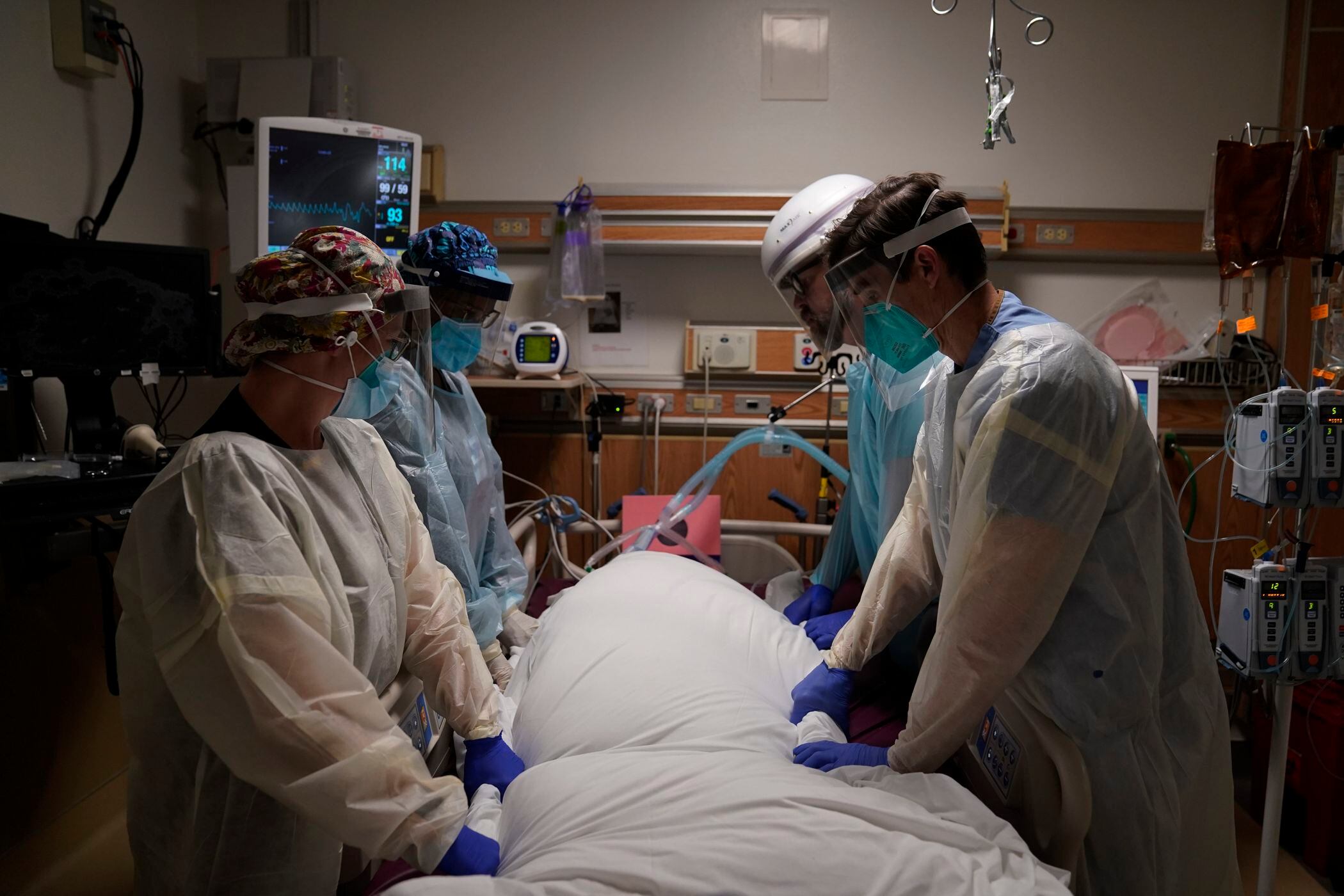
The virus is surging in several states, with California hit particularly hard, reporting on Thursday a record two-day total of 1,042 coronavirus deaths. Skyrocketing caseloads there are threatening to force hospitals to ration care and essentially decide who lives and who dies.
“Folks are gasping for breath. Folks look like they’re drowning when they are in bed right in front of us,” said Dr. Jeffrey Chien, an emergency room physician at Santa Clara Valley Regional Medical Center, urging people to do their part to help slow the spread. “I’m begging everyone to help us out because we aren’t the front line. We’re the last line.”
Meanwhile, the number of Americans who have gotten their first shot of the COVID-19 vaccine climbed to at least 5.9 million Thursday, a one-day gain of about 600,000, according to the Centers for Disease Control and Prevention. Hundreds of millions will need to be vaccinated to stop the coronavirus.
About 1.9 million people around the world have died of the virus, more than 360,000 in the U.S. alone. December was by far the nation's deadliest month yet, and health experts are warning that January could be more terrible still because of family gatherings and travel over the holidays.
A new, more contagious variant is spreading around the globe and in the U.S. Also, it remains to be seen what effect the thousands of supporters of President Donald Trump who converged this week in Washington, many of them without masks, will have on the spread of the scourge.
Trump has long downplayed the virus and scorned masks, and many of his ardent supporters have followed his example. He has also raged against lockdowns and egged on protesters objecting to restrictions in states such as Michigan, where armed supporters invaded the statehouse last spring.
On Wednesday, the day a horde of protesters breached the U.S. Capitol, disrupting efforts to certify the election of Joe Biden, the U.S. recorded 3,865 virus deaths, according to Johns Hopkins University. The numbers can fluctuate dramatically after holidays and weekends, and the figure is subject to revision.
“The domestic terrorists overran the Capitol police, just as the virus has been allowed to overrun Americans,” said Dr. Eric Topol, head of the Scripps Research Translational Institute. “The U.S. lost control of a Trump-incited mob and a Trump-played-down pandemic virus.”
Some of the forces contributing to the eruption of violence were partially foreseen by experts in global disease planning when they held a tabletop exercise in 2019, said Dr. Eric Toner, a senior scholar at the Johns Hopkins Center for Health Security who directed the drill.
“We did consider the possibility of active disinformation and using a pandemic for political gain,” Toner said. “Real life turned out to be much worse.”
In California, health authorities Thursday reported 583 new deaths, a day after 459 people died. The overall death toll there stands at more than 28,000. The state also registered more than a quarter-million new weekly cases, and only Arizona tops California in cases per resident. Florida broke its record for the highest single-day number of cases with over 19,800, while its death toll reached 22,400.
Los Angeles County, the nation’s most populous with 10 million residents, and nearly two dozen other counties have essentially run out of intensive care unit beds for COVID-19 patients.
“This is a health crisis of epic proportions,” said Barbara Ferrer, public health director for Los Angeles County.
Guidelines posted on the website for Methodist Hospital of Southern California warned: “If a patient becomes extremely ill and very unlikely to survive their illness (even with life-saving treatment), then certain resources ... may be allocated to another patient who is more likely to survive.”
___
Associated Press writers Olga Rodriguez in San Francisco and Tamara Lush in Tampa, Florida, contributed to this report.