U.S. health authorities said Thursday that 16- and 17-year-olds should get a booster dose of Pfizer's COVID-19 vaccine once they're six months past their last shot.
The U.S. and many other nations already were urging adults to get booster shots to pump up immunity that can wane months after vaccination, calls that intensified with the discovery of the worrisome new omicron variant.
On Thursday, the Food and Drug Administration gave emergency authorization for 16- and 17-year-olds to get a third dose of the vaccine made by Pfizer and its partner BioNTech. And hours later, the Centers for Disease Control and Prevention lifted the last barrier — saying those teens should get their booster as soon as it's time.
CDC Director Rochelle Walensky told The Associated Press the boosters are important considering that protection against infection wanes over time and “we’re facing a variant that has the potential to require more immunity to be protected.”
“Vaccination and getting a booster when eligible, along with other preventive measures like masking and avoiding large crowds and poorly ventilated spaces, remain our most effective methods for fighting COVID-19,” Dr. Janet Woodcock, acting FDA commissioner, said in a statement.
The Pfizer vaccine is the only option in the U.S. for anyone younger than 18, either for initial vaccination or for use as a booster. It’s not yet clear if or when teens younger than 16 might need a third Pfizer dose.
Vaccinations for children as young as 5 just began last month, using special low-dose Pfizer shots. By this week, about 5 million 5- to 11-year-olds had gotten a first dose.
The extra-contagious delta variant is causing nearly all COVID-19 infections in the U.S., and in much of the world. It’s not yet clear how vaccines will hold up against the new and markedly different omicron mutant. But there’s strong evidence that boosters offer a jump in protection against delta-caused infections, currently the biggest threat.
Complicating the decision to extend boosters to 16- and 17-year-olds is that the Pfizer shot -- and a similar vaccine made by Moderna -- have been linked to a rare side effect. Called myocarditis, it’s a type of heart inflammation seen mostly in younger men and teen boys.
The FDA said rising COVID-19 cases in the U.S. mean the benefits of boosters greatly outweighed the potential risk from the rare side effect, especially as the coronavirus itself can cause more serious heart inflammation.
Health officials in Israel, which already gives boosters to teens, have said the side effect continues to be rare with third doses.
A U.S. study this week offered additional reassurance. Researchers from children’s hospitals around the country checked medical records and found the rare side effect usually is mild and people recover quickly. The research was published Monday in the journal Circulation.
___
Associated Press reporter Matthew Perrone contributed to this report.
Stan Farnsworth, chief marketing officer at PulseForge, joined Cheddar to talk about his company's debut at CES 2022 and how it plans to innovate the sustainable tech manufacturing space. PulseForge is bringing a new approach to industrial thermal processing, which contributes to 30 percent of global greenhouse gas emissions, according to Farnsworth. "By using 85 percent less energy in the processing of materials through a variety of manufacturing processes, we can make a direct impact in reducing carbon output and reducing carbon footprint associated with manufacturing," he said.
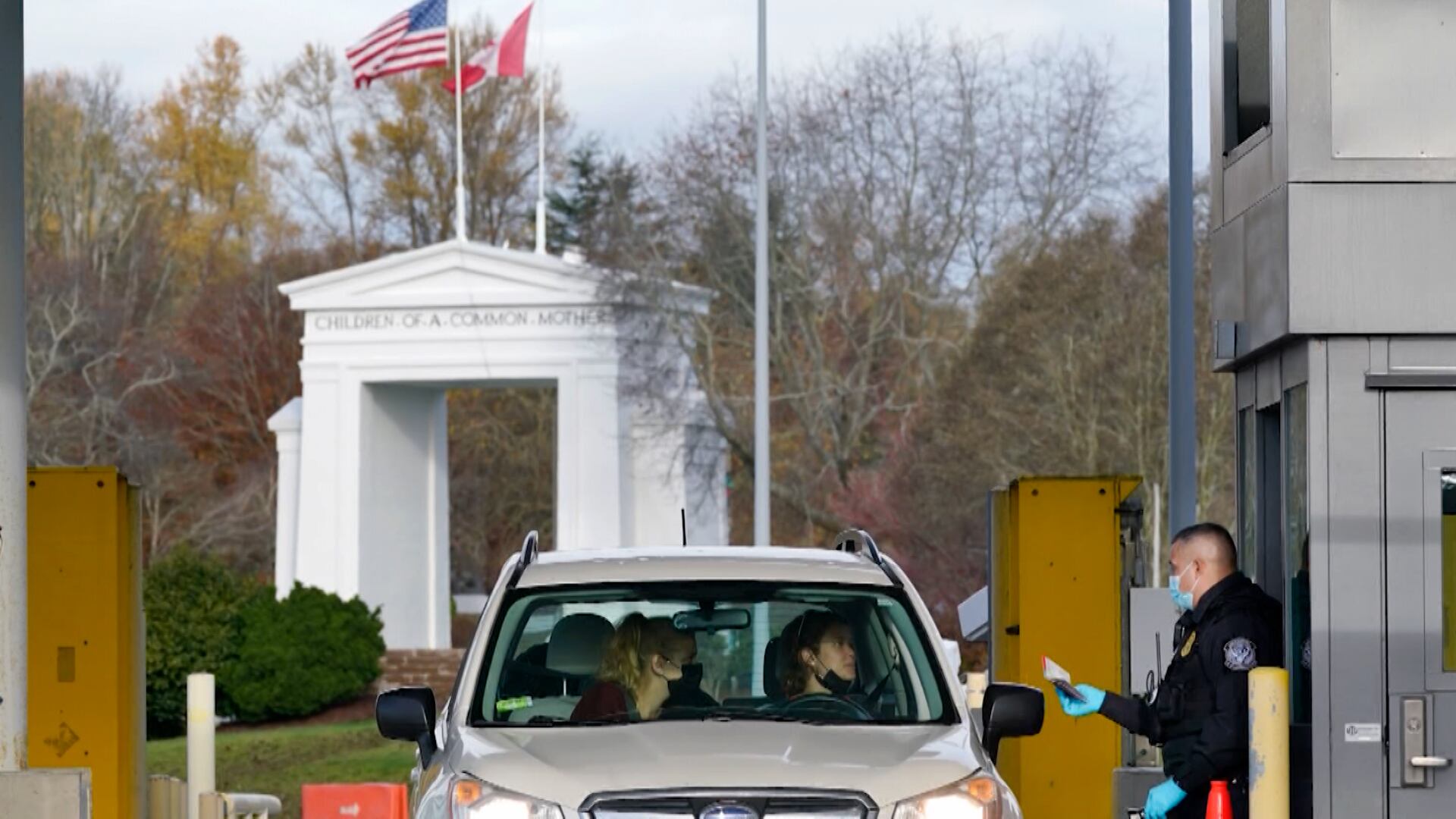
The U.S. will be implementing a vaccine mandate for all people entering through its land borders, removing exemptions for "essential" travelers such as truckers, students, and business people. While the Canadian Trucking Alliance argues that the new, stricter rule might exacerbate ongoing auto supply chain issues, some health experts see the potential for helping curb the ongoing pandemic. Anthony Santella, a professor of health administration at the University of New Haven, joined Cheddar to give his take on the updated border crossing restriction. "We can't just focus on one type of travel. We need to ensure that it's clear and consistent across all types of travel," Santella said.
Mona Zhang, states cannabis policy reporter at POLITICO Pro joins Cheddar News to discuss major factors that caused Canada's retail marijuana sales to drop last year.
To encourage and inspire young women to pursue careers in STEAM, or science, technology, engineering, arts, and math, Space VIP has officially launched its New York Space Prize Challenge. Young women enrolled in the public school system within New York's five boroughs and are between the ages of 15 to 18 are welcomed to participate. Executive Director of Space Prize, Kim Macharia, joined Cheddar to discuss more.
According to a recent report from NASA and NOAA, the last eight years have been the eight hottest years on record. Director of NASA's Goddard Institute For Space Studies Gavin Schmidt, joined Cheddar to discuss more.
Aditi Mayer, a climate justice activist joins Cheddar News to discuss her partnership with DoSomething.org and how a new PSA is working to shine a light on environmental racism.
The drama surrounding tennis star Novak Djokovic continues after he was deported from Australia over the weekend due to the nation's COVID-19 vaccine requirements. Djokovic was forced to leave the country on the eve of what was to be his first match in defense of his Australian Open title after three judges ruled in favor of his removal and revealed their reasoning for doing so. Adding to his woes, a law recently passed in France is putting his chances of defending his French Open title in jeopardy. The director of Marist's Center for Sports Communication, Jane McManus, joined Cheddar to discuss the ongoing fallout.
On this episode of Cheddar Innovates: Vrai CEO discusses the process of creating lab grown diamonds, Entrupy CEO breaks down how the app uses artificial intelligence to analyze authenticity for luxury goods and sneakers; A look at Curiosity Stream's 'Red Elvis.'
The Department of Agriculture has officially unveiled its plan to fight catastrophic wildfires that have devastated parts of the West in the last few years. The department, along with the Forest Service will work to significantly increase fuels and forest health treatments to address the escalating crisis of wildfire danger. Executive Editor of Cipher, a publication by Breakthrough Energy, Amy Harder, joined Cheddar to discuss more.