By Christopher Rugaber
U.S. inflation ticked down again last month, with cheaper gas helping further lighten the weight of price increases in the United States.
At the same time, the latest data on consumer inflation showed that prices in some areas — services such as rents, restaurants and auto insurance — continued to rise uncomfortably fast.
Tuesday’s report from the Labor Department said the consumer price index rose just 0.1% from October to November. Compared with a year earlier, prices were up 3.1% in November, down from a 3.2% year-over-year rise in October.
But core prices, which exclude volatile food and energy costs, rose 0.3% from October to November, slightly faster than the 0.2% increase the previous month. Measured from a year ago, core prices rose 4%, the same as in October. The Federal Reserve considers core prices to be a better guide to the future path of inflation.
The stickiness of inflation in the economy's service sector will likely keep the Federal Reserve on guard against inflation as it meets this week. Fed Chair Jerome Powell has been scrutinizing such costs as a guide to whether underlying inflationary trends are cooling.
Inflation remains above the Fed's 2% target. And while Powell has expressed optimism about slowing inflation, he said earlier this month that it was “premature” to assume that the Fed was done raising its benchmark interest rate or to speculate about rate cuts, which many on Wall Street expect as early as spring.
Michael Gapen, chief economist at Bank of America, said that persistent inflation in the service sector “fits the ‘wait and see and be careful’ narrative that the Fed is constructing.”
“In terms of building confidence that you’re in a disinflationary environment and opening the door to cuts," Gapen added, “I think you have to say, well, we need more time to assess where services inflation is is going.”
Prices for such services as hotels, health care and entertainment are heavily determined by wages because they are labor-intensive. And wages are still rising rapidly, though they've eased from pandemic-era peaks.
Restaurant prices are an example. They rose 0.4% from October to November for a third straight month, leaving them 5.3% more expensive than they were a year earlier. Rents are also fueling inflation: They accelerated slightly from October to November. Real-time data from companies like Zillow and ApartmentList, though, suggest that apartment rent growth is slowing. That slowdown has started to bring down the government's official measure of rents and should continue to do so in coming months.
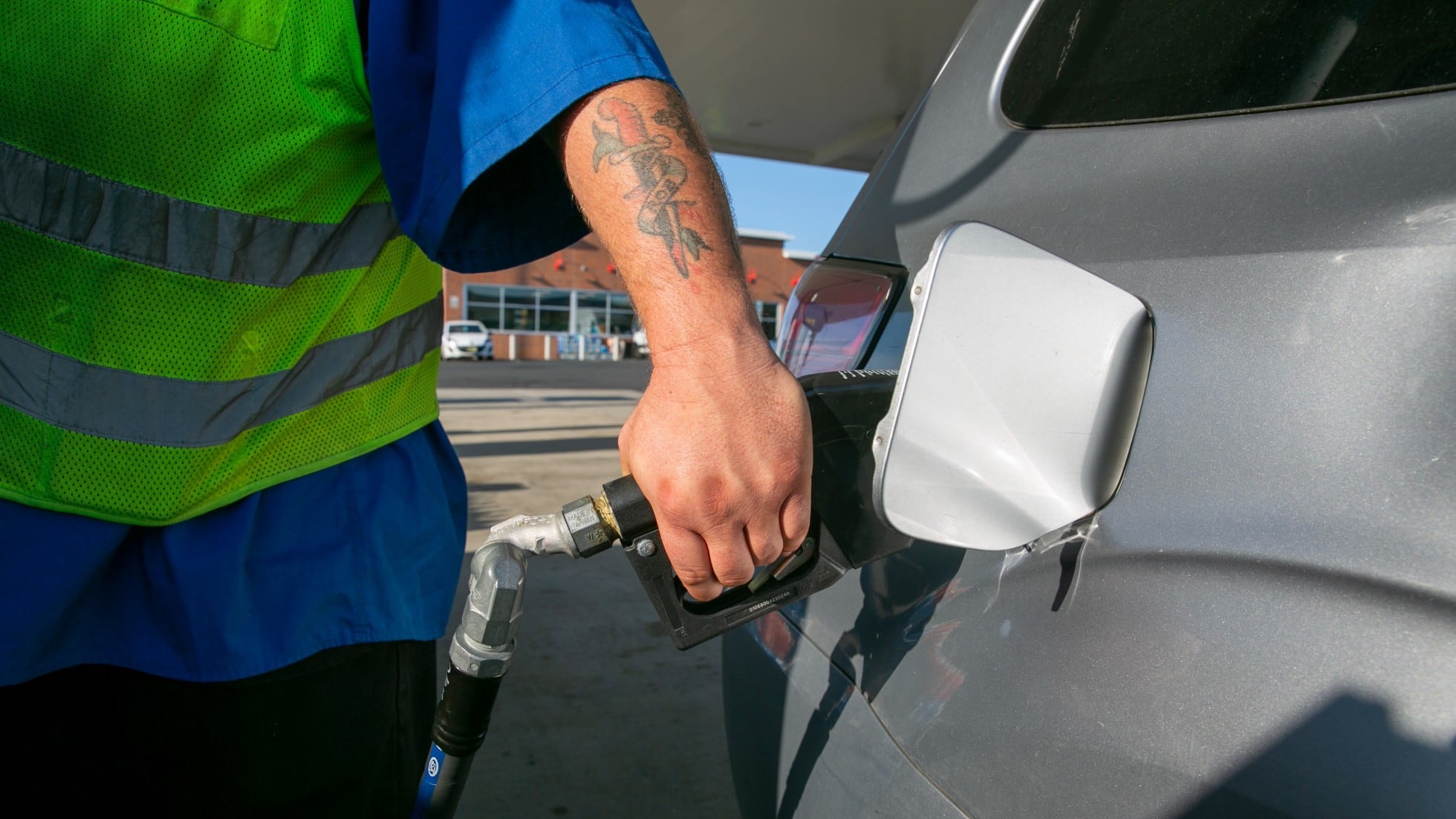
Gas prices tumbled 6% just from October to November. From a peak of $5 about a year and a half ago, the national average has dropped to $3.14 a gallon, according to AAA.
And grocery prices are showing signs of further cooling, which should provide consumers with some relief for one of their most frequent purchases: Food prices ticked up just 0.1% in November and are only 1.7% higher than they were a year ago. Bread, beef, chicken and pork prices all dropped.
Many goods prices, including furniture, clothing and appliances, also fell last month. Used cars were an exception. Their average prices jumped 1.6% in November, though they're still down nearly 4% from 12 months earlier.
The sharp decline in goods prices reflects substantial improvement in global supply chains, which were severely disrupted by the pandemic. At the same time, Americans ramped up spending on cars, stationary bikes and furniture in 2021 and 2022, worsening the bottlenecks for many factory-made items.
In the past year or so, a slower economy and smoother production have helped reduce inflation pressures by making it easier and cheaper for companies to obtain supplies and find workers.
At Christmas Decor, a company that installs holiday decorations for homes and businesses, sales are still growing this year but at a less frantic pace than in the previous two years. In 2021, for example, Brandon Stephens, the company president, was so busy and customers were so willing to spend money on decorations that some people were willing to wait until after Christmas for his company to put up lights and ornaments.
“This year wasn't as feverish as it felt in the last two years,” Stephens said.
Stephens, who imports most of his Christmas lights, Santa statues and greenery, said that in 2021 shipping costs had jumped from $6,000 for a 40-foot container to as much as $30,000. He recommended to his roughly 275 franchisees that they raise prices by 7% to 9% that year to cover the higher costs.
With shipping prices having since dropped back to pre-pandemic levels, Christmas Decor is raising prices more slowly. Still, the cost of some goods and labor remains much higher than before the pandemic. A basic install at a home now costs about $2,300, Stephens said, compared with $1,700 before COVID.
The mixed picture in Tuesday’s inflation report will likely keep the Fed on track to leave its benchmark interest rate unchanged when its latest meeting ends Wednesday. Inflation still exceeds the Fed’s 2% annual target, which is why its officials are set to leave rates high. But inflation is also cooling faster than officials expected, a key reason they likely see no cause to further raise rates, at least for now.
If the Fed leaves rates where they are Wednesday, it will be the third straight time it has done so. The central bank last raised its key rate in July, which suggests that it's probably finished raising borrowing costs.
The central bank has pushed its key rate to about 5.4%, the highest level in 22 years, in a determined drive to conquer inflation. Its rate hikes have made mortgages, auto loans, business borrowing and other forms of credit much costlier, reflecting the Fed’s goal of slowing borrowing and spending enough to tame inflation.
Even if the central bank is done raising rates, it’s expected to keep its benchmark rate at a peak for at least several more months. The Fed raised its key short-term rate 11 times starting in March 2022.
According to a lesser-known inflation gauge that the Fed prefers, core prices rose 3.5% in October compared with 12 months earlier. That was less than the central bank’s forecast of 3.7% for the final three months of this year.