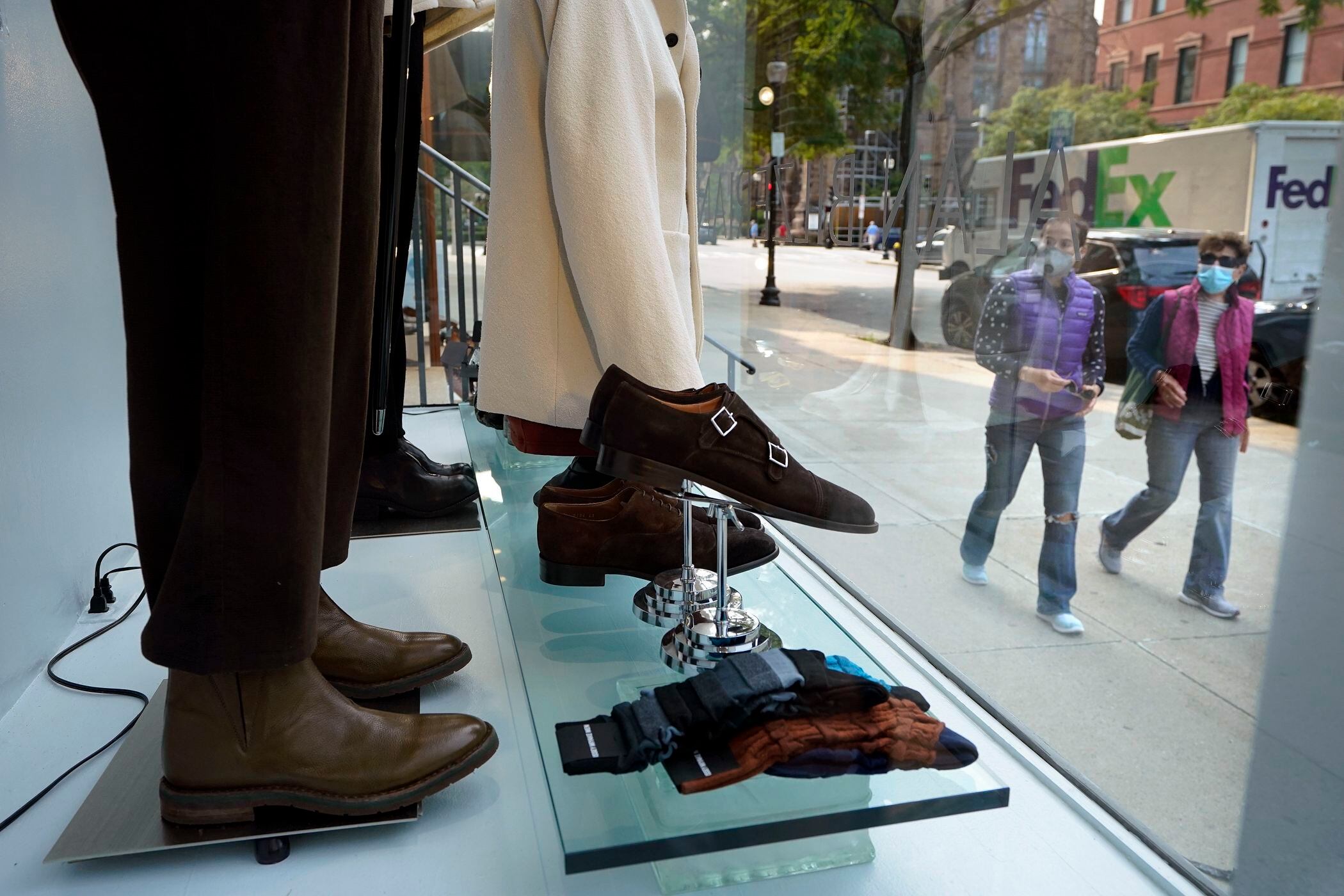
In this Tuesday, Sept. 15, 2020, file photo, passers-by examine a storefront window in Boston's fashionable Newbury Street shopping district. U.S. consumer confidence dipped slightly in October as a new wave of coronavirus cases began across the country. The Conference Board reported Tuesday, Oct. 27, 2020, that its consumer confidence index fell to a reading of 100.9, from 101.8 in September. (AP Photo/Steven Senne)
By Martin Crutsinger
U.S. consumer confidence fell to a reading of 96.1 in November as rising coronavirus cases pushed American optimism down to the lowest level since August.
The November reading released Tuesday by the Conference Board said represents a drop from a revised 101.4 in October. The decline reflected a big drop in consumer expectations for income, business, and labor market conditions.
The consumer confidence index is set on a scale with 100 equaling the confidence level in 1985.
In the leadup to the pandemic with the country enjoying unemployment at a half-century low of 3.9%, the confidence index had risen above 130. It stood at 132.6 in February but plunged to 85.7 in April as millions of Americans lost their jobs after the country went into lockdown to try to halt the spread of the pandemic.
The index has bounced around since its big April decline but remains well below the levels reached before the pandemic hit.
Emera CEO Scott Balfour discusses soaring energy demand, AI-driven grid challenges, clean-power investments, and how the company is building a resilient future.
JB Mackenzie discusses Robinhood’s new entertainment prediction markets, letting users engage with pop culture, award shows, and more through low-stakes bets.
Rhett Power shares his startup journey, lessons from his early years and insights from his book on overcoming negative self-talk to lead with confidence.
Despite inflation, Americans aren’t giving up the gym. Crunch Fitness CEO Jim Rowley discusses strong growth, value-driven expansion and what the future holds.
Home prices far outpacing incomes, low inventory, and higher living costs are reshaping the market. WSJ’s Veronica Dagher breaks down the challenges ahead.
As commercial options tighten, more travelers are turning to private aviation. Wheels Up CEO George Mattson breaks down capacity and demand challenges.
Layoffs, hiring slowdowns, and shifting skill demands dominate this year’s job talk. LinkedIn’s Kory Kantenga explains what workers should watch for next.