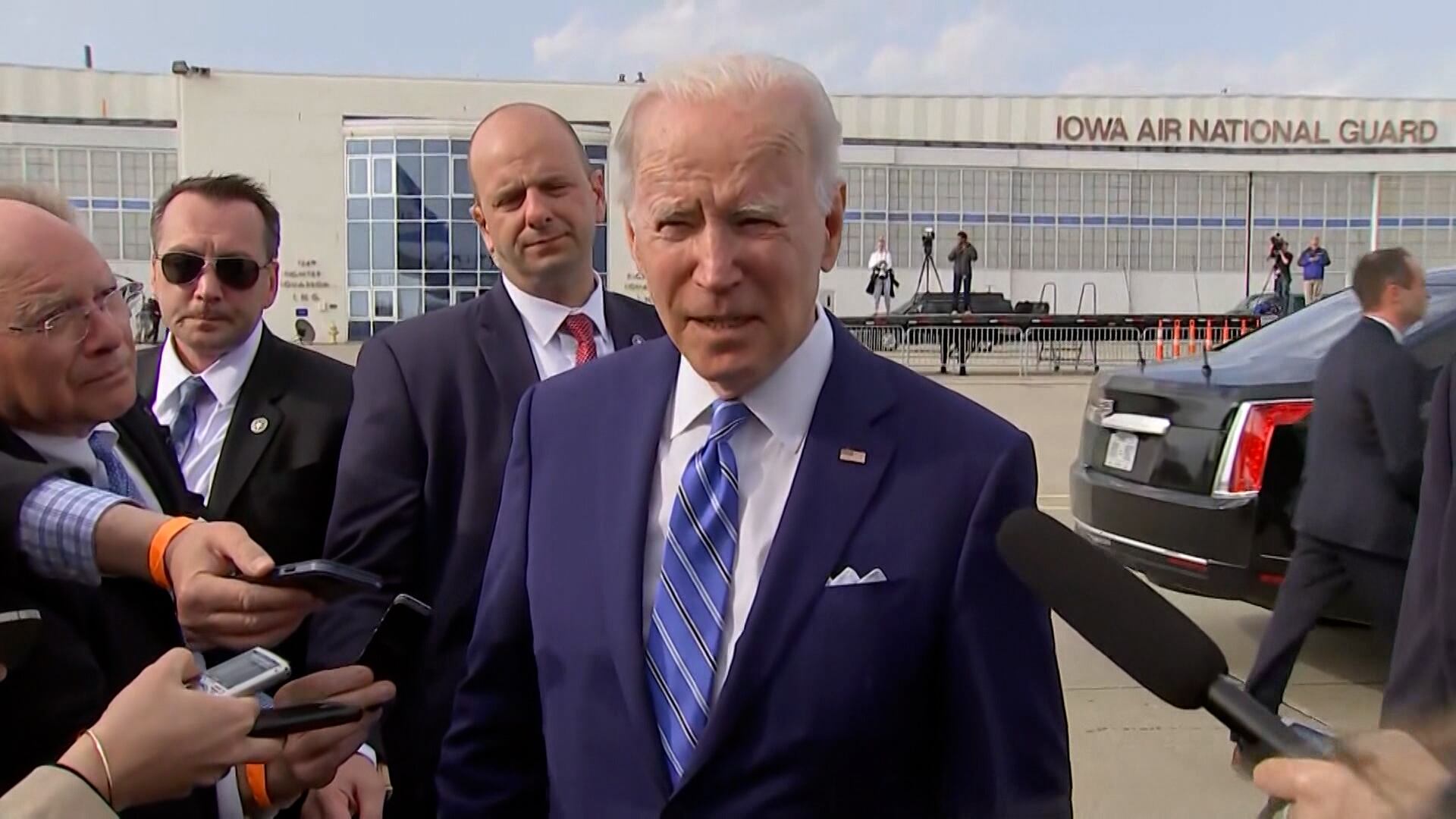
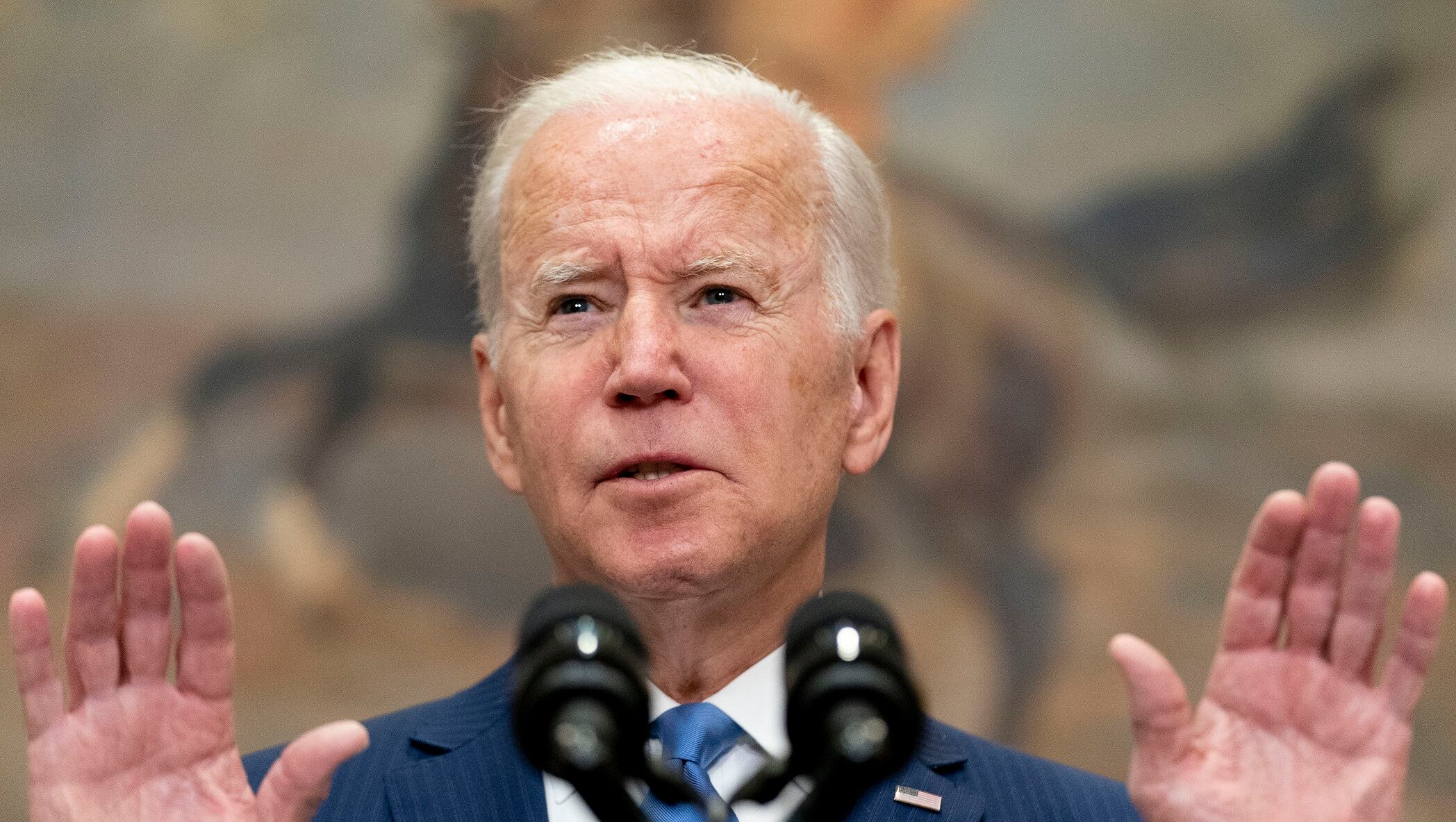
President Joe Biden said Monday that the U.S. will share an additional 20 million doses of COVID-19 vaccines with the world in the coming six weeks as domestic demand for shots drops and global disparities in distribution have grown more evident.
The doses will come from existing production of Pfizer, Moderna or Johnson & Johnson vaccine stocks, marking the first time that U.S.-controlled doses of vaccines authorized for use in the country will be shared overseas. It will boost the global vaccine sharing commitment from the U.S. to 80 million.
“We know America will never be fully safe until the pandemic that’s raging globally is under control," Biden said at the White House.
The announcement comes on top of the Biden's administration’s prior commitment to share about 60 million doses of the AstraZeneca vaccine, which is not yet authorized for use in the U.S., by the end of June. The AstraZeneca doses will be available to ship once they clear a safety review by the Food and Drug Administration.
Biden also tapped COVID-19 coordinator Jeff Zients to lead the administration's efforts to share doses with the world.
“Our nation’s going to be the arsenal of vaccines for the rest of the world," Biden said. He added that, compared to other countries like Russia and China that have sought to leverage their domestically produced doses, “we will not use our vaccines to secure favors from other countries.”
The Biden administration hasn't yet said how the new commitment of vaccines will be shared or which countries will receive them.
To date, the U.S. has shared about 4.5 million doses of AstraZeneca vaccine with Canada and Mexico. Additional doses of the Pfizer vaccine manufactured in the U.S. have begun to be exported as the company has met its initial contract commitments to the federal government.
The U.S. has faced growing pressure to share more of its vaccine stockpile with the world as interest in vaccines has waned domestically.
“While wealthy countries continue ramping up vaccinations, less than 1 percent of COVID-19 vaccine doses globally have been administered to people in low-income countries," said Tom Hart the acting CEO of the ONE Campaign. “The sooner the US and other wealthy countries develop a coordinated strategy for sharing vaccine doses with the world’s most vulnerable, the faster we will end the global pandemic for all.”
More than 157 million Americans have received at least one dose of a COVID-19 vaccine, and 123 million are full vaccinated against the virus. Biden hopes the U.S. will have 160 million people fully vaccinated by July Fourth.
Globally, more than 3.3 million people are confirmed to have died from the coronavirus. The U.S. has seen the largest confirmed loss of life from COVID-19, at more than 586,000 people.
Cheddar Politics breaks down the seismic shift in White House rhetoric surrounding Russia's war on Ukraine. President Biden began calling the alleged war crimes committed by Russian soldiers in the Kyiv region "genocide." Foreign policy and national security analyst A. Ari Aramesh joins Cheddar News to discuss what constitutes genocide and whether the developments in Ukraine qualify.
President Joe Biden said he is considering forgiving some federal student debt, a step that would help him fulfill a campaign promise and provide relief to borrowers who took out thousands of dollars in loans to finance their higher education.
Catching you up on what you need to know on April 28, 2022, with Elon Musk mocking Twitter's top legal exec Vijaya Gadde on the platform itself, a probe in George Floyd's death finding discrimination within the Minneapolis police force, the latest California drought leading to new water restrictions, and more.
Tech giant Microsoft won a military contract for the production of its IVAS (integrated visual augmentation system) combat goggles, based on its HoloLens ARG tech, worth up to $21.9 billion over 10 years. However, the Pentagon is now saying that the device "has not yet demonstrated the capability to serve as a fighting goggle," and that the Army made mistakes in the program's initial stages by not clearly describing minimum performance standards. While testing continues, concerns have grown outside of the Defense Department to Congress and even within Microsoft itself. Cheddar's Ken Buffa takes a deeper look at the possible boondoggle.
U.S. stocks fell sharply to close Tuesday's session, with the Nasdaq dropping 3.95% and hitting a new one-year low. Frances Newton Stacy, Director of Strategy for Optimal Capital, joins Cheddar News to discuss her reaction to how markets closed the session, and to break down Q3 2022 earnings from Microsoft. "Netflix was sort of the big warning, and I think Big Tech was down today in anticipation of these earnings," she says.
Florida Governor Ron DeSantis has signed into law a bill that strips Disney World of its special self-governing status. This came after Disney spoke out against Florida's so-called “Don’t Say Gay” bill, some saying in retaliation of that. Ben Means, Professor of Law and the John T. Campbell Chair in Business and Professional Ethics at the University of South Carolina School of Law, breaks down how the new law might impact Disney’s business moving forward.
Catching you up on what you need to know on April 27, 2022, with Tesla stocks absorbing an initial hit following Elon Musk's purchase of Twitter, Russia pausing its natural gas supplies to Poland and Bulgaria, NASA's SpaceX Crew-4 mission taking off, and more.
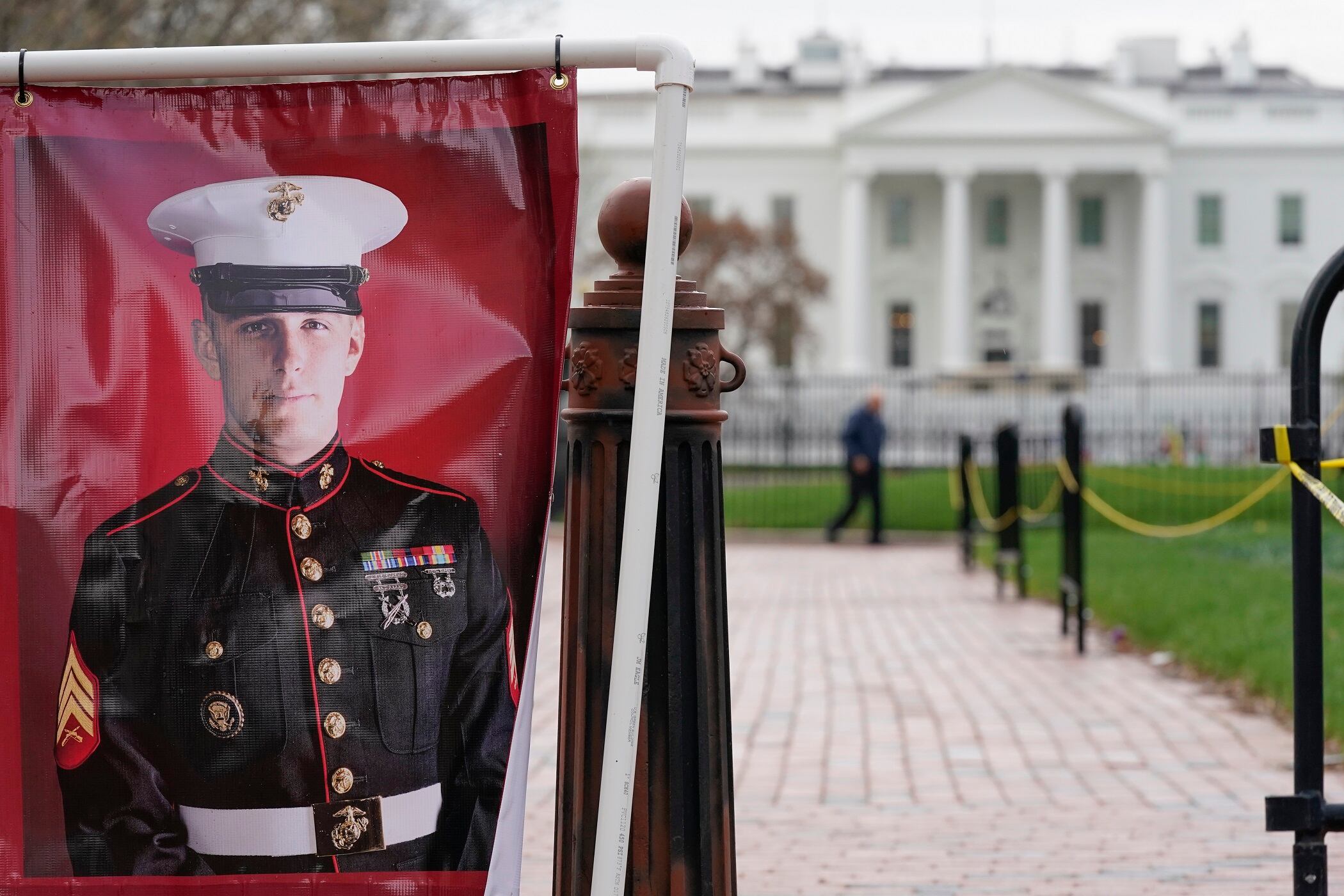
Russia and the United States have exchanged prisoners. Russia released a Marine veteran jailed in Moscow while the U.S. released a convicted Russian drug trafficker serving a prison sentence in Connecticut.