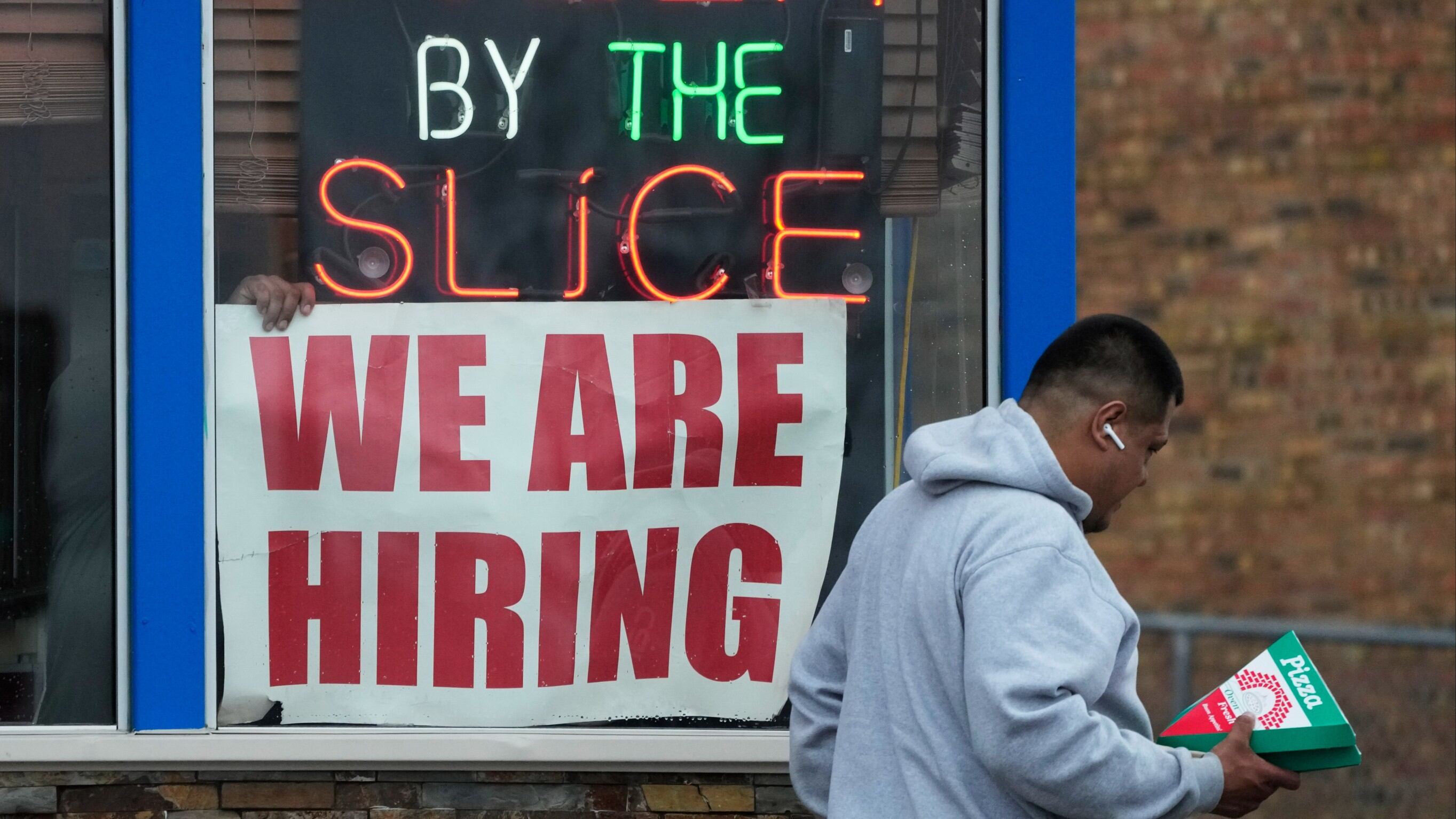
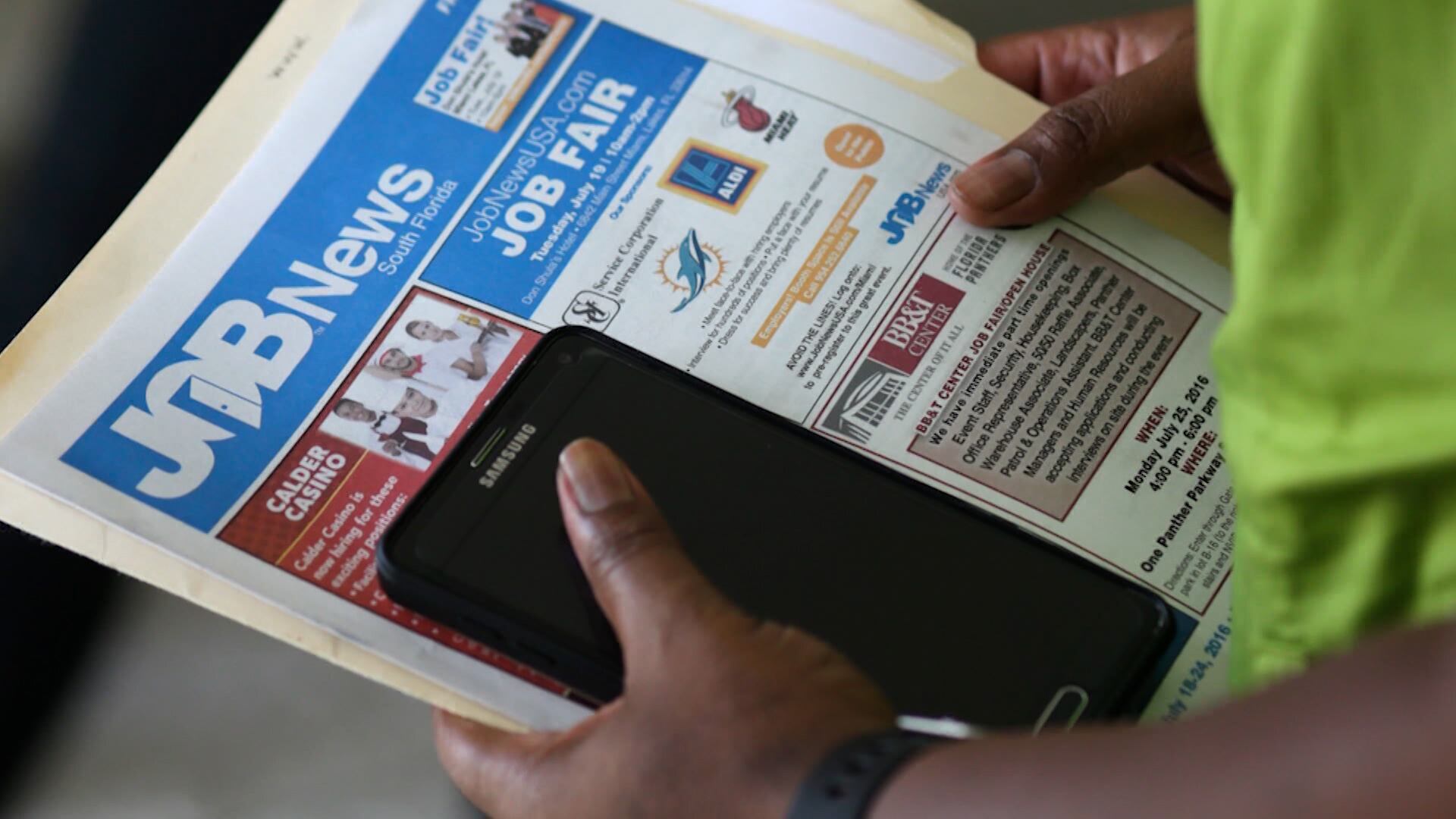
A hiring sign is displayed at a restaurant in Prospect Heights, Ill., on April 4, 2023. The hot jobs market has been defying a weakening economy and confounding the Federal Reserve for months, but now shows signs of cooling. The latest set of employment data from the government shows that job openings fell in March to their lowest level since April 2021. Layoffs rose to 1.8 million, their highest level since December 2020. (AP Photo/Nam Y. Huh, File)
By Matt Ott
The number of Americans applying for unemployment benefits last week rose to its highest level since October 2021, but the labor market remains one of the healthiest parts of the U.S. economy.
The Labor Department reported Thursday that U.S. applications for jobless claims were 261,000 for the week ending June 3, an increase of 28,000 from the previous week's 233,000. Weekly jobless claims are considered representative of U.S. layoffs.
The four-week moving average of claims, which evens out some of the weekly variations, rose by 7,500 to 237,250.
Despite last week’s sharp increase in filings for unemployment aid, some analysts cautioned against concluding that layoffs are picking up across the economy. They noted that the weekly figures are prone to revision and that last week’s numbers might have been distorted by the three-day Memorial Day weekend.
“The latest reading reflects a holiday-shortened week (Memorial Day), which ought to raise suspicions that the big move was more noise than signal,” said Stephen Stanley, chief U.S. economist for Santander. “I am eager to see next week’s reading before I draw any conclusions.”
The U.S. economy has added jobs at a furious rate since the pandemic purge of more than 20 million jobs in the spring of 2020. Americans have enjoyed unusual job security, despite the Federal Reserve's aggressive campaign to cool the economy and labor market in its bid to stifle persistent, decades-high inflation.
In early May, the Fed raised its benchmark lending rate for the 10th time in a row. There have been scattered signs that the Fed’s actions are working, but broadly, the job market continues to favor workers.
U.S. employers added a robust 339,000 jobs last month, well above expectations. Last week’s report painted a mostly encouraging picture of the job market but there were some mixed messages. Notably, the unemployment rate rose to 3.7%, from a five-decade low of 3.4% in April, the highest unemployment rate since October.
In April, employers posted 10.1 million job openings, up from 9.7 million in March and the most since January. Economists had expected vacancies to slip below 9.5 million.
Those reports, along with the jobless claims numbers, could help sway Fed officials one way or the other with regard to its next rate hike move. Most economists are predicting that the Fed will pause its rate hikes at its meeting next week, though the strong labor market could convince the central bank to stay the course with another small quarter-point increase.
The U.S. economy grew at a lackluster 1.3% annual rate from January through March as businesses wary of an economic slowdown trimmed their inventories. That’s a slight upgrade from its initial growth estimate of 1.1%.
Though the labor market remains strong, there have been notable high-profile layoffs recently, mostly in the technology sector, where many companies now acknowledge overhiring during the pandemic. IBM, Microsoft, Salesforce, Twitter, Lyft, LinkedIn, Spotify and DoorDash have all announced layoffs in recent months. Amazon and Facebook parent Meta have each announced two sets of job cuts since November.
Outside the tech sector, McDonald’s, Morgan Stanley and 3M also recently announced layoffs.
Overall, 1.76 million people were collecting unemployment benefits the week that ended May 27, about 37,000 fewer than the previous week.
Stocks closed lower on the last trading day of 2021, but all three major indexes ended the year with double-digit growth. The S&P 500, in particular, marked its third straight positive year. What's in store for 2022 amid the Federal Reserve's plans to speed up asset tapering and raise interest rates, and how could COVID-19 continue to impact stocks? Steve Sosnick, Chief Strategist at Interactive Brokers, joins Cheddar News' Closing Bell to discuss movement on the last trading day of 2021, market predictions for 2022, and more.
As the pandemic continues to evolve, and cases of the omicron variant increase, how will this impact economic growth and movement in the new year? Consumer behavior continues to shift, labor issues linger, and questions about whether the pandemic will eventually become endemic are on economists' minds as we enter 2022. Jason Ware, Economist & Chief Investment Officer at Albion Financial Group, joins Cheddar News' Closing Bell to discuss.
Mike Draper, Founder and Owner of Raygun, joins Cheddar News' Closing Bell, where he discusses how increases to the minimum wage in several states next year will help his company and explains why he advocates for it nationally.
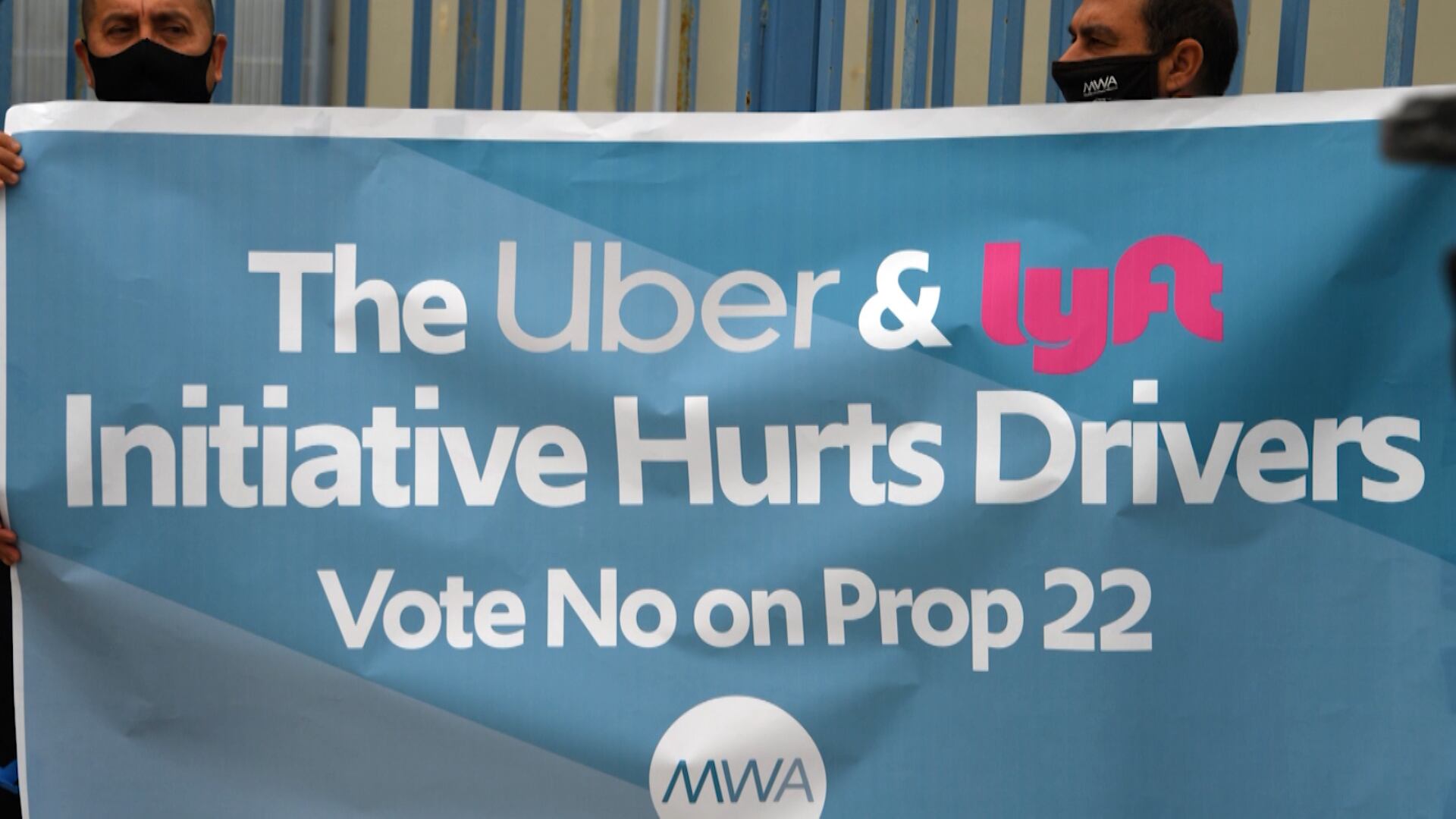
The push to regulate the gig worker economy is gaining steam as the share of workers who participate in freelancing through businesses like Uber and Lyft have also exponentially grown during the pandemic. Employment attorney Mark Kluger, founding partner at Kluger Healey, LLC, joined Cheddar to break down how the battle to reclassify gig workers will continue in the new year, and why the issue continues to generate conflict. "More and more workers are using gig work as their primary source of income and as a result of that they are not like employees in the sense that they don't have benefits like health insurance," Kluger noted.
Renewable energy company Heliogen has gone public via a SPAC merger with blank check company Athena Technology Acquisition Corp. on the NYSE. Joining Cheddar, founder and CEO Bill Gross went into why he felt the end of 2021 was the best time to get into the public markets. "If you think of the Industrial Revolution and the digital revolution, this renewable revolution is probably going to be as big or larger than that," he said. "So we're going to use this capital to scale our business, to meet more customer demand, to do more projects in parallel, and to scale our research and development to continue to drive down the price to be competitive with fossil fuels."
Carl "The Moon" Runefelt, a Bitcoin investment expert, recently made a hefty purchase of a $2 million Bugatti sports car at a Dubai dealership. The Swedish crypto evangelist joined Cheddar to talk about how he made the big acquisition of a luxury item he had long had his eye on and why he chose the dealership, The Car Vault, to make the unprecedented transaction. "They accepted crypto directly, and that was important to me," he said. "I am not going to go to any car dealership that don't accept crypto, and that's kind of a principle I have today."
Marjorie Mesidor, Partner at Phillips & Associates, joined Wake Up With Cheddar to break down the latest trends in the job market, as the demand for labor has recovered, but as the number of people willing to fill positions remains relatively low.
2021 proved that crypto currency is here to stay. This year saw more and more adoptions of crypto, from top athletes looking to be paid in bitcoin, to Elon Musk even experimenting with bitcoin and dogecoin payments for a bit over at Tesla. And it wasn't all bitcoin either - other cryptos like Cardano and Solana saw some action in 2021 as well. Patrick McConlogue, CEO of Overline and former Citadel Investment Group Engineer explains why 2021 was such a good year for crypto, and what to expect in 2022.