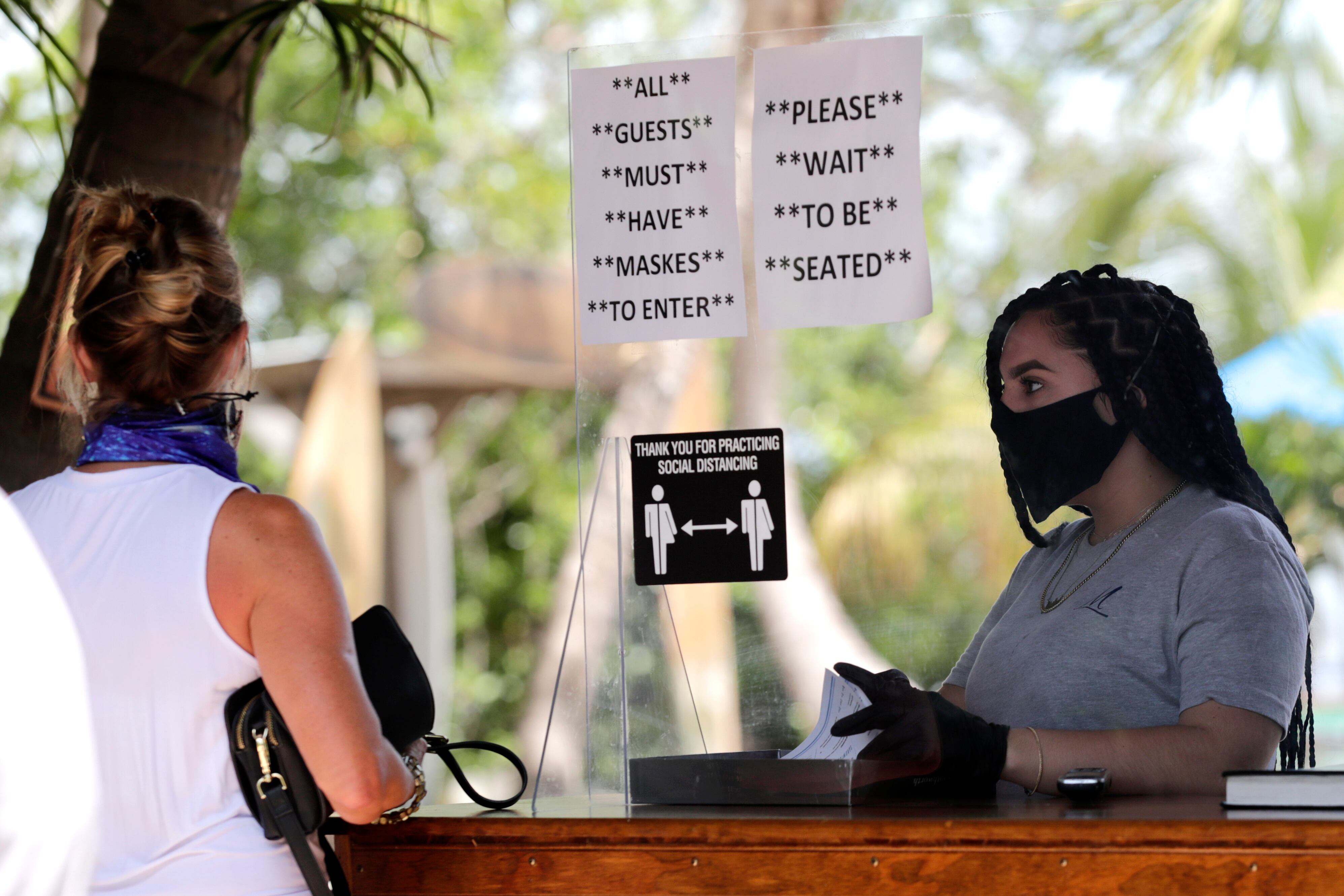
Nailea Rosales works behind a protective shield wearing a protective mask and gloves at the Morada Bay Beach Cafe in Islamorada, in the Florida Keys, during the new coronavirus pandemic, Monday, June 1, 2020. The Florida Keys reopened for visitors Monday after the tourist-dependent island chain was closed for more than two months to prevent the spread of the coronavirus. (AP Photo/Lynne Sladky)
By Christopher Rugaber
The U.S. unemployment rate fell to 13.3 percent in May from 14.7 percent, and 2.5 million jobs were added — a surprisingly positive reading in the midst of a recession that has paralyzed the economy in the wake of the viral pandemic.
The May job gain suggests that businesses have quickly been recalling workers as states have reopened their economies.
Other evidence has also shown that the job market meltdown triggered by the coronavirus has bottomed out. The number of people applying for unemployment benefits has declined for nine straight weeks. And the total number of people receiving such aid has essentially leveled off.
The overall job cuts have widened economic disparities that have disproportionately hurt minorities and lower-educated workers. Though the unemployment rate for white Americans was 12.4 percent May, it was 17.6 percent for Hispanics and 16.8 percent for African-Americans.
Even with the surprising gain in May, it may take months for all those who lost work in April and March to find jobs. Some economists forecast the rate could remain in double-digits through the November elections and into next year.
Despite healthcare spending cuts, medtech stocks like Edwards Life Sciences, Stryker, and Boston Scientific are rising, especially those serving older pati
Joby CPO Eric Allison discusses the UAE’s historic EVTOL take off, marking Dubai as the launchpad for global air taxi adoption and Joby’s commercial readiness.
CFRA’s Angelo Zino joins us to unpack Meta’s Superintelligence Labs and what it means for the future of AI, innovation, and the company’s bold new direction.
AIRO CEO Joe Burns and Executive Chairman Chirinjeev Kathuria talks the future of aerospace, drones, and urban air mobility through innovation and synergy.
NYC's mayoral race heats up with a socialist candidate aiming to make the city affordable—and rattling the financial sector. Plus: Coinbase's prospects.
Mark Hamrick of Bankrate discusses the jobs market, AI's growing impact on employment, and how markets are reacting to today’s surprising payroll data.