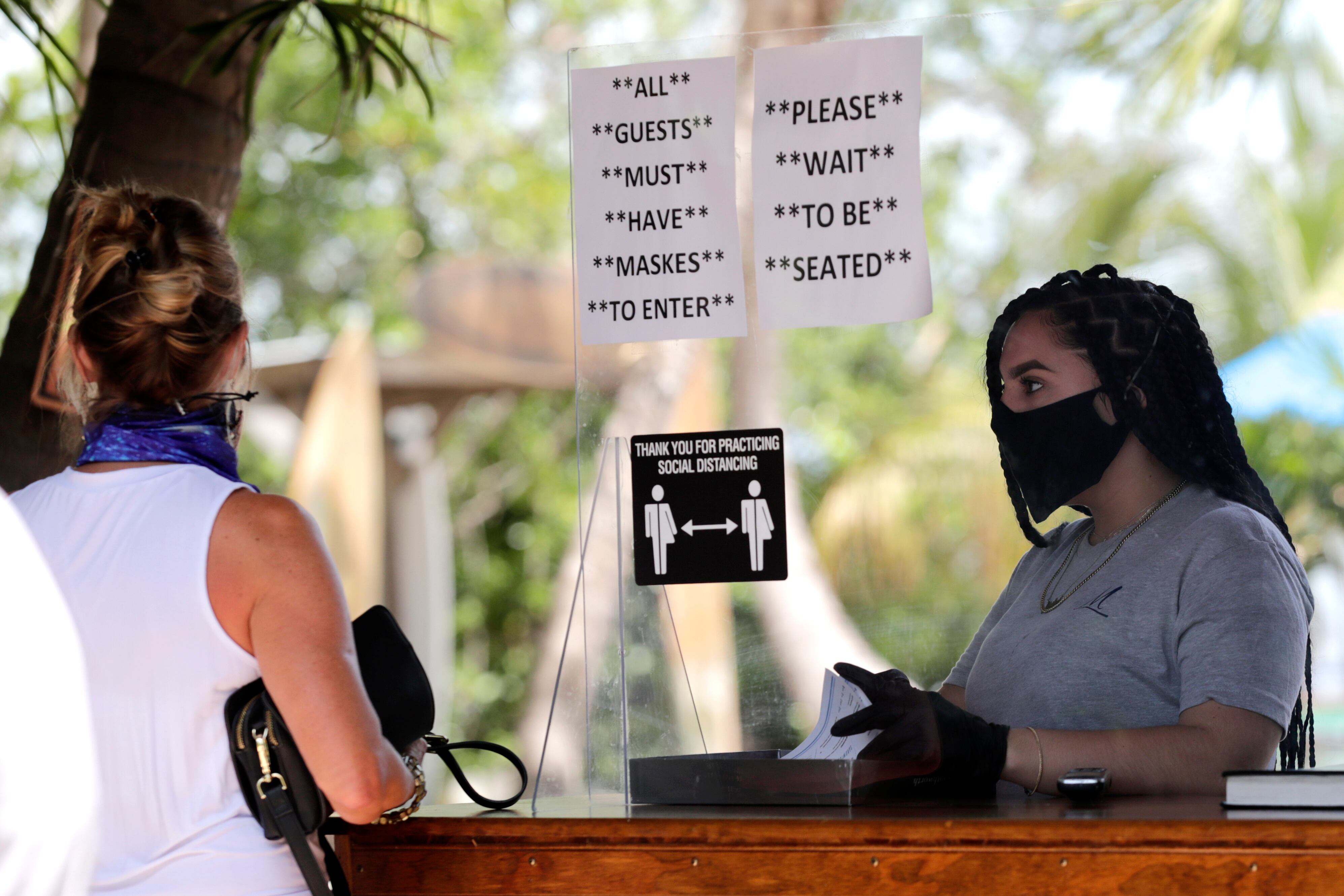
Nailea Rosales works behind a protective shield wearing a protective mask and gloves at the Morada Bay Beach Cafe in Islamorada, in the Florida Keys, during the new coronavirus pandemic, Monday, June 1, 2020. The Florida Keys reopened for visitors Monday after the tourist-dependent island chain was closed for more than two months to prevent the spread of the coronavirus. (AP Photo/Lynne Sladky)
By Christopher Rugaber
The U.S. unemployment rate fell to 13.3 percent in May from 14.7 percent, and 2.5 million jobs were added — a surprisingly positive reading in the midst of a recession that has paralyzed the economy in the wake of the viral pandemic.
The May job gain suggests that businesses have quickly been recalling workers as states have reopened their economies.
Other evidence has also shown that the job market meltdown triggered by the coronavirus has bottomed out. The number of people applying for unemployment benefits has declined for nine straight weeks. And the total number of people receiving such aid has essentially leveled off.
The overall job cuts have widened economic disparities that have disproportionately hurt minorities and lower-educated workers. Though the unemployment rate for white Americans was 12.4 percent May, it was 17.6 percent for Hispanics and 16.8 percent for African-Americans.
Even with the surprising gain in May, it may take months for all those who lost work in April and March to find jobs. Some economists forecast the rate could remain in double-digits through the November elections and into next year.
Super League is redefining brand advertising, inside Roblox and Minecraft, reaching 300M gamers with results traditional ads can't touch. Here's how they do it.
As OpenAI and Anthropic eye public markets, Mizuho analyst Lloyd Walmsley tells us which AI giant has the stronger case for investors and what to watch next.
Hershey's VP of Marketing Dan Mohnshine reveals the brand's newest products, the story behind Dirty Soda Twizzlers, and how an iconic brand stays relevant.
Lavu CEO Saleem Khatri joins to explain how AI-powered POS systems are changing how major franchises like KFC take orders, cut costs, and serve customers faster
BillionToOne's Jen Hoskovec breaks down the Unity test, the latest in prenatal genetic screening, and what it means for those born with genetic conditions.