By Jill Lawless and Pan Pylas
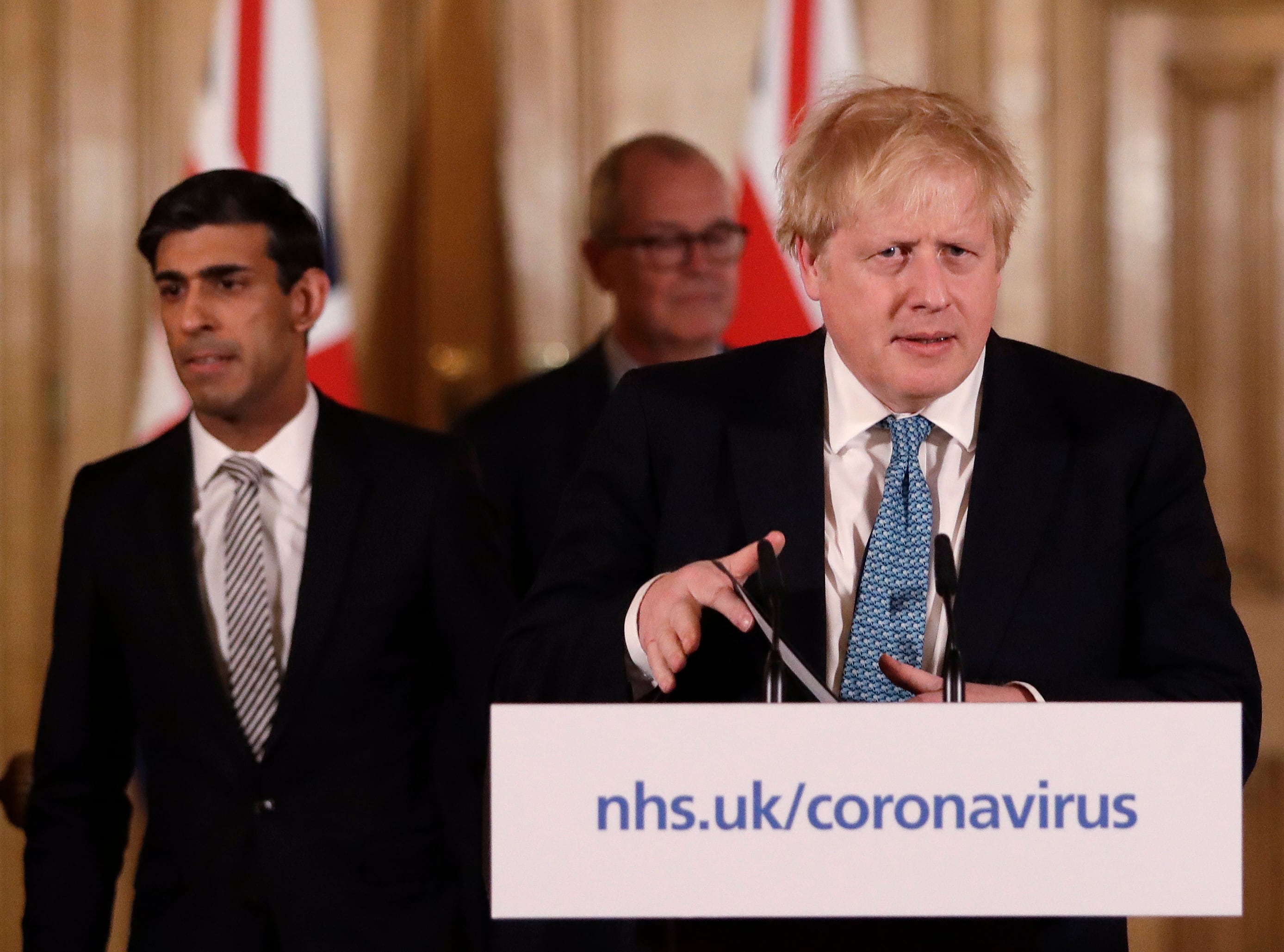
British Prime Minister Boris Johnson was moved out of intensive care Thursday at the London hospital where he is being treated for the new coronavirus, as his government told Britons to prepare for several more weeks in lockdown.
Johnson had been in the ICU at St. Thomas’ Hospital since Monday after his symptoms of COVID-19 worsened.
Johnson's office said he was “moved this evening from intensive care back to the ward, where he will receive close monitoring during the early phase of his recovery.”
It said Johnson was in “extremely good spirits.”
The British leader tested positive for the new coronavirus two weeks ago and at first had only “mild” symptoms. He was hospitalized Sunday and taken to the ICU a day later. Johnson had been receiving oxygen without being placed on a ventilator.
His condition appeared to be improving over the past day or so. Earlier Thursday, Foreign Secretary Dominic Raab, who has been standing in for the prime minister during key meetings, said Johnson was “making positive steps forward.”
News of Johnson's improving condition was welcomed across the British political spectrum — and by U.S. President Donald Trump, who tweeted: “Great News: Prime Minister Boris Johnson has just been moved out of Intensive Care. Get well Boris!!!”
As Johnson recovered, the government told Britons it was too early to ease restrictions on public activity imposed March 23 to try to slow the spread of the virus.
The original restrictions were for three weeks, a period that ends Monday. But after chairing a meeting of the government’s crisis committee, COBRA, Raab said no decision on lifting the government’s stay-home order and business closures would be made “until evidence clearly shows that we’ve moved beyond the peak” of the outbreak.
Raab said “we’re starting to see the impact of the sacrifices we’ve all made, but the deaths are still rising and we haven’t yet reached the peak of the virus.”
He said the government and its scientific experts would assess the evidence again next week.
“We mustn’t give the coronavirus a second chance to kill more people and to hurt our country,” Raab said at the government’s daily news conference.
For most people, the coronavirus causes mild to moderate symptoms such as fever and cough. But for some, especially older adults and the infirm, it can cause pneumonia and in some cases death.
Almost 8,000 people with the coronavirus have died in British hospitals, according to government figures. While the number of new confirmed cases has begun to plateau, deaths have neared the peaks seen in Italy and Spain, the two countries with the greatest number of fatalities.
On Thursday, the U.K. reported 881 new deaths, down from the 938 recorded the day before. Italy recorded a high of 969 deaths on March 27 and Spain 950 deaths on April 2.
The figures may not be directly comparable, however. Not all the U.K. deaths reported each day occurred in the preceding 24 hours, and the total only includes deaths in hospitals.
U.K. officials have suggested restrictions could be tightened if people flock to parks and outdoor spaces over what is forecast to be a warm, sunny Easter weekend. Currently most parks remain open, and people are allowed to go outside for essential work. shopping and exercise.
While most Britons have observed the rules, there have been breaches. Police in the northwest English city of Manchester said they had broken up 660 parties in the city over the past two weeks, including some with DJs and fireworks.
In some cases, police have been accused of excessive zeal. Nick Adderley, the chief of Northamptonshire Police in central England, said Thursday that his officers might have to set up roadblocks and start “checking the items in (shopping) baskets and trolleys to see whether it’s a legitimate, necessary item.”
Civil liberties group Big Brother Watch called those comments “outrageous” and Adderley later clarified that his officers would not be inspecting people’s shopping.
Johnson’s government was slower than those in some European countries to impose restrictions on daily life in response to the pandemic, leading his critics to accuse him of complacency. Britain also had one of the lowest numbers of hospital beds per capita in Western Europe before the pandemic, with only about 5,000 intensive-care beds nationwide.
That number has been increased vastly in the past few weeks, both by converting other areas of hospitals to treat COVID-19 patients and by building temporary facilities, including a 4,000-bed hospital at London’s Excel conference center.
So far, hospitals have been stretched but not overwhelmed, But some medics say they are struggling and still have not received adequate supplies of personal protective equipment, or PPE
“We’re still, by and large, wearing the same equipment that we were a few weeks ago,” said Dr. Nishant Joshi, an accident and emergency doctor who works in a hospital north of London.
“We’re getting a higher volume of patients, and they are more unwell and they’re probably more contagious,” he said.
“So it’s fair to assume that the PPE that we were kind of making do with, it was a hit and hope situation, a few weeks ago. It’s fair to say that it’s no longer adequate.”
James Slack, the prime minister’s spokesman, said “we are confident that enough supply is now reaching the front line” and that the government was working urgently to sort out any distribution problems with protective equipment.
___
Associated Press Writer Danica Kirka contributed to this story.