By Nebi Qena and Andrea Rosa
About 300 people were killed in the Russian airstrike last week on a Mariupol theater that was being used as a shelter, Ukrainian authorities said Friday in what would make it the war's deadliest known attack on civilians yet.
Meanwhile, in what could signal an important narrowing of Moscow’s military objectives, the U.S. said Russian forces appear to have halted, at least for now, their ground offensive aimed at capturing the capital, Kyiv, and are concentrating more on the fighting for control of the Donbas region in the country's southeast — a shift the Kremlin seemed to confirm.
Col.-Gen Sergei Rudskoi, deputy chief of the Russian general staff, said the main objective of the first stage of the operation — reducing Ukraine's fighting capacity — has "generally been accomplished,” allowing Russian forces to focus on “the main goal, liberation of Donbas.”
The seeming shift in Moscow’s stated war aims -- after weeks in which Vladimir Putin denied Ukraine’s right to exist as an sovereign country and appeared bent on capturing many of its cities and toppling its government — could point to a possible exit strategy for Russia, which has suffered fiercer resistance and heavier losses than anticipated.
In fact, the Russians are no longer in full control of Kherson, the first major city to fall to Moscow’s forces, a senior U.S. defense official said. The official said the southern city is being contested by the Ukrainians in heavy fighting. The Kremlin denied it had lost full control.
The Donbas is the largely Russian-speaking eastern part of the country where Russian-backed separatists have been fighting Ukrainian forces since 2014 and where many residents have expressed support for Moscow.
In Mariupol, the bloodshed at the theater fueled allegations Moscow is committing war crimes by killing civilians, whether deliberately or by indiscriminate fire.
For days, the government in the besieged and ruined port city was unable to give a casualty count for the March 16 bombardment of the grand, columned Mariupol Drama Theater, where hundreds of people were said to be taking cover, the word “CHILDREN” printed in Russian in huge white letters on the ground outside to ward off aerial attack.
In announcing the death toll on its Telegram channel Friday, the city government cited eyewitnesses. But it was not immediately clear how witnesses arrived at the figure or whether emergency workers had finished excavating the ruins.
U.S. President Joe Biden’s national security adviser, Jake Sullivan, said Friday the theater bombing was an "absolute shock, particularly given the fact that it was so clearly a civilian target.” He said it showed “a brazen disregard for the lives of innocent people.”
The scale of devastation in Mariupol, where bodies have been left unburied amid bomb craters and hollowed-out buildings, has made information difficult to obtain.
But soon after the attack, the Ukrainian Parliament’s human rights commissioner said more than 1,300 people had taken shelter in the theater, many of them because their homes had been destroyed. The building had a basement bomb shelter, and some survivors did emerge from the rubble after the attack.
“This is a barbaric war, and according to international conventions, deliberate attacks on civilians are war crimes,” said Mircea Geoana, NATO’s deputy-secretary general.
He said Putin's efforts to break Ukraine's will to resist are having the opposite effect: "What he's getting in response is an even more determined Ukrainian army and an ever more united West in supporting Ukraine.”
While the Russians continue to pound the capital from the air, they appear to have gone into a “defensive crouch” outside Kyiv and are focused more on the Donbas, the senior U.S. defense official said, speaking on condition of anonymity to discuss the Pentagon's assessment.
“They don’t show any signs of being willing to move on Kyiv from the ground,” the official said.
The official also said the U.S. has seen indications that Russia is beginning to draw on Russian soldiers in Georgia for deployment to Ukraine.
Britain’s Ministry of Defense said Ukrainian forces have been counterattacking and have been able to reoccupy towns and defensive positions up to 35 kilometers (22 miles) east of Kyiv as Russian troops fall back on their overextended supply lines. In the south, logistical problems and Ukrainian resistance are slowing the Russians as they look to drive west toward the port of Odesa, the ministry said.
The Russian military said 1,351 of its soldiers have died in Ukraine and 3,825 have been wounded, though it was not immediately clear if that included pro-Moscow separatist forces fighting in the east or others not part of the Defense Ministry, such as the National Guard. Earlier this week, NATO estimated that 7,000 to 15,000 Russian soldiers have been killed in four weeks of fighting.
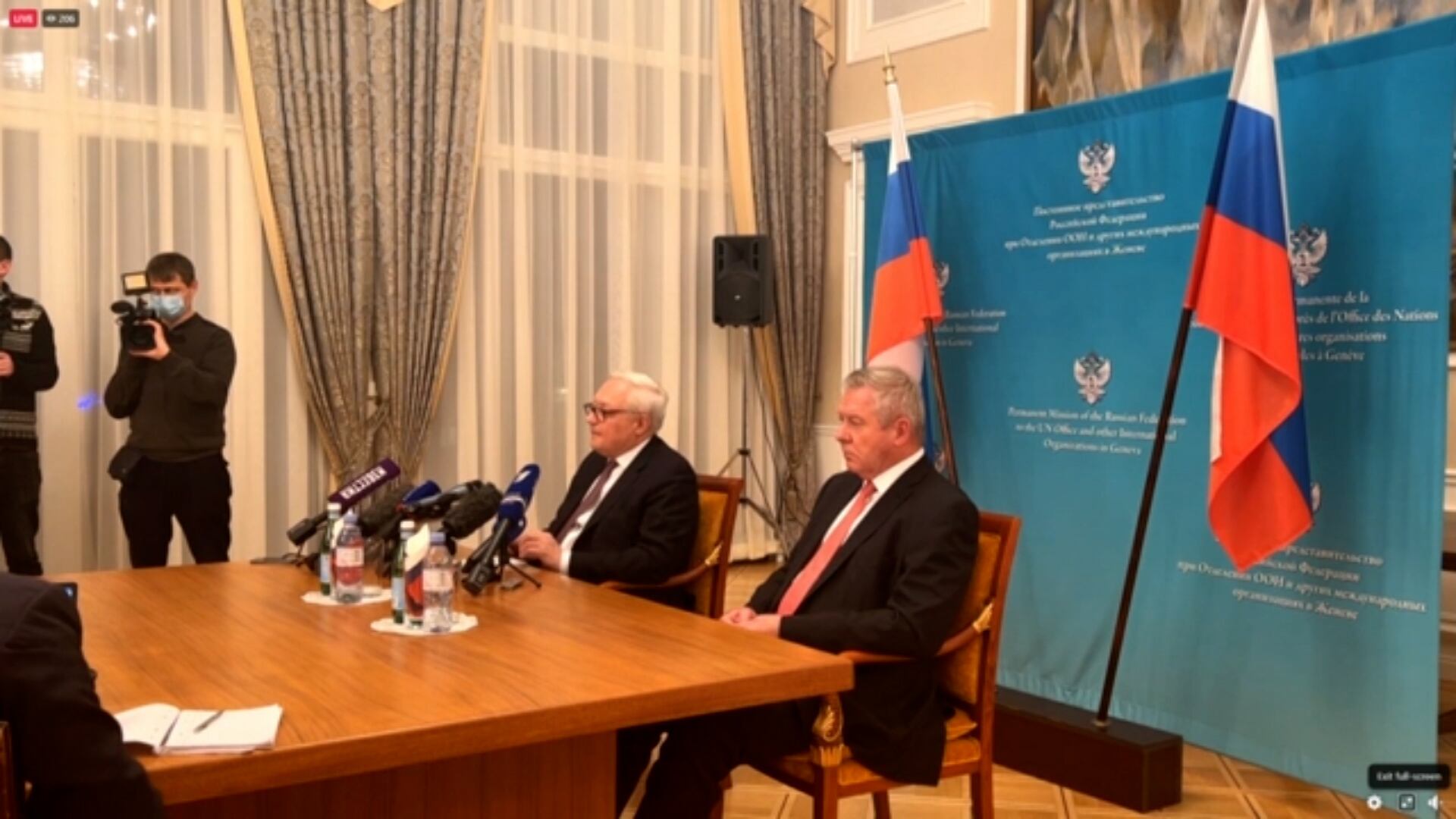
Moscow is bristling at the tightening noose of sanctions around Russia's economy. Russian Foreign Minister Sergey Lavrov said the Western pressure amounts to “total war.”
“And the goals are not hidden,” he said. “They are declared publicly — to destroy, break, annihilate, strangle the Russian economy and Russia on the whole.”
For civilians, the misery is growing more severe in Ukrainian towns and cities, which increasingly resemble the ruins that Russian forces left behind in their campaigns in Syria and Chechnya.
In the village of Yasnohorodka, some 50 kilometers (30 miles) west of Kyiv, Russian troops who were there earlier in the week appeared to have been pushed out as part of a counteroffensive by Ukrainian forces.
The tower of the village church was damaged by a blast, and houses on the main crossroads lay in ruins. Loud explosions and bursts of gunfire could be heard.
“You can see for yourself what happened here. People were killed here. Our soldiers were killed here. There was fighting,” said Yasnohorodka resident Valeriy Puzakov.
Tens of thousands of people have left Mariupol in the past week, most of them driving out in private cars through dozens of Russian checkpoints.
“Unfortunately, nothing remains of Mariupol,” said Evgeniy Sokyrko, who was among those waiting for an evacuation train in Zaporizhzhia, the closest urban center to Mariupol and a way station for refugees. “In the last week, there have been explosions like I’ve never heard before.”
Oksana Abramova, 42, said she ached for those left behind in the city, who have been cut off from communication with the shelling of cell, radio and TV towers and do not have the means to escape.
“All the time I think about how they are, where they are. Are still hiding, are they alive? Or maybe they are no longer there," she said.
In Kyiv, ashes of the dead are piling up at the main crematorium in the capital because so many relatives have left, leaving urns unclaimed. And the northern city of Chernihiv is all but cut off.
Chernihiv lost its main road bridge over the Desna River to a Russian airstrike this week. Follow-up shelling then damaged a pedestrian bridge, trapping remaining inhabitants inside the city without power, water and heat, authorities said. More than half of Chernihiv's prewar population of 285,000 is thought to have fled.
In other developments:
— The U.S. and the European Union announced a move to further squeeze Russia economically: a partnership to reduce Europe’s reliance on Russian energy and dry up the billions of dollars the Kremlin gets from the sale of fuel.
—Russia said it would offer safe passage starting Friday to 67 ships from 15 foreign countries that are stranded in Ukrainian ports because of the danger of shelling and mines.
—The International Atomic Energy Agency said it has been told by Ukrainian authorities that Russian shelling is preventing workers from being rotated in and out of the decommissioned Chernobyl nuclear plant, which requires constant monitoring of its spent fuel.
—Russia’s military claimed it destroyed a massive Ukrainian fuel base used to supply the Kyiv region’s defenses, with ships firing a salvo of cruise missiles, according to the Interfax news agency. Videos on social media showed an enormous fireball near the capital.
For the vulnerable — the elderly, children and others unable to join millions heading westward — food shortages are mounting in a country once known as the breadbasket for the world.
In relentlessly shelled Kharkiv, hundreds of panicked people took shelter in the subway, and a hospital emergency room filled with wounded soldiers and civilians.
Mostly elderly women lined up stoically to collect food and other urgent supplies this week, as explosions thudded in the distance. Fidgeting with anticipation, a young girl watched as a volunteer’s knife cut through a giant slab of cheese, carving out thick slices, one for each hungry person.
Hanna Spitsyna took charge of divvying up the delivery of food aid from the Ukrainian Red Cross. Those waiting each got a lump of the cheese, dropped into plastic bags that people in line held open.
“Among those who stayed, there are people who can walk on their own, but many who cannot walk, the elderly,” Hanna said. “All these people need diapers, swaddle blankets and food."
___
Rosa reported from Kharkiv, Ukraine. Associated Press writer Robert Burns in Washington and journalists around the world contributed to this report.
Updated on March 25, 2022, at 3:22 p.m. with U.S. saying Russians have lost full control of Kherson.