LONDON (AP) — British officials and space scientists said Tuesday they were disappointed but not deterred after the first attempt to launch satellites into orbit from the U.K. ended in failure.

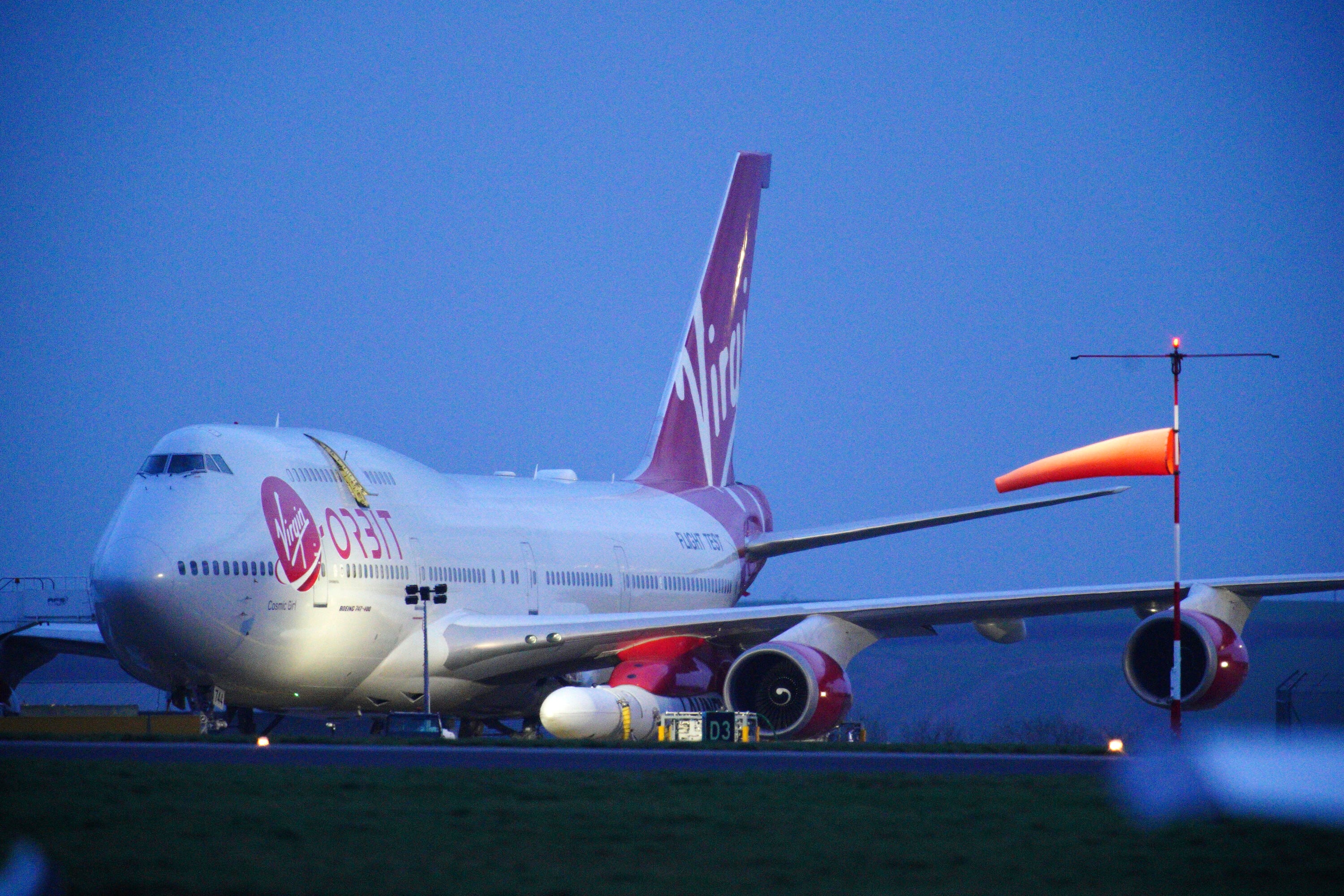
U.S.-based Virgin Orbit attempted its first international launch late Monday, using a modified jumbo jet to carry one if its rockets from Cornwall in southwestern England over the Atlantic Ocean.

The plane released the rocket, carrying nine small satellites for a mix of civilian and domestic uses. But about two hours after the plane took off, the company reported “an anomaly that has prevented us from reaching orbit.”

The plane, piloted by a Royal Air Force pilot, returned to Cornwall. The rocket and satellites were destroyed.

“We’re feeling awful, to be honest – I’m not going to lie,” Melissa Thorpe, head of Spaceport Cornwall. said.

“This isn’t the first time we’ve been knocked, this is the biggest definitely, but I feel OK and we’ll get up and we’ll go again,” she said.

Virgin Orbit, which was founded by British transport and telecommunications tycoon Richard Branson, previously completed four similar launches from California.

Hundreds of people gathered for the Cornwall launch had cheered when a repurposed Virgin Atlantic Boeing 747 aircraft, named Cosmic Girl, took off late Monday. Around an hour into the flight, the plane released the rocket at around 35,000 feet (around 10,000 meters) over the Atlantic Ocean to the south of Ireland.

Virgin Orbit chief executive Dan Hart said “a technical failure appears to have prevented us from delivering the final orbit.”

“While we are very proud of the many things that we have successfully achieved as part of this mission, we are mindful that we failed to provide our customers with the launch service they deserve,” he said.

The mission was a collaboration between the U.K. Space Agency, the Royal Air Force, Virgin Orbit and Cornwall Council.

Britain hopes to become a major player in making and launching satellites, and is building a spaceport in the Shetland Islands north of Scotland as well as the one in Cornwall.

U.K. Business Secretary Grant Shapps said Monday’s launch was “a big moment” despite its failure.

“Space is difficult,” Shapps told Sky News.

“It didn’t work. I’ve no doubt that they’ll pick themselves up, dust themselves off and they’ll go again once they find out what exactly went wrong with it,” he said.

Share:
More In Science
The "Pokémon Go" of Crypto Is Coming
Joe Blackburn, the CEO of Crypto Coin Trader and head advisor at Crypto Hunt, explains how his company is using an augmented reality and blockchain game to help initiate users into crypto.
Closing Bell: February 23, 2018
This week's episode of Cheddar's Crypto Craze tackles the latest news and trends in this emerging market. Dropbox files to go public. The dow closes the week up more than 300 points. TV personality Kelly Killoren Bensimon is out with a fur slipper line.
SpaceX Continues Quest for Reusability
Hanneke Weitering, staff writer at Space.com, discusses SpaceX's launch of the Falcon 9 rocket that carried a Spanish imaging satellite and two demo Starlink broadband test satellites. With this technology, SpaceX hopes to provide high speed, low cost energy across the globe.
Weight Watchers Tries to Score Points With Teens
Weight Watchers is getting slammed after offering a free membership promotion for teenagers. Project Heal's Kristina Saffran joins Cheddar to discuss the effects early dieting can have on young people's health and wellness.
Science-Backed Sick Day
Cody Gough, podcast host at Curiosity.com, discusses new studies that reveal why we may not want to be around people when we're sick. He also describes the physical characteristics that tell people when we're feeling under the weather.
The Science of Adolescence
I-han Chou, senior editor at Nature, discusses a new study about adolescence and how that period of your life influences adulthood.
Protecting Batteries from Electric Cars to NASA Space Shuttles
Concerns over electronics' batteries overheating and potentially exploding have been circling for some time, reaching a head with Samsung's massive recall of its Note Seven phones. That is why KULR Technologies has created technology that protects batteries and material for everything from electric cars to NASA spaceships.
Fixing the Facebook Fake News Problem
Facebook is back under the microscope for failing to stop the spread of fake news. Sara Fischer, media reporter for AXIOS, joins to explain how the big tech companies are, or are not, addressing the problem.
The Polar Vortex Explained
Extreme weather across the nation this week. New York City, Philadelphia, and Washington, D.C. experiencing record high temperatures. Meanwhile, parts of Washington state and Denver are seeing record lows. Mashable's Andrew Freedman explains how the polar vortex split is causing wild weather coast to coast.
Why Is U.S. Weather So Crazy Right Now?
Temperatures in Washington, D.C., hit 82 degrees on Wednesday, while the West Coast braced for record lows. Andrew Freedman, senior science editor at Mashable, says a "polar vortex split" is partly to blame.
Load More