LONDON (AP) — British officials and space scientists said Tuesday they were disappointed but not deterred after the first attempt to launch satellites into orbit from the U.K. ended in failure.
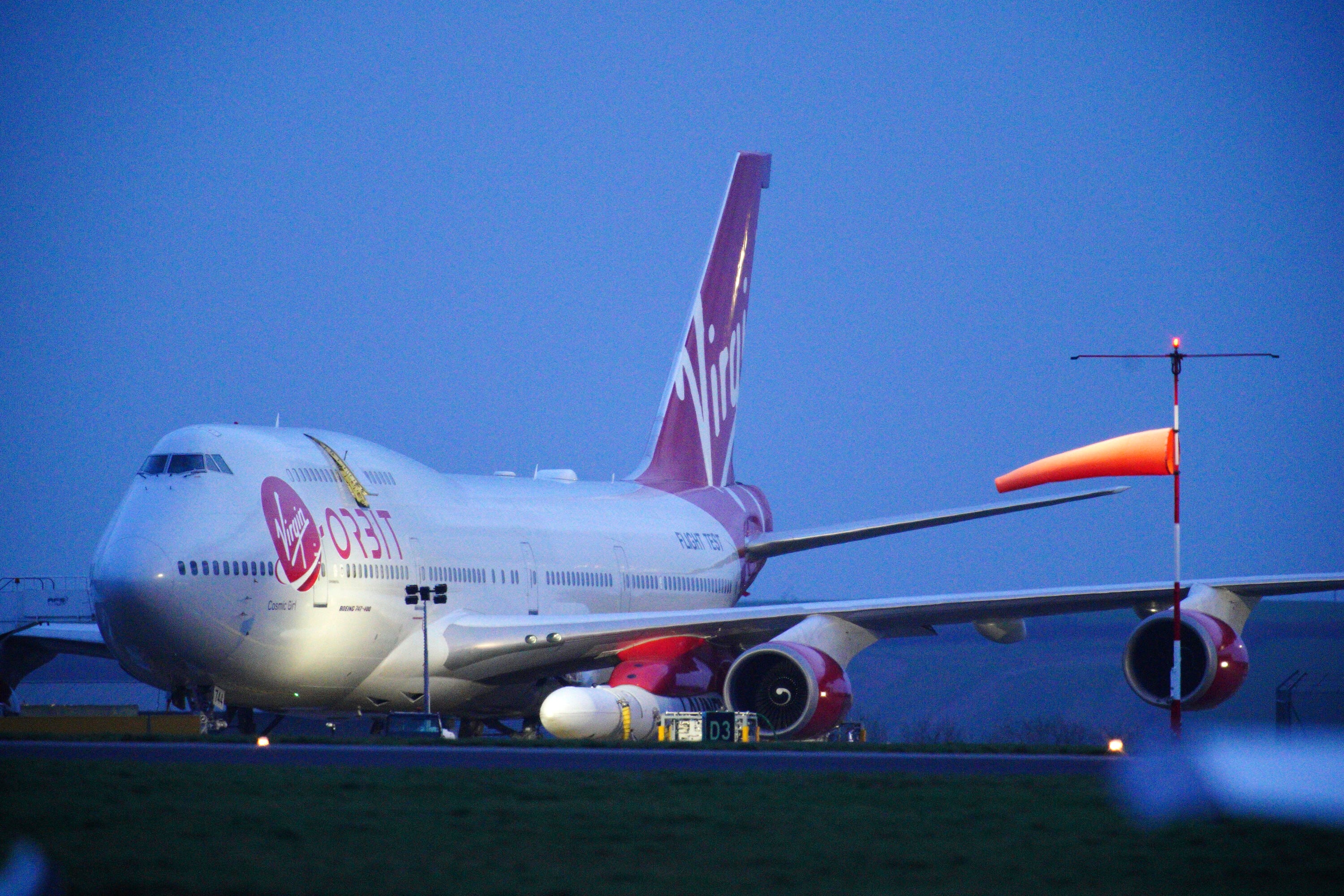
U.S.-based Virgin Orbit attempted its first international launch late Monday, using a modified jumbo jet to carry one if its rockets from Cornwall in southwestern England over the Atlantic Ocean.
The plane released the rocket, carrying nine small satellites for a mix of civilian and domestic uses. But about two hours after the plane took off, the company reported “an anomaly that has prevented us from reaching orbit.”
The plane, piloted by a Royal Air Force pilot, returned to Cornwall. The rocket and satellites were destroyed.
“We’re feeling awful, to be honest – I’m not going to lie,” Melissa Thorpe, head of Spaceport Cornwall. said.
“This isn’t the first time we’ve been knocked, this is the biggest definitely, but I feel OK and we’ll get up and we’ll go again,” she said.
Virgin Orbit, which was founded by British transport and telecommunications tycoon Richard Branson, previously completed four similar launches from California.
Hundreds of people gathered for the Cornwall launch had cheered when a repurposed Virgin Atlantic Boeing 747 aircraft, named Cosmic Girl, took off late Monday. Around an hour into the flight, the plane released the rocket at around 35,000 feet (around 10,000 meters) over the Atlantic Ocean to the south of Ireland.
Virgin Orbit chief executive Dan Hart said “a technical failure appears to have prevented us from delivering the final orbit.”
“While we are very proud of the many things that we have successfully achieved as part of this mission, we are mindful that we failed to provide our customers with the launch service they deserve,” he said.
The mission was a collaboration between the U.K. Space Agency, the Royal Air Force, Virgin Orbit and Cornwall Council.
Britain hopes to become a major player in making and launching satellites, and is building a spaceport in the Shetland Islands north of Scotland as well as the one in Cornwall.
U.K. Business Secretary Grant Shapps said Monday’s launch was “a big moment” despite its failure.
“Space is difficult,” Shapps told Sky News.
“It didn’t work. I’ve no doubt that they’ll pick themselves up, dust themselves off and they’ll go again once they find out what exactly went wrong with it,” he said.