By Danica Kirka
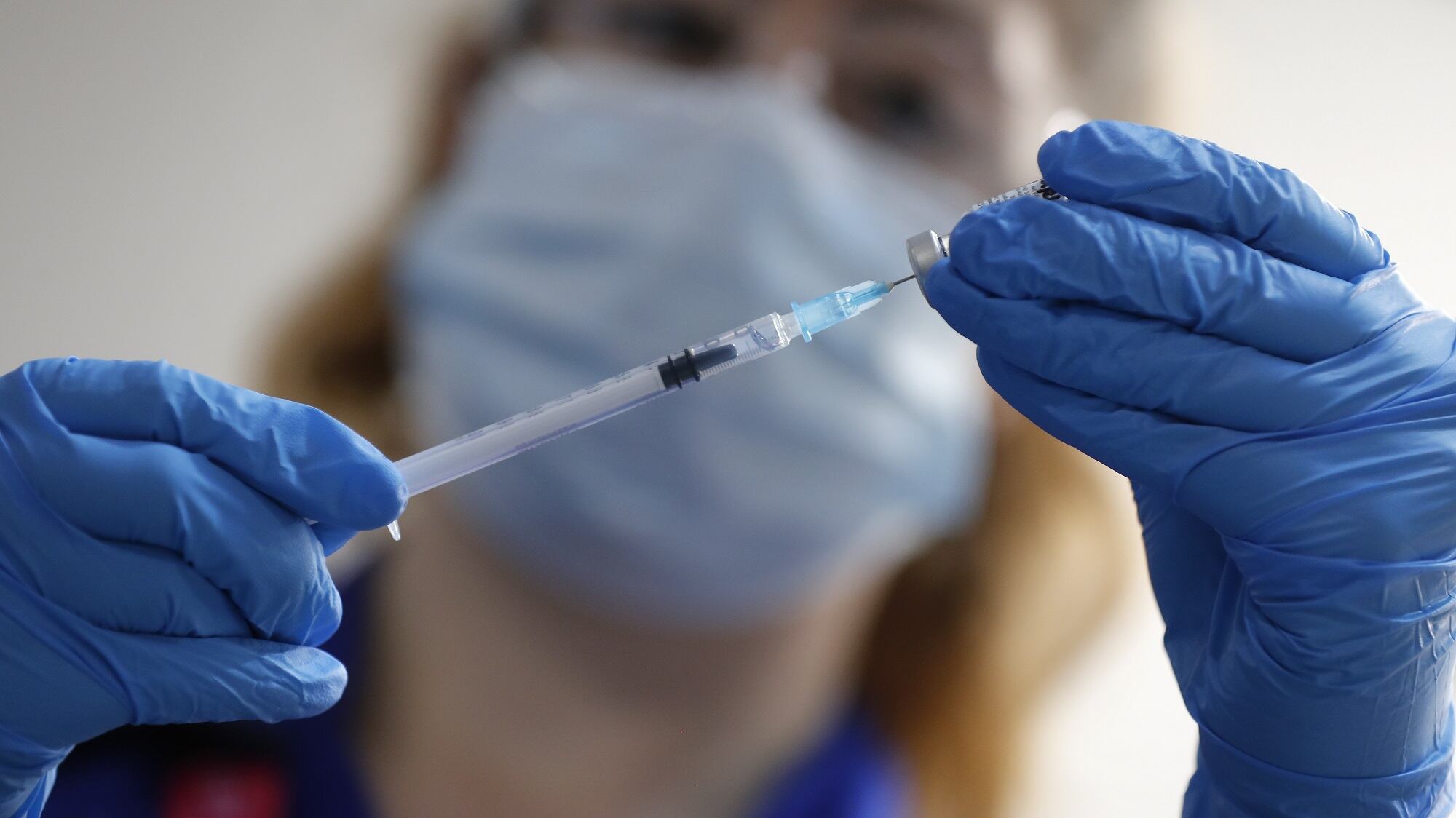
British regulators warned Wednesday that people who have a history of serious allergic reactions shouldn’t receive the new Pfizer-BioNTech vaccine as they investigate two adverse reactions that occurred on the first day of the country’s mass vaccination program.
The U.K.’s Medical and Healthcare Products Regulatory Agency is looking into whether the reactions were linked to the vaccine. The two people affected were staff members with the National Health Service who had a history of allergies, and both are recovering. Authorities have not specified what their reactions were.
In the meantime, the regulator has issued the warning for anyone who has had a significant allergic reaction to a vaccine, medicine or food. That includes anyone who has been told to carry an adrenaline shot or others who have had potentially fatal allergic reactions.
“As is common with new vaccines the MHRA have advised on a precautionary basis that people with a significant history of allergic reactions do not receive this vaccination after two people with a history of significant allergic reactions responded adversely yesterday,’’ Professor Stephen Powis, medical director for the NHS in England, said in a statement. “Both are recovering well.”
The medical regulatory agency also said vaccinations should not be carried out in facilities that don’t have resuscitation equipment.
Pfizer and BioNTech said they were working with investigators “to better understand each case and its causes.''
Late-stage trials of the vaccine found “no serious safety concerns,” the companies said. More than 42,000 people have received two doses of the shot during those trials.
“In the pivotal phase three clinical trial, this vaccine was generally well tolerated with no serious safety concerns reported by the independent Data Monitoring Committee,” the companies said.
Documents published by the two companies showed that people with a history of severe allergic reactions were excluded from the trials, and doctors were advised to look out for such reactions in trial participants who weren’t previously known to have severe allergies.
Even in non-emergency situations, health authorities must closely monitor new vaccines and medications because studies in tens of thousands of people can’t detect a rare risk that would affect 1 in 1 million.
Dr. Peter Openshaw, a professor of experimental medicine at Imperial College London, said there is a “very small” chance of an allergic reaction to any vaccine.
The MHRA last week gave emergency authorization to the Pfizer-BioNTech vaccine, making Britain the first country to allow its widespread use.
The U.K. began its mass vaccination program on Tuesday, offering the shot to people over 80, nursing home staff and some NHS workers. It's not clear how many people have received the jab so far.
As part of its emergency authorization for the vaccine, the MHRA required healthcare workers to report any adverse reactions to help regulators gather more information about safety and effectiveness.
The agency is monitoring the vaccine rollout closely and “will now investigate these cases in more detail to understand if the allergic reactions were linked to the vaccine or were incidental,” he said. “The fact that we know so soon about these two allergic reactions and that the regulator has acted on this to issue precautionary advice shows that this monitoring system is working well.”
Dr. June Raine, head of the medical regulatory agency, informed a Parliamentary committee about the reactions during previously scheduled testimony on the pandemic.
“We know from the very extensive clinical trials that this wasn’t a feature” of the vaccine, she said. “But if we need to strengthen our advice, now that we have had this experience in the vulnerable populations, the groups who have been selected as a priority, we get that advice to the field immediately.”
Associated Press writers Frank Jordans in Berlin contributed.