UBS said Monday that it has completed its takeover of embattled rival Credit Suisse, nearly three months after the Swiss government hastily arranged a rescue deal to combine the country's two largest banks in a bid to safeguard Switzerland’s reputation as a global financial center and choke off market turmoil.

A statement from the bank said that “UBS has completed the acquisition of Credit Suisse today, crossing an important milestone."

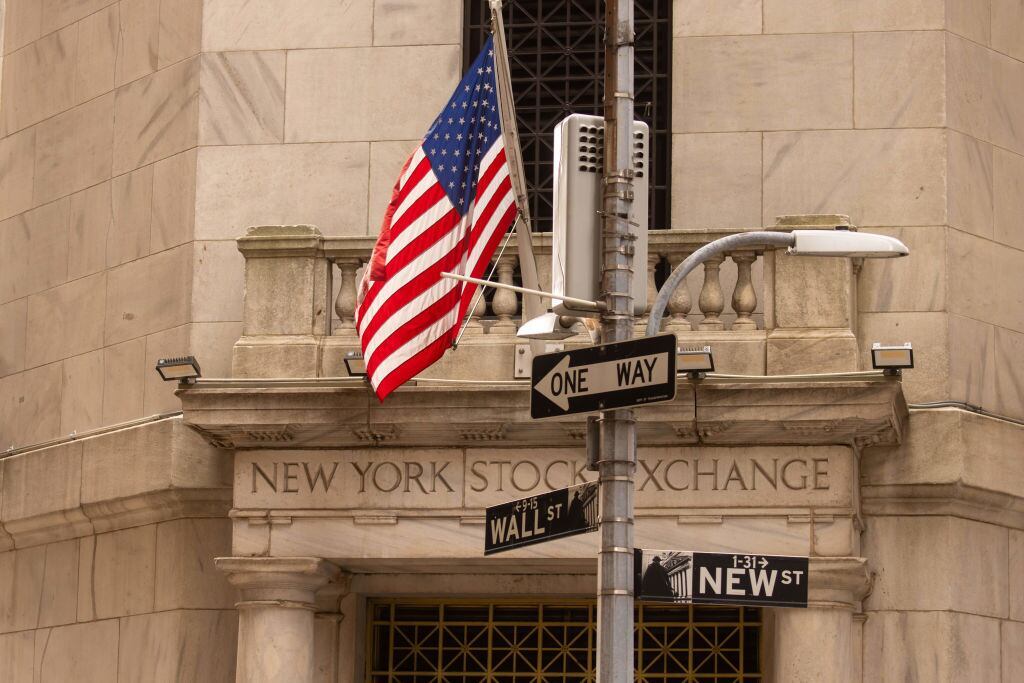
UBS had said last week that it expected to complete the acquisition worth 3 billion Swiss francs ($3.3 billion) as early as Monday — which will be the last trading day for Credit Suisse shares on the Swiss stock exchange. Credit Suisse will also no longer be traded on the New York Stock Exchange.

It's a pivotal moment for the two Zurich-based rivals, whose combination has raised concerns about thousands of expected job losses, drawn rebukes and lawsuits over the terms of the deal, and stirred fears about the impact of creating a Swiss megabank that would be too big to fail.

“This is a very important moment — not just for UBS, (but) for Switzerland as a financial location and for Switzerland as a country,” UBS CEO Sergio Ermotti said on Friday. “So we do feel the responsibility, but we are fully motivated.”

Ermotti, who returned to UBS to push through the deal, acknowledged that “the coming months will certainly be bumpy” but said the bank was “very focused on doing on it right.”

The Swiss government orchestrated the rescue of Credit Suisse over a weekend in March after the lender’s stock plunged and customers quickly pulled out their money, fearing its collapse could further roil global financial markets in the wake of the failure of two U.S. banks.

“I’m pleased that we’ve successfully closed this crucial transaction in less than three months, bringing together two global systemically important banks for the first time,” UBS Chairman Colm Kelleher said in Monday’s statement. “We are now one Swiss global firm and, together, we are stronger.”

Ermotti said that “we’ll present our clients an enhanced global offering, broader geographic reach and access to even greater expertise.”

UBS Group AG will manage two separate parent banks, UBS and Credit Suisse, with each continuing to have its own branches and customers.

The 167-year-old Credit Suisse had seen a string of scandals over the years that hit the heart of its business, ranging from bad bets on hedge funds to failing to prevent money laundering by a Bulgarian cocaine ring and accusations it didn’t report secret offshore accounts that wealthy Americans used to avoid paying U.S. taxes.

UBS will inherit ongoing cases against Credit Suisse and the financial repercussions those entail, including a recent ruling in Singapore that said Credit Suisse owes former Georgian Prime Minister Bidzina Ivanishvili hundreds of millions of dollars for failing to protect the billionaire’s money in a trust pilfered by a manager.

Credit Suisse is appealing that and a similar case in Bermuda, where Ivanishvili says a bank subsidiary failed to prevent “fraudulent mismanagement” of his assets in two life insurance policies.

Switzerland’s government has agreed to provide UBS with 9 billion Swiss francs (nearly $10 billion) in guarantees to cover any losses it may face from the takeover after UBS covers any hits up to 5 billion francs ($5.5 billion).

That emergency rescue plan is facing political pushback ahead of parliamentary elections in October. Switzerland’s lower house has rebuked it in a symbolic vote, and lawmakers have approved setting up an inquiry into the deal and the events leading up to it. The Swiss attorney general’s office already has opened a probe.

Credit Suisse investors also have sued the country’s financial regulators after about 16 billion Swiss francs ($17.7 billion) in higher-risk bonds were wiped out.

The U.S. Federal Reserve, the European Union’s executive branch and others worldwide have signed off on the takeover. Credit Suisse was classified as one of 30 globally significant banks because its collapse posed a wider risk to the financial system.

___

Bonnell reported from London.

Share:
More In Business
Streaming Services Compete for South Korean Content
The record-breaking success of "Squid Game" on Netflix has many media companies competing to produce, stream, and invest in new content from South Korea. Netflix has spent half a billion dollars on developing Korean content this year, and other streaming services are taking note. Seth Schachner, managing director at StratAmericas and digital business executive, joins Cheddar News to discuss.
Airlines Caught 'Flat-Footed' as Omicron Continues to Drive Flight Cancellations
Airlines had to ground 2,500 flights in the U.S. on Tuesday, with bad weather and workers out with COVID-19 blamed as the main culprits. Scott Keyes, founder of ScottsCheapFlights.com and author of "Take More Vacations," joined Cheddar News Wrap to discuss how the surge from the omicron variant has been creating havoc in the air travel industry. Keyes noted that a lack of personnel from pilots to gate agents had been exacerbated by the coronavirus, an issue also disrupting labor markets throughout the economy. "Add to that the fact that travel has rebounded far quicker than many analysts and experts predicted, this is why I think you're seeing so many airlines caught a bit flat-footed in having to pare back the schedules they had set months ago," he said.
Barstool Sports CEO on COVID-Related Growth Despite Canceled Arizona Bowl
Barstool Sports CEO Erika Nardini joined Cheddar's Kristen Scholer to discuss plans for the future even as COVID-19 upended Barstool's sponsorship of the Arizona Bowl featuring the Boise State Broncos and the Central Michigan Chippewas due to the spreading omicron variant. "In our case as a company, coronavirus has been a big boom for us," she noted. "We've been able to create a lot of new programming, launch a lot of different personalities, and frankly take share from traditional media, and that's what we've done the entire pandemic." While she admitted to taking a hit on the canceled Bowl game, live events aren't completely off the table for Barstool in 2022. Nardini also talked about potential sports betting expansion following its partnership with Penn National Gaming.
Metaverse to Require Big Computing Power Upgrades in 2022
Interest in the concept of the metaverse is heating up as more companies get on board, and Cathy Hackl, CEO of Futures Intelligence Group, a metaverse-focused consultancy, joined Cheddar to talk about trends to watch out for in 2022 and what it will take for it to be more than just a buzzword. Hackl noted that businesses likely will have to consider big technology upgrades in the upcoming year in order to keep up. "We're going to need new levels of computing power to be able to enable shared virtual experiences, both in VR but also in augmented reality," she said.
DC's Grow Golden Links Small Biz Pop-Up Shops With Empty Storefronts
Small businesses in Washington, DC, are getting a visibility boost through the non-profit Grow Golden. The initiative connects local entrepreneurs with empty storefronts to establish pop-up shops in the heart of the DC business district, called the Golden Triangle. Cheddar's Arielle Hixson spoke with the small business owners about their experience building exposure through the program during the holiday season.
Home Flipping Profitability Sinks as Competition Heats Up, Costs Rise
Home flipping is turning into a competitive space and a less profitable one according to the property database ATTOM. Todd Teta, chief product officer at ATTOM Data Solutions, joined Cheddar to break down key findings of the report, why the home-flipping market is raking in fewer returns, and what he thinks may have been behind real estate marketplace Zillow withdrawing from the business.
How the Metaverse Will Shape the Future
The metaverse took the world by storm in 2021 and it is just the beginning of the virtual universe. Consumers are jumping on board and companies like Meta and Roblox are already taking advantage. Entrepreneur Andrew Duplessie joined Cheddar to discuss how the metaverse will impact the future of socialization and business. "If I'm doing anything right now, I'm building an app, I'm jumping into that ecosystem, and I'm testing it. I'm seeing what people think," he said.
Load More