UBS said Monday that it has completed its takeover of embattled rival Credit Suisse, nearly three months after the Swiss government hastily arranged a rescue deal to combine the country's two largest banks in a bid to safeguard Switzerland’s reputation as a global financial center and choke off market turmoil.
A statement from the bank said that “UBS has completed the acquisition of Credit Suisse today, crossing an important milestone."
UBS had said last week that it expected to complete the acquisition worth 3 billion Swiss francs ($3.3 billion) as early as Monday — which will be the last trading day for Credit Suisse shares on the Swiss stock exchange. Credit Suisse will also no longer be traded on the New York Stock Exchange.
It's a pivotal moment for the two Zurich-based rivals, whose combination has raised concerns about thousands of expected job losses, drawn rebukes and lawsuits over the terms of the deal, and stirred fears about the impact of creating a Swiss megabank that would be too big to fail.
“This is a very important moment — not just for UBS, (but) for Switzerland as a financial location and for Switzerland as a country,” UBS CEO Sergio Ermotti said on Friday. “So we do feel the responsibility, but we are fully motivated.”
Ermotti, who returned to UBS to push through the deal, acknowledged that “the coming months will certainly be bumpy” but said the bank was “very focused on doing on it right.”
The Swiss government orchestrated the rescue of Credit Suisse over a weekend in March after the lender’s stock plunged and customers quickly pulled out their money, fearing its collapse could further roil global financial markets in the wake of the failure of two U.S. banks.
“I’m pleased that we’ve successfully closed this crucial transaction in less than three months, bringing together two global systemically important banks for the first time,” UBS Chairman Colm Kelleher said in Monday’s statement. “We are now one Swiss global firm and, together, we are stronger.”
Ermotti said that “we’ll present our clients an enhanced global offering, broader geographic reach and access to even greater expertise.”
UBS Group AG will manage two separate parent banks, UBS and Credit Suisse, with each continuing to have its own branches and customers.
UBS will inherit ongoing cases against Credit Suisse and the financial repercussions those entail, including a recent ruling in Singapore that said Credit Suisse owes former Georgian Prime Minister Bidzina Ivanishvili hundreds of millions of dollars for failing to protect the billionaire’s money in a trust pilfered by a manager.
Credit Suisse is appealing that and a similar case in Bermuda, where Ivanishvili says a bank subsidiary failed to prevent “fraudulent mismanagement” of his assets in two life insurance policies.
Switzerland’s government has agreed to provide UBS with 9 billion Swiss francs (nearly $10 billion) in guarantees to cover any losses it may face from the takeover after UBS covers any hits up to 5 billion francs ($5.5 billion).
That emergency rescue plan is facing political pushback ahead of parliamentary elections in October. Switzerland’s lower house has rebuked it in a symbolic vote, and lawmakers have approved setting up an inquiry into the deal and the events leading up to it. The Swiss attorney general’s office already has opened a probe.
The U.S. Federal Reserve, the European Union’s executive branch and others worldwide have signed off on the takeover. Credit Suisse was classified as one of 30 globally significant banks because its collapse posed a wider risk to the financial system.
Stocks closed lower to end the day Thursday, the second to last trading day of 2021. The Dow snapped a six-day winning streak, and the S&P 500 was weighed down by chip and energy stocks. This all comes as weekly jobless claims fell to a 52-year low to 198,000. Kevin Riley, Managing Partner at Exponential Investment Partners, joins Cheddar News' Closing Bell to discuss today's close, his 2022 market predictions, the state of business in China, and more.
Daniel Newman, Founding Partner and Principal Analyst at Futurum Research, joins Cheddar News' Closing Bell, where he says the markets are going to feel very uncomfortable receiving news of more potential setbacks for chip manufacturers after already enduring a lengthy chip shortage.
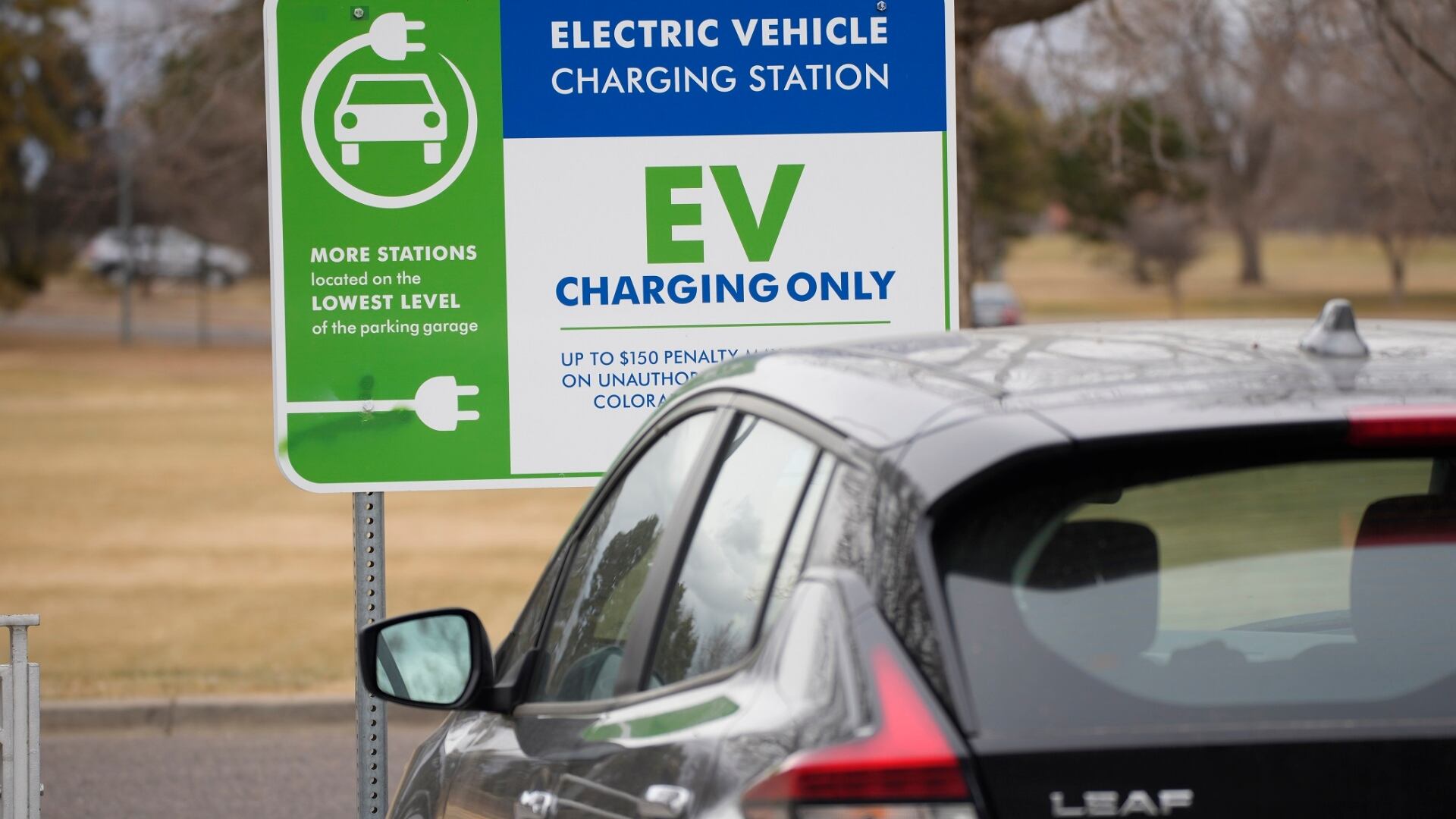
The federal government and numerous industries have been preparing for a greener future, setting goals to reduce greenhouse emissions by switching to electric vehicles. But the next hurdle to clear is convincing the wider public to get on board. Arun Kumar, managing director in automotive practice at AlixPartners, spoke to Cheddar's Ken Buffa about consumer trends related to EV transition and said he believes a widespread switch is imminent in 2022. Despite this, he acknowledged there are still significant obstacles to overcome, including high prices and more charging stations. "Without charging infrastructure, people are going to struggle with increasing adoption of electric vehicles in the future," Kumar told Cheddar. "I think by 2030 our estimate is that about a million chargers need to be put in place nationally in the U.S."
The pandemic has supercharged the creator economy, and there are no signs of it slowing down no matter when the pandemic officially ends. Creators prove to be a key factor in driving purchasing decisions and retail sales, and an increasing amount of platforms are taking advantage of the social influence. Karissa Bell, senior editor at Engadget, joins cheddar news to discuss the creator economy boom.
The National Women's Soccer League is partnering with Voyager Digital as its first-ever cryptocurrency brokerage in a multi-year deal. Marla Messing, interim CEO of the NWSL, and Steve Ehrlich, CEO of Voyager Digital, joined Cheddar to discuss benefitting the league and educating players and fans as a way of democratizing cryptocurrency. Messing explained that the players themselves will own half the assets as part of how the deal is structured. "My hope is, just in terms of the expectations of crypto over the long term, that I hope a lot of them are able to just let it sit there," she said. "And that one day this will be a nice retirement account for them."
Howard Lorber, chairman, president, and CEO of Douglas Elliman Inc., and Scott Durkin, CEO of Douglas Elliman Realty, joined Cheddar's "Opening Bell" to talk about the real estate brokerage company's recent IPO launch on the New York Stock Exchange following the spinoff of its tobacco subsidiary Vector Group. "There are many investors that cannot buy tobacco because of their mandates," said Lorber. "And therefore splitting off Douglas Elliman the real estate, and there's a lot of people looking for real estate investments, so they'll be able to buy Douglas Elliman, and those that want tobacco can buy Vector alone." The pair also discuss the future of New York real estate and the auxiliary business the property broker sees as growth prospects.
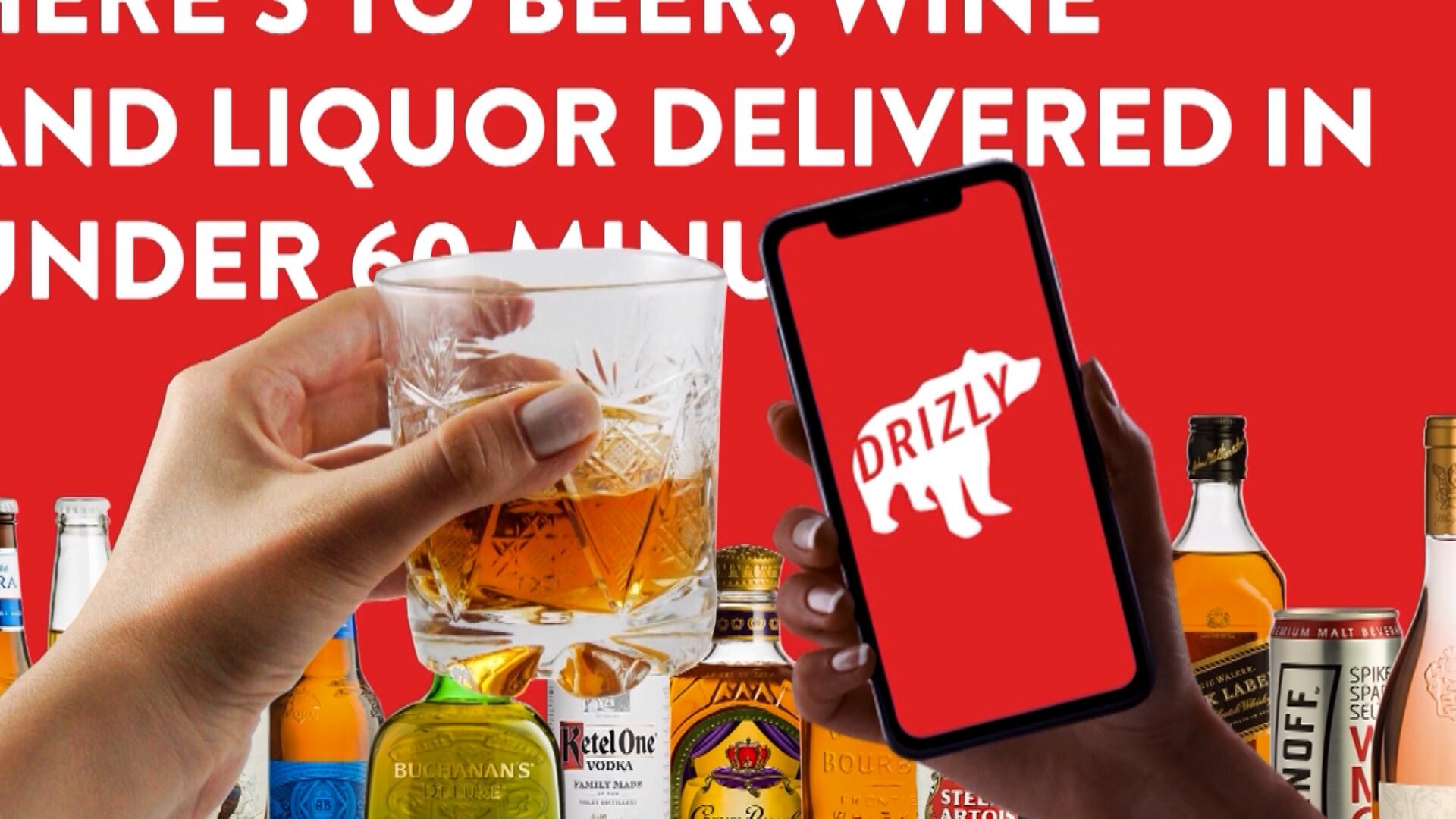
Despite a champagne shortage ahead of New Year's Eve, adult beverage retailers are staying optimistic about 2022. Cathy Lewenberg, COO at online alcoholic beverages platform Drizly, joined Cheddar to talk about the sunny outlook for next year and the current state of the industry. She noted a 20 percent higher demand for champagne year-over-year has led to the holiday's shortfall and that the spirit category is continuing to thrive with tequila on pace to outsell vodka for the first time. "Tequila has just been on fire on our platform. It's grown 13 percent in share on our platform over the last couple of years where vodka obviously had been the leader," she said. "Tequila is the top thing in addition to bourbon that retailers are looking to give more shelf space to in 2022."
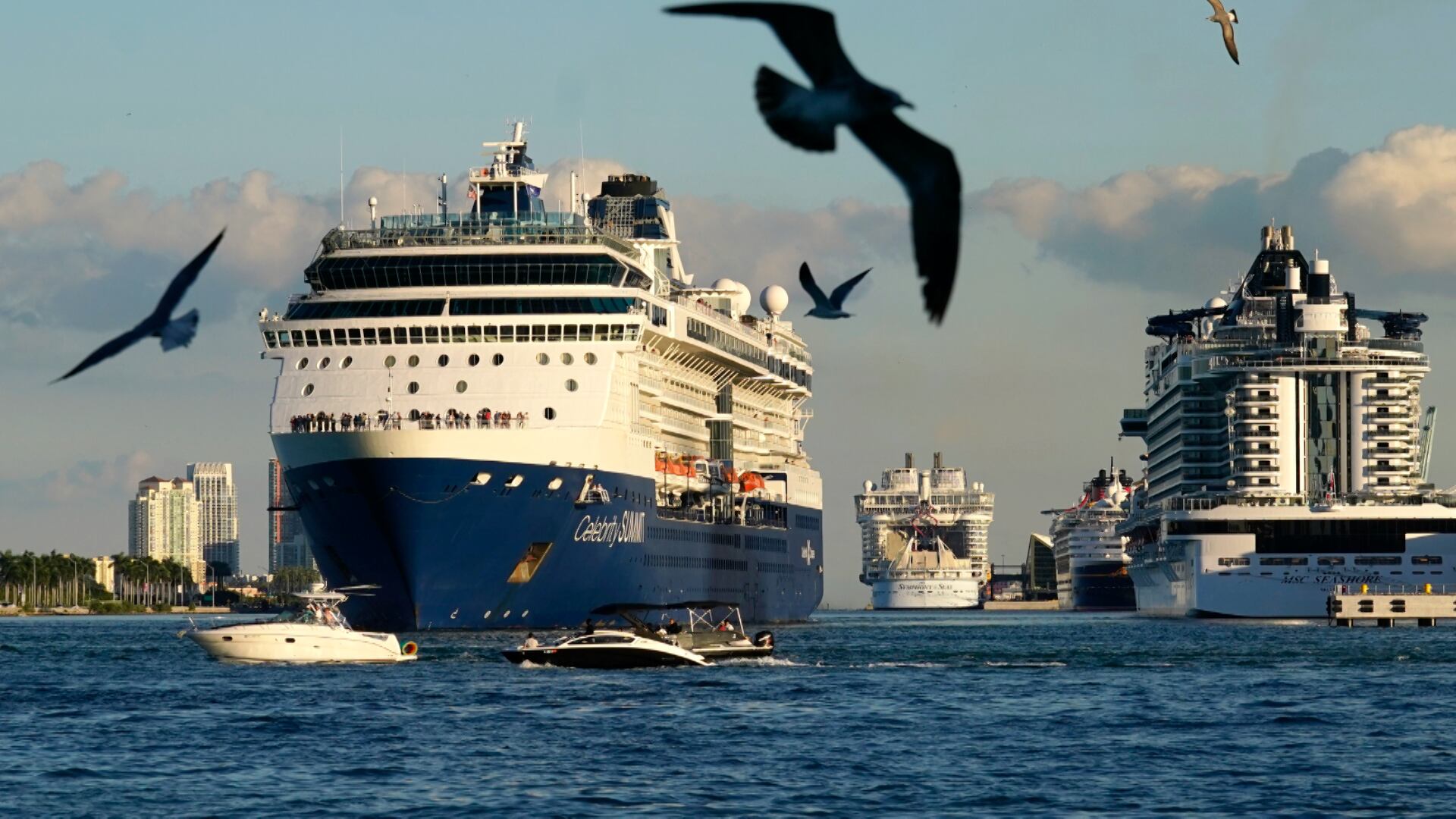
Travel expert Francesca Page joined Cheddar's Baker Machado to break down how the omicron-fueled COVID-19 surge of cases on cruise ships is impacting the industry, as the CDC is actively monitoring at least 92 ships for outbreaks. Page also talked about the upcoming expiration of the CDC's conditional sailing order mandating mask-wearing and addressed passenger concerns. "Everyone is asking, financially, should I cancel my cruise should COVID surges keep going, which it looks they are, and to a large degree I think that decision is very personal and is based on one's own risk tolerance," she said.