Uber's Growth Slows as It Diversifies Business Ahead of IPO
Uber's net losses widened to nearly $1 billion in its latest quarter as it invested in new businesses prior to its initial public offering expected next year, the private company said in its self-reported financial disclosures.
The losses were 32 percent greater than the previous quarter.
Revenues were nearly $3 billion, up 38 percent over the same period last year but a slower rate of growth from the prior quarter.
For the first time, Uber disclosed some numbers related to its fast-growing Uber Eats delivery service. That division accounted for $2.1 billion of $12.7 billion in gross bookings ー a 150 percent increase from the same quarter last year.
Uber's losses can be partially attributed to its increasingly diversified business model, in which ride-hailing is but one of the ways the company intends to make money in the future. In addition to Uber Eats, which is growing in emerging markets and will soon [cover](https://www.cnbc.com/2018/10/23/uber-plans-to-expand-food-delivery-to-70percent-of-the-us.html) 70 percent of the U.S. population, Uber has invested in new mobility offerings like e-scooters and bike shares.
Uber is on course for an initial public offering in 2019 that could value the company at as much as $120 billion.
The Supreme Court strikes down Trump-era tariffs, limiting presidential trade powers and raising questions about refunds, global trade, and business impact.
New research from GoDaddy and UCLA shows small businesses signal shifts in GDP, jobs, and digital growth earlier than traditional data or Wall Street trends.
GoFundMe launches Back in Business Fund with Paris Hilton to provide targeted grants helping women entrepreneurs recover and rebuild after natural disasters.
Samsung launches its “AI in Action Lab” in NYC, giving public high school students hands-on AI experience and tools to prepare for real world innovations.
Gen Z workers are increasingly worried AI could replace their jobs. However, experts say companies are using AI more to assist workers than replace them.
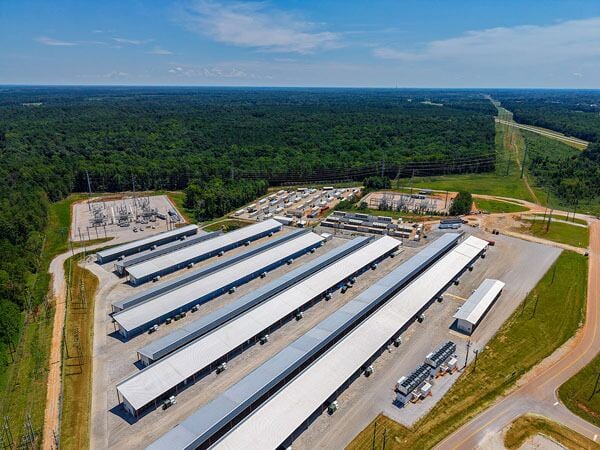
Matt Schultz of CleanSpark discusses Bitcoin mining and AI infrastructure converge, energy demand dynamics, and the company’s position in the evolving market.
Bhavin Shah of ServiceNow discusses how the new Autonomous Workforce AI automates tasks, integrates with Teams and Slack, and boosts workplace efficiency.