Uber's Autopilot Has Challenges on the Road and in the Air
*By Britt Terrell*
In the race to deploy autonomous driving technology to chauffeur passengers wherever they might go by road, Uber's Elevate division is also looking to gain an edge in the air by becoming the first company to bring similar self-driving technology to its fleet of flying taxis [as early as 2020](https://nypost.com/2018/05/07/uber-hopes-to-have-flying-taxis-by-2020/).
"It's actually going to be significantly easier we think, because a lot of the problems that you deal with on the road such as complicated street signs, such as other cars that may not be necessarily cooperative ー we're going to build the system to be autonomous for the future vision from the outset," said Nikhil Goel, head of product and advanced programs at Uber.
But in an interview Tuesday with Cheddar, Goel said the company was proceeding with caution, especially as Uber addresses issues with its ground-level autonomous driving technology. The company found that its self-driving feature was at fault when one of its cars killed a pedestrian in March. The vehicle did not brake soon enough.
Though the challenges for autonomous driving on the ground are different from those in the air, the technology still needs some work.
"These vehicles will actually start out as piloted," Goel said, referring to Uber's plans for flying taxis, adding they would only be used after close coordination with the Federal Aviation Administration and after a thorough safety review.
Uber was scheduled to meet with U.S. transportation and safety officials this week at its second annual Elevate Summit. Officials will hear about the company's technological developments as it seeks to begin testing its flying taxi technology in Los Angeles, Dallas, and Dubai.
For the full interview, [click here](https://cheddar.com/videos/uber-gets-elevated).
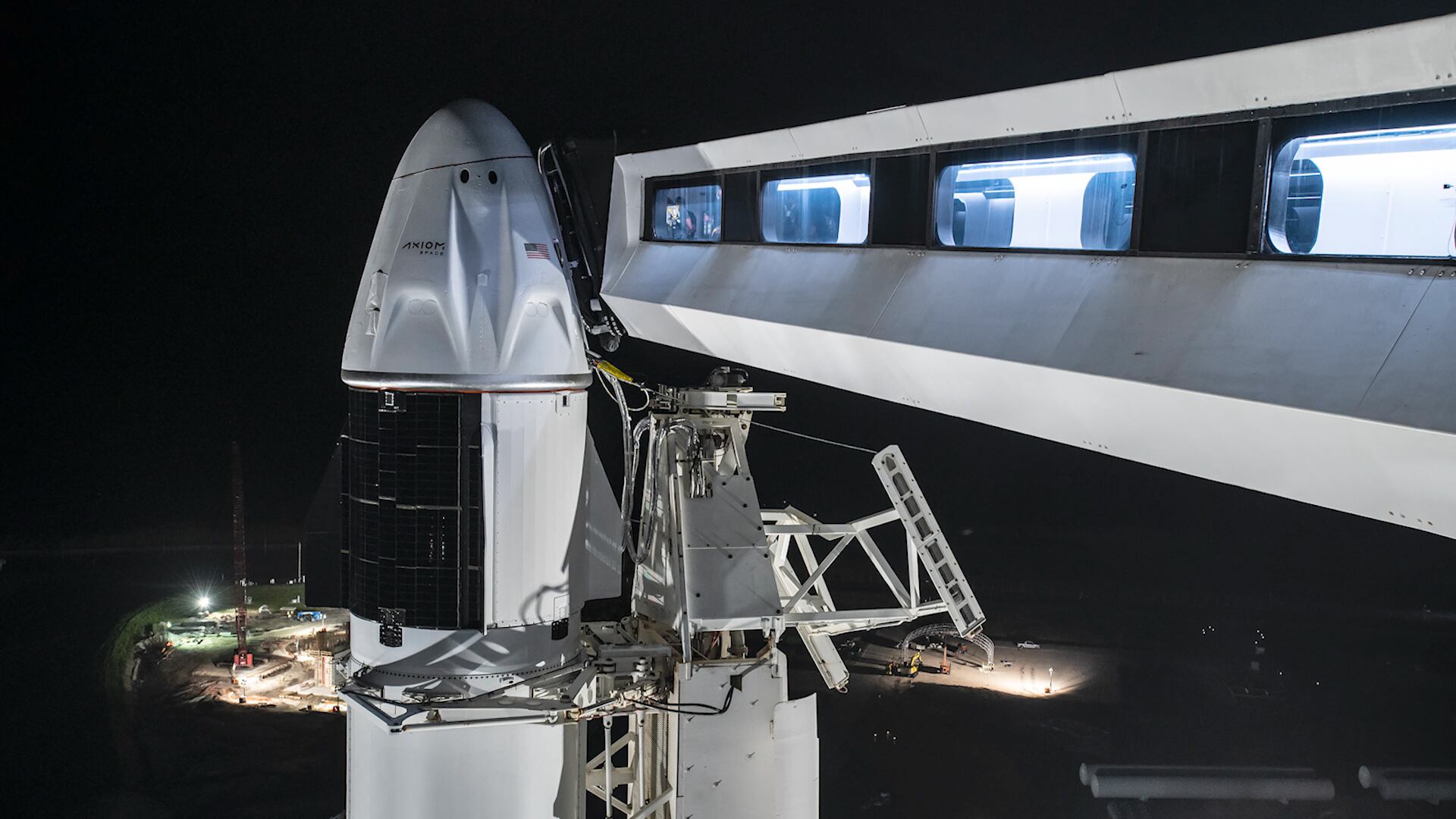
Peggy Whitson, Director of Human Space Flight, Axiom Space, joins Cheddar Innovates to discuss Axiom's involvement in the first fully-private mission to the ISS, and her experience spending 665 days in space.
On this episode of Cheddar Innovates, Peggy Whitson, Director of Human Space Flight, Axiom Space, breaks down Axiom's involvement in the first fully-private mission to the ISS, and her experience spending 665 days in space; William Li and Danielle Chang, co-founders of The Hao Life, discuss how they're shaking up the $71 billion supplement industry by putting a modern spin on traditional natural Chinese remedies; Cheddar gets a look at Curiosity Stream's 'Sagrada Familia: Gaudi's Challenge.'
On this episode of Cheddar Innovates: President of The Pillow Bar breaks down how everyone can benefit from a pillow customized to their unique way of sleeping; CEO of H2Pro explains how to bring environmentally friendly hydrogen to scale; Cheddar gets a look at Curiosity Stream's 'Suppressed Science.'
On this episode of Cheddar Innovates: Gardenuity CEO breaks down how gardening can improve your wellbeing; Augmedix CEO discusses how this technology is helping doctors fight burnout; Cheddar gets a look at Curiosity Stream's 'Suppressed Science.'
On this episode of Cheddar Innovates: Atom Limbs CEO breaks down how the Atom Touch prosthetic is different from other prosthetics on the market; CEO & Chief Scientific Officer of MyMD explains how the MYMD-1 is on track to be the first FDA-approved drug to treat aging and age-related diseases; A look at Curiosity Stream's 'The Future of Warfare.'
On this episode of Cheddar Innovates: SkilsVR CEO explains how virtual reality is being used to train frontline workers to handle difficult customers; Rubicon CEO breaks down how technology and sustainability will go hand in hand in the future; Cheddar gets a look at 'Our Infinite Universe.'
As Russian forces invade Ukraine, millions of dollars in cryptocurrency has flowed into the country to lend support. Russian citizens are also seeing the appeal after sanctions have made their traditional banks unreliable. Robbie Heeger, president and CEO of Endaoment, joins Cheddar News to discuss.