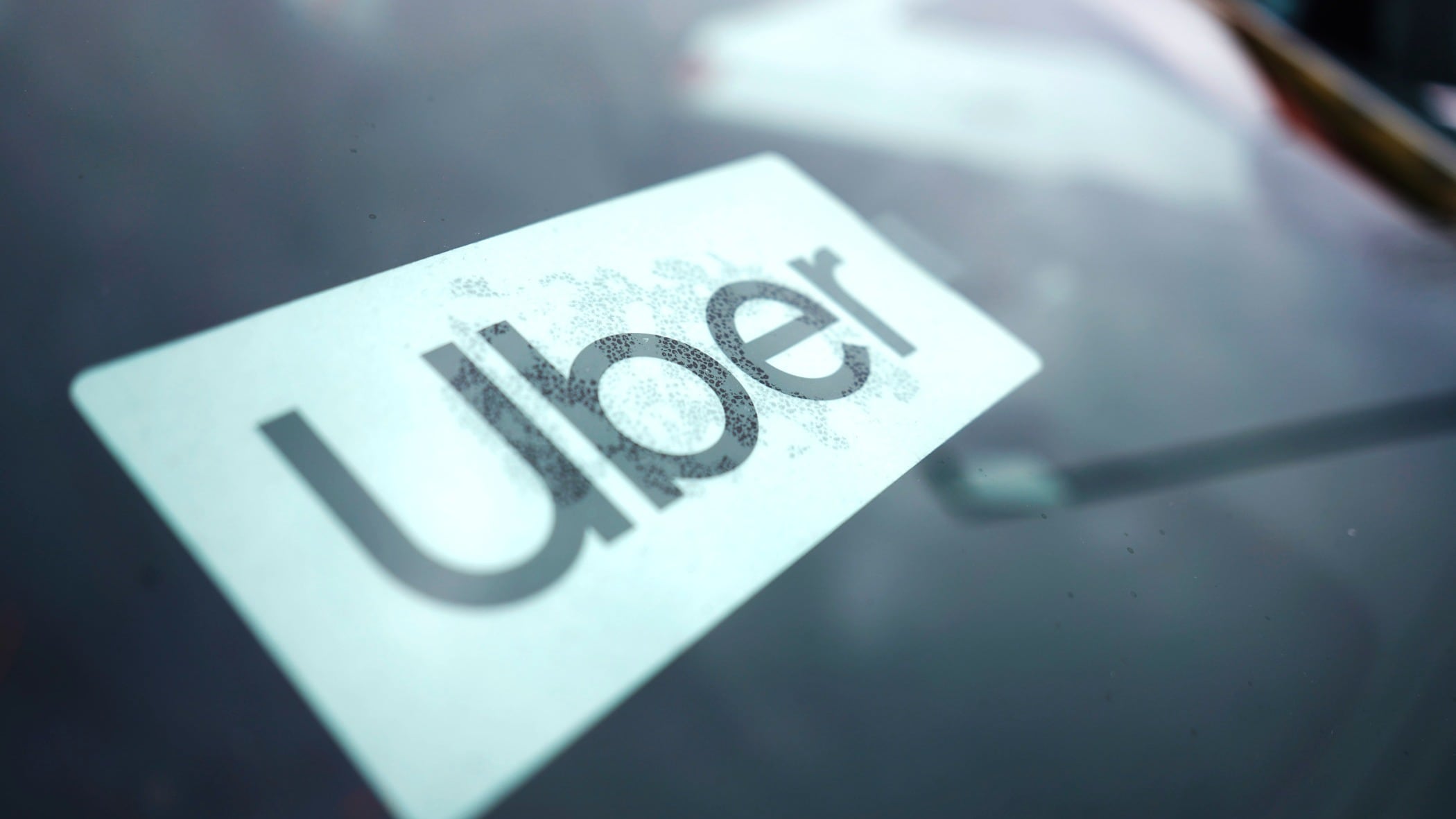
An Uber sign is displayed inside a car in Palatine, Ill., Thursday, Feb. 10, 2022. (AP Photo/Nam Y. Huh, File)
Uber is shutting down alcohol delivery app Drizly, the company confirmed, three years after acquiring the platform for $1.1 billion.
Drizly will officially shut down at the end of March, Uber told The Associated Press. That means orders are open until then, Drizly said in details posted on X, the platform formerly known as Twitter.
"We'll be sure to let you know when it's last call," Drizly wrote in a post Monday.
In a prepared statement, Uber's senior vice president of delivery Pierre Dimitri Gore-Coty said that the company decided to close Drizly's business and "focus on our core Uber Eats strategy of helping consumers get almost anything — from food to groceries to alcohol — all on a single app."
Uber purchased Drizly in a cash-and-stock deal back in 2021. The Boston-based subsidiary continued to operate as a standalone app, with its marketplace also integrated into the Uber Eats platform.
Drizly currently delivers beer, wine and spirits in states where it's legal, and partners with retailers across North America.
Regulators accused the alcohol delivery app of security failures several years ago that exposed personal information of some 2.5 million customers. To resolve these allegations, Drizly later agreed to tighten security and limit data collection.
Axios first reported on Uber's decision to shutter Drizly Monday.
In a Tuesday email to The AP, Uber said it plans to learn from Drizly's time in the industry as the company continues to grow its own "BevAlc" offerings, which are currently available in 35 U.S. states and 25 countries worldwide. The San Francisco company added that the majority of current Drizly customers also have Uber accounts.
Aya Kantorovich, Co-CEO of August Digital, breaks down Bitcoin’s surge, crypto ETFs, institutional investment trends, and the future of safer crypto access.
Most members of the Federal Reserve’s interest-rate setting committee supported further reductions to its key interest rate this year, minutes from last month’s meeting showed.
Sinead O’Sullivan breaks down Taylor Swift’s genius marketing for The Life of a Showgirl, which just set the record for most albums sold in a single week.
Markets are emerging from a turbulent Q3. Horizon’s Mike Dickson shares insights on interest rates, small caps, and where investors should look in Q4 and beyond
Bambu Ventures's Kyle Pretsch dives into Lemonaid’s $10M buyout, down from 23andMe’s $400M price tag, and what’s next after Chrome Co.’s dramatic pivot.
Former Cisco Systems CEO John Chambers learned all about technology’s volatile highs and lows as a veteran of the internet’s early boom days during the late 1990s and the ensuing meltdown that followed the mania. And now he is seeing potential signs of the cycle repeating with another transformative technology in artificial intelligence. Chambers is trying take some of the lessons he learned while riding a wave that turned Cisco into the world's most valuable company in 2000 before a crash hammered its stock price and apply them as an investor in AI startups. He recently discussed AI's promise and perils during an interview with The Associated Press.
Grove Collaborative’s CEO shares how the company is reinventing everyday goods with sustainability at the core and working toward a plastic-free future.