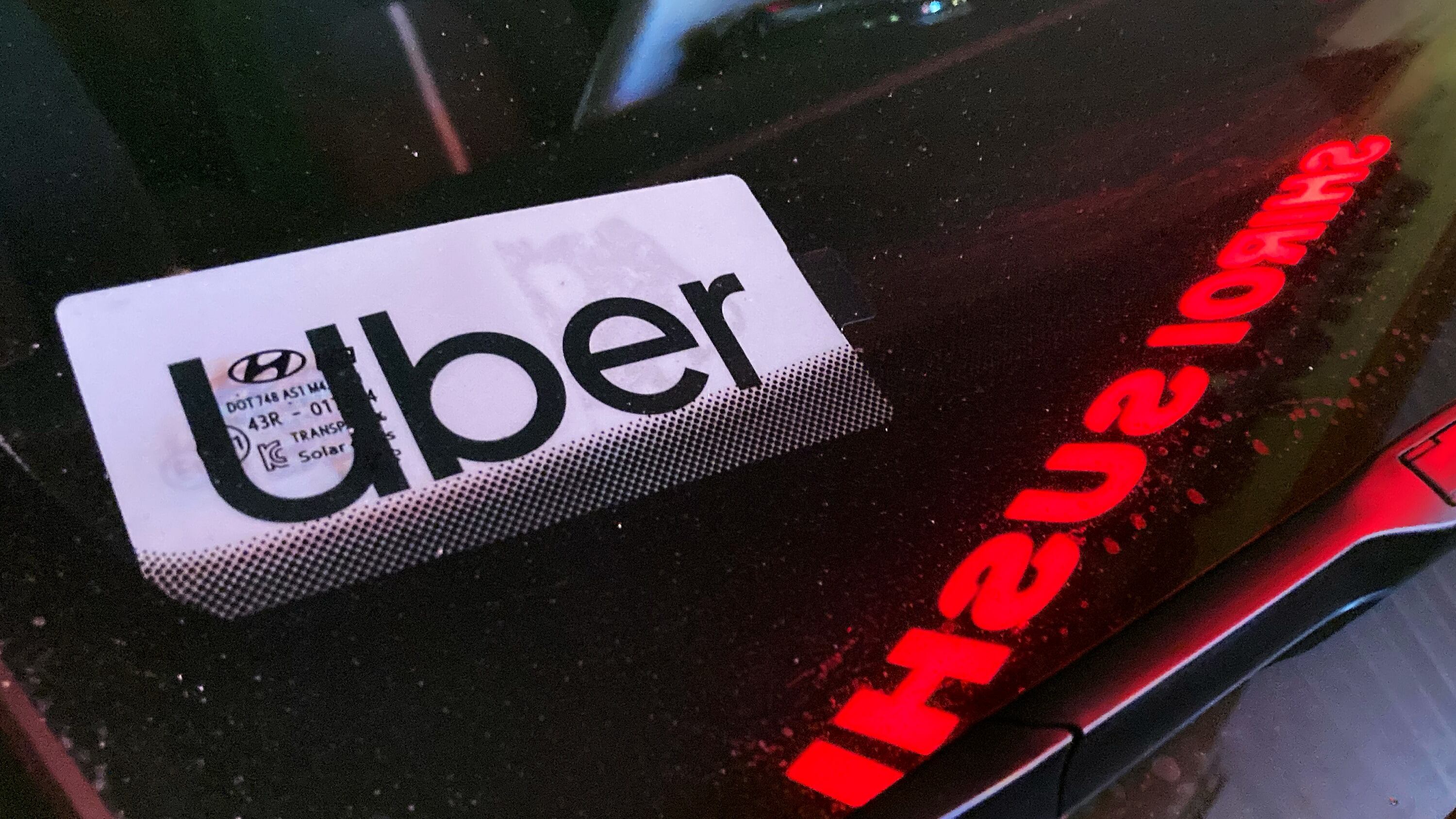
An Uber sign is displayed inside a car in Glenview, Ill., on Dec. 17, 2022. Ride-hailing companies Uber and Lyft will pay a combined $328 million to settle wage theft claims in New York, Attorney General Letitia James announced Thursday. (AP Photo/Nam Y. Huh, File)
Ride-hailing companies Uber and Lyft will pay a combined $328 million to settle wage theft claims in New York, Attorney General Letitia James announced Thursday.
James said the settlements resolve investigations into the companies improperly charging drivers sales taxes and other fees when the costs should have been paid by customers.
Uber will pay $290 million and Lyft will pay $38 million. The money will be distributed to current and former drivers, she said. The companies have also agreed to provide drivers outside of New York City with paid sick leave and give drivers outside of New York City a minimum wage of $26 per hour.
“For years, Uber and Lyft systemically cheated their drivers out of hundreds of millions of dollars in pay and benefits while they worked long hours in challenging conditions," James said in a statement.
Tony West, chief legal officer for Uber, said the agreement “helps put to rest the classification issue in New York and moves us forward with a model that reflects the way people are increasingly choosing to work.”
Lyft's chief policy officer, Jeremy Bird, said in a statement, “This is a win for drivers, and one we are proud to have achieved with the New York Attorney General’s Office.”
Wearable robotics are moving beyond sci-fi. Dephy CEO Luke Mooney explains how its smart ankle exoskeleton is changing mobility, recovery and everyday movement.
Voice AI is moving into cars, restaurants and customer service. SoundHound CEO Keyvan Mohajer explains the company’s growth and the future of voice-powered AI.
Americans are still spending, but rising anxiety over jobs, AI, housing and tariffs tells a different story. Kearney Consumer Institute’s Katie Thomas explains.
Disney is back in focus after Q3 earnings. Investors are watching streaming profits, theme parks and ESPN as the entertainment giant looks for its next catalyst
Healthcare policy is shifting fast, raising questions about drug prices, Medicare and access. Leap Health CEO Hani Elias explains what patients need to know.
The U.S. job market is cooling as hiring slows and employers turn cautious. LinkedIn’s Kory Kantenga breaks down jobs, wages, spending and AI’s impact.
AI is entering a new phase as enterprises move beyond experimentation and demand measurable returns. Appian CEO Matt Calkins discusses what comes next.